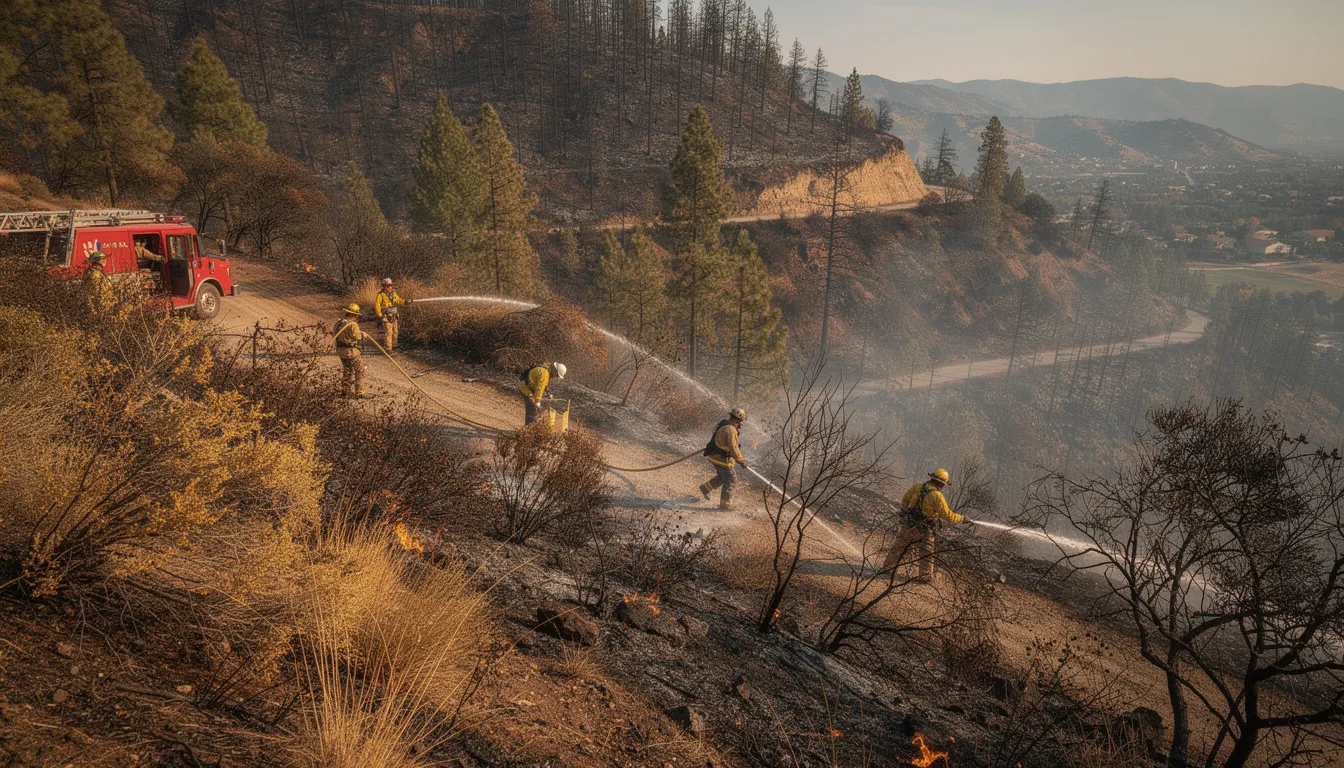
The Sheep Fire in early June 2022 moved fast through steep, brushy terrain and sent smoke across mountain communities. Firefighters battled shifting winds, dry fuels, and tough access while residents packed cars and checked evacuation maps. This guide breaks down the causes, the timeline, the impact on people and nature, and what recovery looks like. If you want a clear picture of how a modern wildfire unfolds and what to learn from it, keep reading.
💡 Keys Takeaways
- The Sheep Fire burned over 1,000 acres.
- Containment reached 81% after significant firefighting efforts.
- Over 500 residents were evacuated during the fire.
Overview of the Sheep Fire
Centered in the San Gabriel Mountains near Wrightwood, California, the Sheep Fire ignited in June 2022 and quickly challenged crews with rugged canyons and dense chaparral. By the time lines held around the perimeter, the blaze had consumed over 1,000 acres, producing smoke columns visible across the High Desert and mountain passes.
Incident commanders noted a mix of heavy brush, pinyon-juniper, and fine flashy fuels that dried early in the season. Air tankers, helicopters, hand crews, and dozers worked in tandem to slow the run of the head fire and cut off flanking spread. After several days of round-the-clock work and improved weather, containment climbed to 81%, and key roads reopened under caution.
Timeline of Events
Wildfires unfold through distinct operational phases. Here is how the Sheep Fire progressed based on typical incident updates, witness reports, and agency briefings from that period.
- Early June, late afternoon: Initial smoke reported in steep terrain near Sheep Canyon with gusty winds and low humidity. Engines and aircraft launched quickly for an aggressive initial attack.
- Overnight growth: Hot embers and slope-driven winds pushed the fire uphill. Night operations focused on point protection around homes and critical infrastructure.
- Next 24 to 48 hours: Highway closures were put in place, and crews established anchor points to build control lines. Spot fires occurred ahead of the main front as winds shifted.
- Midweek: Cooler morning temperatures and increased air support helped widen containment lines. Structure defense in at-risk neighborhoods remained a priority.
- End of the first operational week: Perimeter growth slowed. Mop-up expanded 100 to 300 feet inside the line where heat remained in stumps and downed logs.
- Following days: Containment strengthened and reached 81%, with patrols assigned to watch for rollouts and hold lines during afternoon wind peaks. Evacuation orders relaxed in stages as hazards diminished.
This cadence is common for mountain fires in early summer. Fast initial spread followed by steady containment reflects how weather windows, resource surges, and decisive line building can swing momentum.
Causes of the Sheep Fire
Investigators typically examine origin points for burn patterns, heat signatures, and physical evidence that indicate cause. For the Sheep Fire, conditions favored rapid ignition and spread. Southern California’s early summer often brings critically dry fuels after a short, variable winter wet season. In that window, even small sparks can escalate when they find continuous brush and grass.
Lightning was not a dominant factor in the area at that time, which points to a likely human cause such as equipment, vehicle issues near roadside vegetation, or improper outdoor use of heat sources. Final determinations in similar incidents hinge on trace evidence, witness accounts, and elimination of alternatives. Regardless of the exact spark, the setting did the rest. Live fuel moisture in chaparral communities often dips below thresholds associated with rapid fire spread, and slopes funnel wind that accelerates flame lengths and spotting distance.
Two environmental drivers made a difference. First, prolonged dryness created a bed of fine fuels that ignite easily and carry fire quickly between shrubs and trees. Second, afternoon winds aligned with drainages and ridgelines, increasing the potential for short-range spotting. Fire behavior analysts often describe this pairing as a setup for rapid initial attack challenges. Crews adapt by securing a solid anchor, flanking the fire, and using aviation assets to cool the head so ground teams can tie lines together safely.
Impact on Communities and Environment
Mountain towns near the perimeter experienced a tense few days. As flames advanced toward accessible ridges, law enforcement issued evacuation orders and traffic control points. Families packed essentials and met at staging sites while firefighters defended properties with engines positioned for quick knockdowns and ember patrol. Structure losses remained limited thanks to coordinated defense, but the stress of leaving home underscored how quickly conditions can shift during an early-season event like the sheep fire of june 2022.
Smoke affected air quality in valleys and passes, prompting advisories for sensitive groups. Residents used portable air purifiers and N95 masks to reduce exposure, particularly during morning inversion layers when smoke settled low. Wildlife pushed into unburned refuges as habitat edges shifted, and trail closures went up to protect both the public and active fire areas. Post-fire safety risks included weakened trees, rolling debris on steep slopes, and ash pits that can remain hot for days.
Long-term Environmental Effects
The ecological footprint of the sheep fire of june 2022 will unfold over seasons. In chaparral and mixed conifer systems, many native plants are adapted to periodic fire, but the pace and intensity matter. Where flames burned at moderate severity, resprouting shrubs and fire-following wildflowers typically return within months. High-severity patches can take longer, and the risk of invasive grasses filling open space increases if seeds arrive with vehicles or erosion events.
Soils on steep slopes can become water-repellent after intense heating, which elevates runoff and debris flow potential during the first significant storms. Land managers often use straw mulch, wattles, and check dams to slow water and trap sediment. Homeowners on burned or adjacent hillsides can mirror those tactics by installing fiber rolls on contour, clearing drains before rains, and reseeding with native mixes recommended by local conservation districts.
Wildlife response varies by species. Mule deer often browse new growth along burn edges within months, while cavity-nesting birds may increase where snags remain. Pollinator habitat can actually expand where moderate fire opens the canopy. The key risk window spans the first two rainy seasons when slopes are unstable. Staying off closed trails and reporting blocked culverts or slides helps reduce downstream damage.
Response and Recovery Efforts
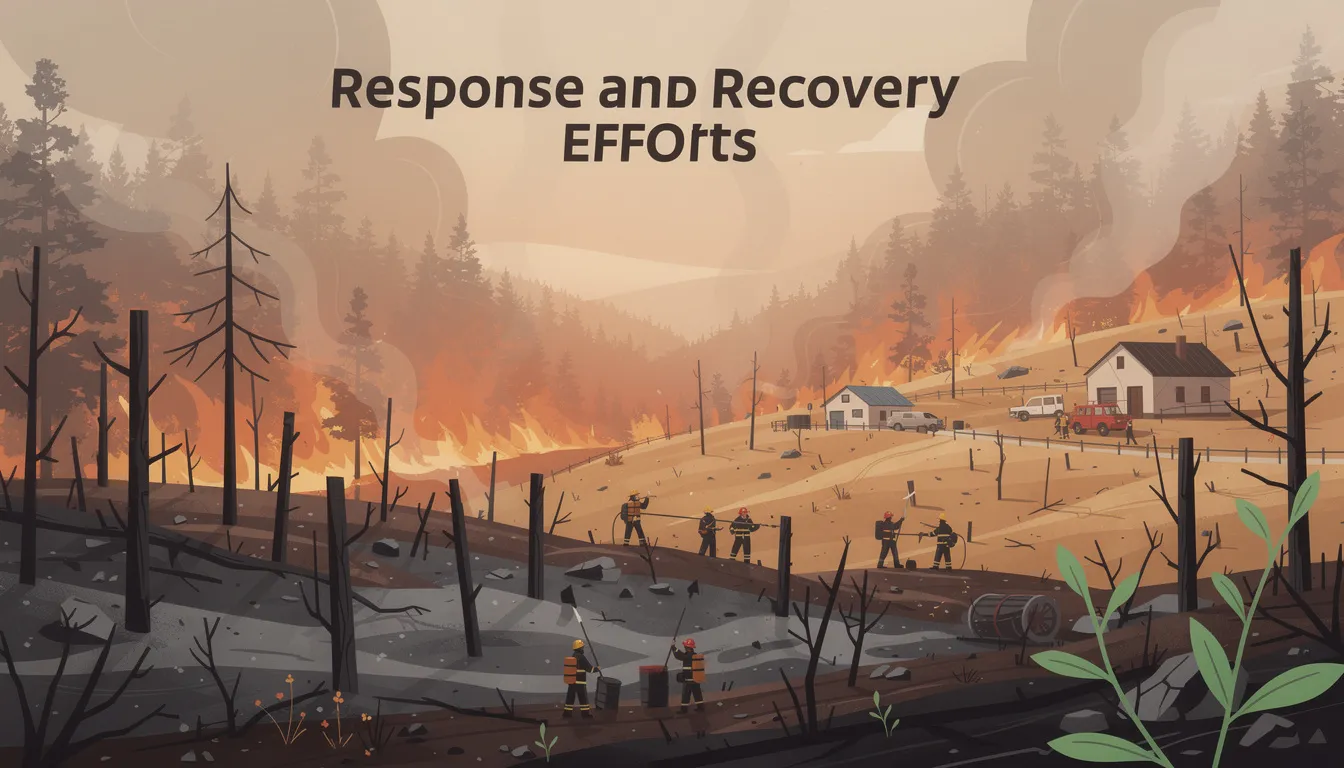
From the first operational period, agencies mobilized a layered response that combined aviation, ground attack, and community coordination. Air tankers dropped retardant to slow advance along ridges while helicopters cooled hotspots that threatened to breach lines. Hand crews cut line through rocky, brush-choked slopes, and dozers tied in ridges where terrain allowed. A Type 2 Incident Management Team oversaw strategy, safety, and logistics while local departments focused on structure defense and patrol.
Containment steadily improved as lines held and crews deepened mop-up. Once patrols reported consistent cooling along the perimeter, officials announced that the incident had reached 81% containment. Transition plans shifted resources to other fires while leaving engines and crews to monitor for re-ignitions, remove hazard trees along roads, and support residents returning home. Recovery began even before full containment with damage assessments, erosion control measures, and public briefings.
Evacuations and Safety Measures
Public safety teams moved quickly to get people out of harm’s way. Over the course of the sheep fire of june 2022, officials evacuated over 500 residents from neighborhoods closest to the advancing front. Traffic flow plans guided vehicles away from narrow mountain roads, and temporary shelters opened for those who needed a place to stay.
- Evacuation orders and warnings were issued in zones, allowing staggered returns as conditions improved.
- Highway closures kept roadways clear for engines, dozers, and ambulances while reducing the risk of accidents in smoke.
- Public alerts provided location-specific updates so residents knew when to leave and how to re-enter safely.
- Defensible space checks helped crews triage properties and set up hose lays, sprinklers, and ember screens.
- Air quality guidance encouraged the use of N95 masks indoors if filtration was limited, especially for sensitive individuals.
For households in fire-prone areas, these actions translate into practical steps. Keep a go-bag with medications, chargers, copies of IDs, pet supplies, and a printed contact list. Back up photos and key documents to the cloud. Save routes in a navigation app for offline use in case coverage drops during an emergency.
Support for Affected Residents
Once evacuation orders eased, communities turned to relief and recovery. Local organizations coordinated food, lodging assistance, and small grants for urgent needs. Insurance adjusters, building departments, and utility crews set up mobile help desks so residents could file claims, schedule inspections, and restore services without long trips off the mountain.
- Temporary lodging and meal vouchers for evacuees in need.
- Debris disposal sites and ash handling guidance to prevent air quality hazards.
- Mental health support lines for stress, loss, and sleep disruptions linked to the incident.
- Volunteer crews assisting with yard cleanup, fence repair, and erosion controls before the first storms.
Many residents also took advantage of home hardening assessments. Inspectors looked for vulnerabilities such as unscreened vents, debris-filled gutters, and combustible fencing attached to structures, then provided low-cost fixes that reduce future risk.
Lessons Learned from the Sheep Fire
The sheep fire of june 2022 reinforced several truths about living and working in fire country. Early action saves time and structures. Crews need clear access, water sources that are ready to tap, and properties prepared to resist embers. Residents benefit from drills and checklists long before a siren sounds. Agencies see the payoff of fuel reduction projects and roadside maintenance when fires launch near communities.
Experts emphasize three pillars that repeatedly show results. First, create and maintain defensible space</strong} around homes so flames slow and firefighters can safely operate. Second, invest in home hardening to keep embers out of attics and from igniting decks or fences. Third, strengthen community networks so alerts, transportation for vulnerable neighbors, and pet or livestock plans come together fast when minutes count.
- Clear the first 5 feet around structures of mulch, woodpiles, and plastic furniture to form an ember-resistant zone.
- Install ember-resistant vents and fine metal mesh over all openings, including gable ends and under-eave spaces.
- Gravel or pave driveway shoulders and clearly mark addresses so engines can find turnouts in smoke.
- Join or start a neighborhood fire council to coordinate evacuation drills and shared fuel reduction days.
- Ask your insurer about mitigation discounts after completing documented upgrades like Class A roofing and tempered glass windows.
At the landscape scale, the sheep fire of june 2022 also points to the value of seasonal staffing surges, roadside fuel breaks near evacuation routes, and prescribed burning where conditions allow. These strategies, combined with public readiness, turn a fast-moving start into a controlled endpoint more quickly, protecting lives, homes, and the ecosystems that define mountain communities.