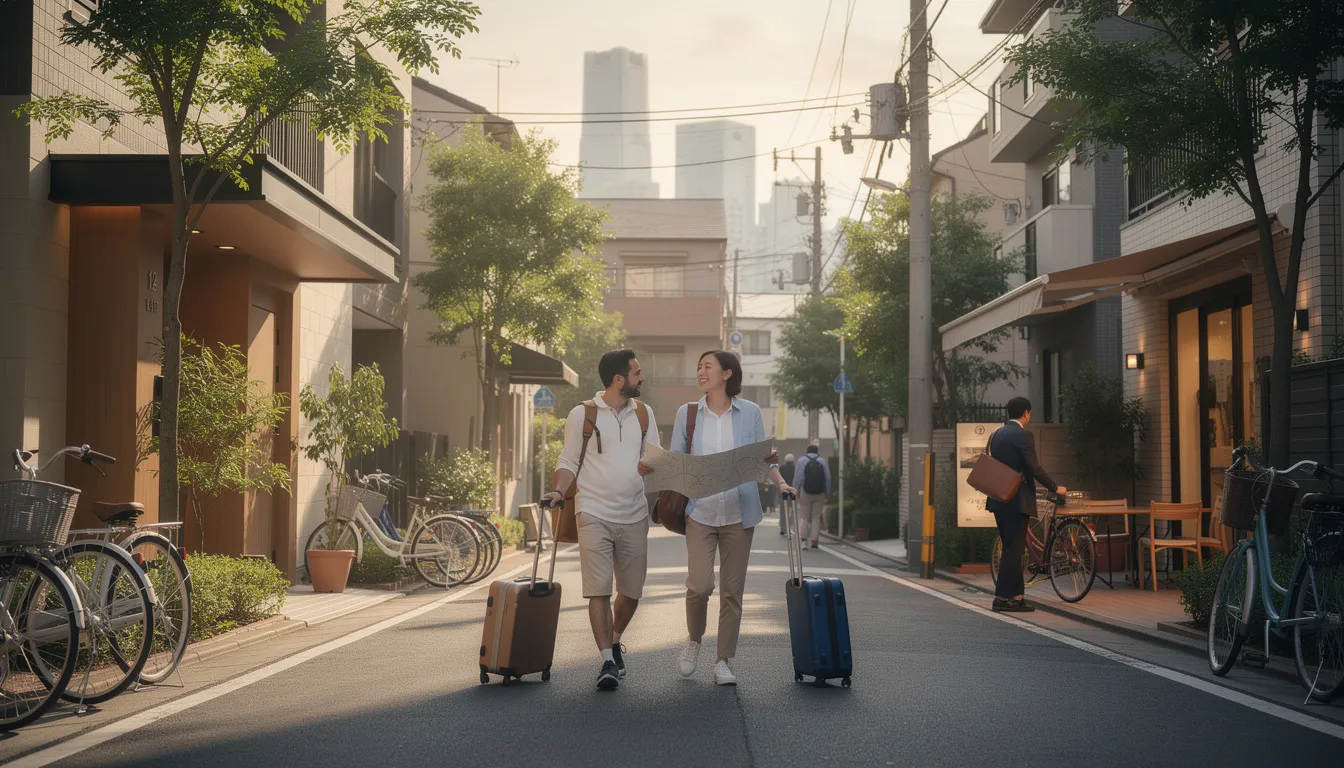
Tokyo rewards curious travelers, but where you stay shapes everything you see, eat, and feel. With fast trains, spotless streets, and neighborhoods that each tell a different story, the city makes it easy to craft your ideal base. This guide breaks down the best neighborhoods to stay in tokyo by vibe, budget, and travel style. Expect local tips, realistic price ranges, and a few under-the-radar spots you’ll wish you’d found sooner.
💡 Key Takeaways
- Tokyo has over 23 special wards, each with its own character.
- Public transport in Tokyo is highly efficient, making it easy to explore different neighborhoods.
- Safety is a key feature of Tokyo, making it one of the safest cities in the world.
Tokyo’s Neighborhoods at a Glance
Tokyo is a patchwork of villages that grew together. Today the city spans 23 special wards, each with its own rhythm—from neon-clad nightlife districts to calm, traditional quarters. Pick a base that matches your pace: late-night energy, food-first wandering, or museum-hopping with coffee breaks.
Getting around is simple thanks to the JR Yamanote Line, a loop that connects most visitor hubs, plus a dense subway network that shows up exactly when it says it will. Load a Suica or PASMO card, avoid rush-hour crowds if you can, and you’ll cross the city faster than your morning latte cools.
Safety is a big part of why Tokyo is a joy to explore. Lost phone? It might return to your hotel. Solo at midnight? Side streets still feel calm and well-lit. When people search for the best neighborhoods to stay in tokyo, they’re really choosing what kind of everyday magic they want: sky-high cityscapes, lantern-lit alleys, or riverside strolls under cherry trees.
Accommodation ranges from capsule pods and business hotels to intimate ryokan and glossy five-stars. Prices shift by area and season, and you’ll pay a premium for convenience next to major stations. If you land late or fly out early, staying near a direct airport line can be a smart play.
Top Areas to Stay in Tokyo
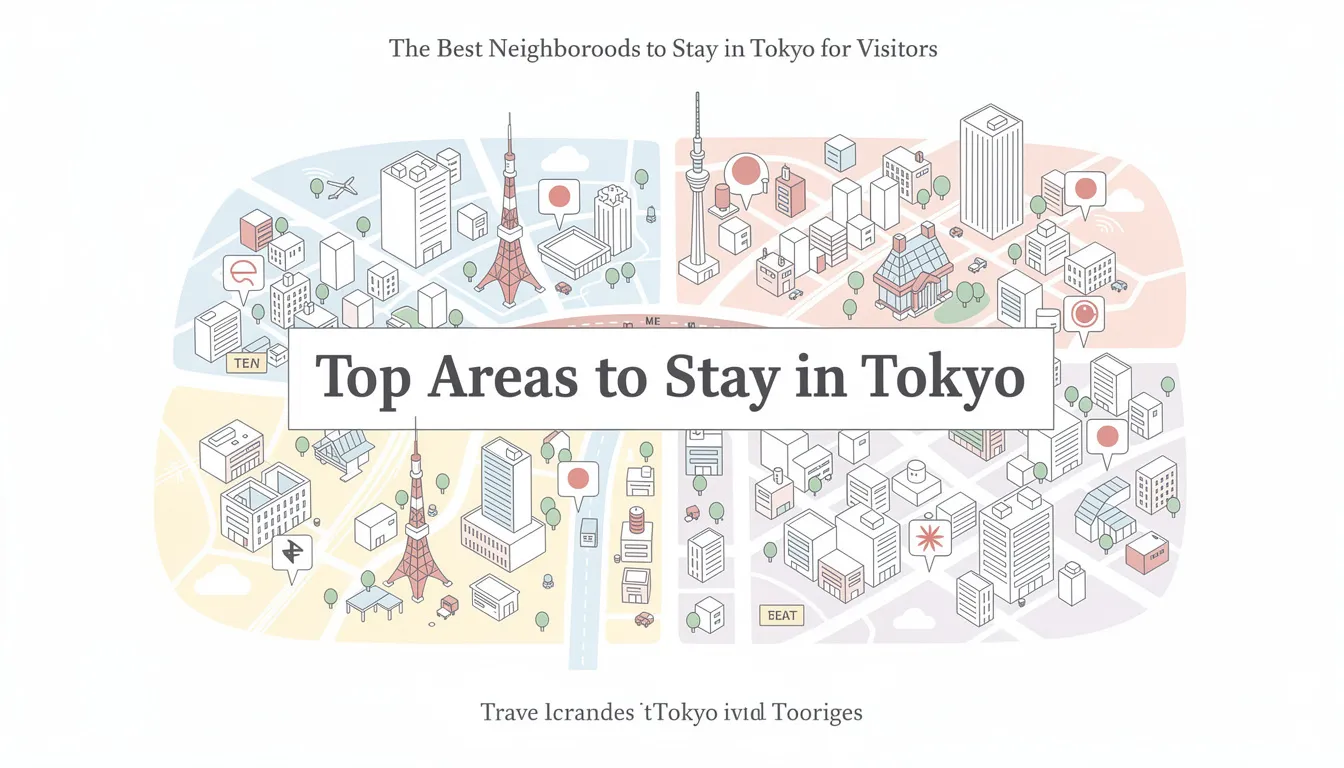
Below are the best neighborhoods to stay in tokyo for first-timers, families, foodies, shoppers, and night owls. Each area includes a quick vibe check, transport notes, price cues, and local favorite spots you won’t always find in guidebooks.
As a rough guide, capsules and hostels often start around ¥2,500–¥5,000 per night, business hotels sit near ¥7,000–¥15,000, midrange boutique stays run ¥12,000–¥25,000, and luxury properties commonly exceed ¥30,000, trending higher in peak seasons.
Shinjuku: The Lively Heart of Tokyo
Shinjuku is one of the best neighborhoods to stay in tokyo for night owls and urban explorers. It’s a major transport hub with direct trains to almost everywhere, including the JR Chuo Line for quick hops to Kichijoji and the Yamanote for easy city loops. Expect big-city buzz, sky-high views, and tiny alley bars tucked just out of sight.
Stay options: business hotels grouped near West Exit, stylish midrange towers in the South Exit area, and a handful of luxury stays with skyline lounges. Budget travelers can find compact rooms or pod-style beds east of the station.
Don’t miss the serene paths of Shinjuku Gyoen, then slide into Omoide Yokocho for smoky yakitori. After dark, peek into Golden Gai’s shoebox bars; go early if you’re shy, late if you want louder energy. For a quiet reset, Kitasando’s indie cafes are one stop away.
- Best for: Food lovers, nightlife, efficient station access
- Transport: JR, subway lines, airport buses; good base for day trips west
- Local tip: Catch sunset at the free Tokyo Metropolitan Government Building observatory
Shibuya: The Trendy Hub
Shibuya is style-forward, young at heart, and endlessly walkable. The famous Crossing is a spectacle, but the real fun is radiating out along Center Gai, Dogenzaka, and the mellow backstreets. Cat Street leads toward Harajuku with vintage shops and sleek cafes.
Accommodation spans cool design hotels and midrange towers; budget stays cluster a few blocks from the main station. Couples and solo travelers love the balance of energy and comfort here.
Browse Shibuya Stream for riverside bites, then trade neon for Nonbei Yokocho, a lantern-lit alley where tiny counters serve craft sake and grilled skewers. Morning runs in Yoyogi Park make a civilized antidote to late nights.
- Best for: Trendy cafes, shopping, nightlife without the chaos of Kabukicho
- Transport: Yamanote, Ginza, Hanzomon, Fukutoshin lines; easy to reach Harajuku and Omotesando
- Local tip: For calmer evenings, base near Shinsen or Ebisu, one stop away
Asakusa: Traditional Tokyo Experience
Asakusa trades high-rises for temple roofs and lantern glow. Senso-ji anchors the district, and early mornings here feel almost cinematic. Families and culture-seekers love the slower pace, riverside walks, and tactile crafts like calligraphy or washi-making.
Expect a mix of small hotels, family-run inns, and a few modern design gems. Prices are often friendlier than in the west side hubs, and rooms can be slightly larger. It’s also an excellent base for cherry blossom season along the Sumida River.
Wander Kappabashi Street for kitchenware, grab melon-pan near Nakamise, then follow backstreets to Kuramae’s minimalist roasters and studios. For a nostalgic detour, hop to Yanaka Ginza’s old-school shopping street. Asakusa remains one of the best neighborhoods to stay in tokyo if you want tradition on your doorstep.
- Best for: Families, photographers, slower mornings, river cruises
- Transport: Ginza and Asakusa subway lines; direct access to Tokyo Skytree area
- Local tip: Visit Senso-ji at dawn for incense in quiet courtyards
Ginza: Luxury Shopping District
Ginza is polished and poised. Flagship boutiques, art galleries, and immaculate department stores make it a dream for design fans and anyone who appreciates impeccable service. Even window-shopping feels like an event.
Hotels skew upscale with refined service, spectacular breakfasts, and soothing rooms that hush the city outside. Business travelers and luxury weekenders choose Ginza for convenience to Tokyo Station and the Imperial Palace area.
Descend into depachika food halls for pristine bento, fruit, and sweets; then stroll Yurakucho’s back alleys, where office workers unwind over skewers under the train tracks. On weekend afternoons the main avenue becomes a pedestrian paradise.
- Best for: Luxury stays, art galleries, immaculate dining
- Transport: Ginza, Marunouchi, Hibiya lines; quick taxi or subway to Tokyo Station
- Local tip: Book weekday lunches at fine-dining spots for better-value tasting menus
Akihabara: For Anime and Tech Lovers
Akihabara thrives on neon, retro beats, and stacks of electronics. It’s a magnet for gamers, manga collectors, and anyone who loves subcultures. The area hums by day; nights are quieter than Shinjuku or Roppongi, which suits early risers.
Rooms tend to be compact and affordable. Business hotels dominate, with a few newer properties catering to pop-culture fans. If you want late bars, plan short train hops to Kanda or Ueno.
Hunt vintage consoles on Chuo-dori, then change gears at Kanda Myojin Shrine for centuries-old calm. Coffee nerds: look for roasters tucked on side streets between specialist shops.
- Best for: Pop culture, collectors, budget-friendly bases with central access
- Transport: JR Akihabara plus Hibiya and Ginza lines nearby
- Local tip: Go early on weekends for the best finds before crowds arrive
Roppongi: Nightlife and Culture
Roppongi mixes late-night bars with blue-chip art. The Roppongi Hills and Tokyo Midtown complexes anchor two stellar museums and refined dining, while side streets pulse past midnight. It’s a cosmopolitan pocket popular with expats and visitors who want gallery days and lively nights in one place.
Hotels run from polished midrange to high-end towers. If you’re sensitive to noise, request upper floors facing away from main intersections or consider nearby Azabu-Juban’s village-like streets.
Spend a morning at the Mori Art Museum, then wander Hinokicho Park for a dose of green calm. For ramen, locals duck into tiny counters on back lanes where menus are short and bowls are perfect.
- Best for: Museum-hopping, nightlife, international dining
- Transport: Hibiya and Oedo lines; quick taxis to Shibuya and Ebisu late at night
- Local tip: Bars often have a small cover; check signage before you sit
Tips for Choosing the Right Neighborhood
Match your base to your trip’s rhythm. If you plan late dinners and bar-hopping, staying central saves your feet and taxi bills when the last train wraps up around midnight. If you’re after quiet mornings and traditional streets, focus on riverside and east-side districts.
Think about airport logistics. Haneda arrivals pair well with Shibuya, Shinjuku, and Roppongi. Narita has direct trains to Tokyo Station and Ueno, making Ginza, Akihabara, and Asakusa convenient. If you have an early flight, book near a line with an easy airport connection.