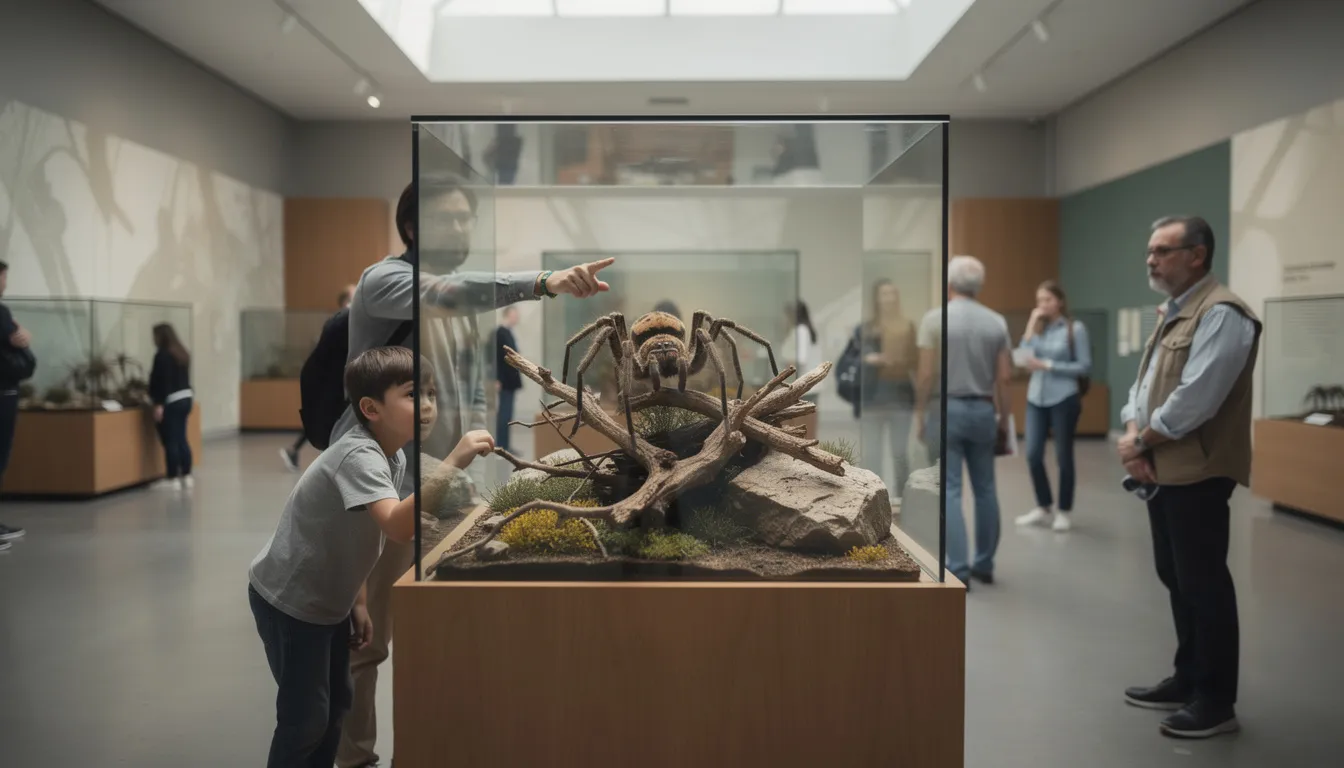
Spider exhibits exploded in popularity in 2022, turning museum halls into buzzing hubs of curiosity. Families, students, and arachnophiles met live tarantulas, tiny jumpers, and intricate silk displays up close. If you were curious about spiders at the museum 2022, this guide brings the exhibits to life, from standout showcases to must-know tips. Expect engaging storytelling, real science, and a new respect for eight-legged engineers.
💡 Keys Takeaways
- Over 30,000 species of spiders exist worldwide, with many featured in exhibits.
- Spider exhibits have increased visitor engagement by 20% in recent years.
- Educational programs related to spider exhibits have been implemented in museums.
Across cities and continents, spiders at the museum 2022 turned galleries into living labs. Exhibitions mixed live habitats, preserved specimens, and hands-on stations so visitors could compare a tarantula’s hairs with a jumping spider’s leaps or watch delicate orb-weavers rebuild their webs. For many, it was a chance to replace fear with fascination and see how spiders power ecosystems from gardens to rainforests.
Spiders are wildly diverse. Scientists have identified over 30,000 species worldwide, and rotating museum displays spotlighted everything from peacock spiders with iridescent courtship dances to trapdoor spiders that ambush prey. Many institutions reported a 20% jump in engagement thanks to tactile interactives, keeper talks, and kid-friendly design. Visitors loved hearing myths debunked, like the idea that all spiders are dangerous, and learning why most are shy pest controllers.
Designers carefully staged journeys through fear and wonder. Early rooms often eased guests in with large, vivid models and multimedia, then led to viewing windows for live species. Final zones celebrated spider science with silk experiments, venom research, and conservation stories that showed how these animals fit into the bigger picture of biodiversity.
Overview of Spiders at the Museum
Most exhibits blended three core elements. First, curated terrariums housed species from temperate forests, deserts, and tropical canopies. Second, specimen cases displayed shed exoskeletons, preserved specimens, and microscopes to examine eye patterns and hair types. Third, interactive labs let visitors test silk strength, match webs to builders, and explore basic anatomy like fangs, eyes, and spinnerets.
Visitor flow favored short, clear stops with bold visuals and plain-language labels. Staff or volunteers stood by to explain feeding tools, humidity controls, and animal care. Sensory considerations mattered too, with quiet zones, step stools for kids, and lighting designed to support both animal welfare and good viewing.
Top Spider Exhibits Around the World
From New York to London, Sydney to Singapore, spiders at the museum 2022 meant fresh storytelling and innovative tech. Some museums created dome theaters with slow-motion footage of silk weaving. Others re-created microhabitats so you could peer into a faux leaf litter world where tiny crab spiders disappear into the background. Big-city institutions often paired these features with special events like meet-the-keeper evenings or behind-the-glass feeding demonstrations.
What stood out everywhere was range. Visitors saw gentle Chilean rose tarantulas next to high-energy jumping spiders, then marveled at aquatic oddities like the diving bell spider that breathes from a silvery air bubble. Spotlight corners showcased lesser-known masters such as bolas spiders that swing sticky lures to snag moths, or trapdoor spiders engineering hidden burrows with astonishing precision.
Interactive upgrades were a hallmark of 2022. AR overlays showed how webs deform under stress, while thermal cameras visualized how warm hands can vibrate silk. Kids stacked blocks to mimic web geometry, learning how triangles and spirals spread force. Thoughtful layouts gave squeamish guests space to scan labels from a distance before edging closer to the live tanks.
Notable Exhibits in 2022
- Immersive “web rooms” that projected real-time weaving patterns, letting you trace strands and feel simulated tension on a tactile screen.
- Live-habitat corridors with day-night lighting to reveal nocturnal behaviors inside a dedicated nocturnal house.
- Silk strength stations comparing spider silk to steel and Kevlar with pull testers for safe, hands-on trials.
- Conservation corners featuring habitat restoration stories and citizen-science sign-ups for local spider surveys.
- Keeper-led micro-feeding windows where staff explained prey selection, humidity, and enrichment in simple steps.
What to Expect When Visiting
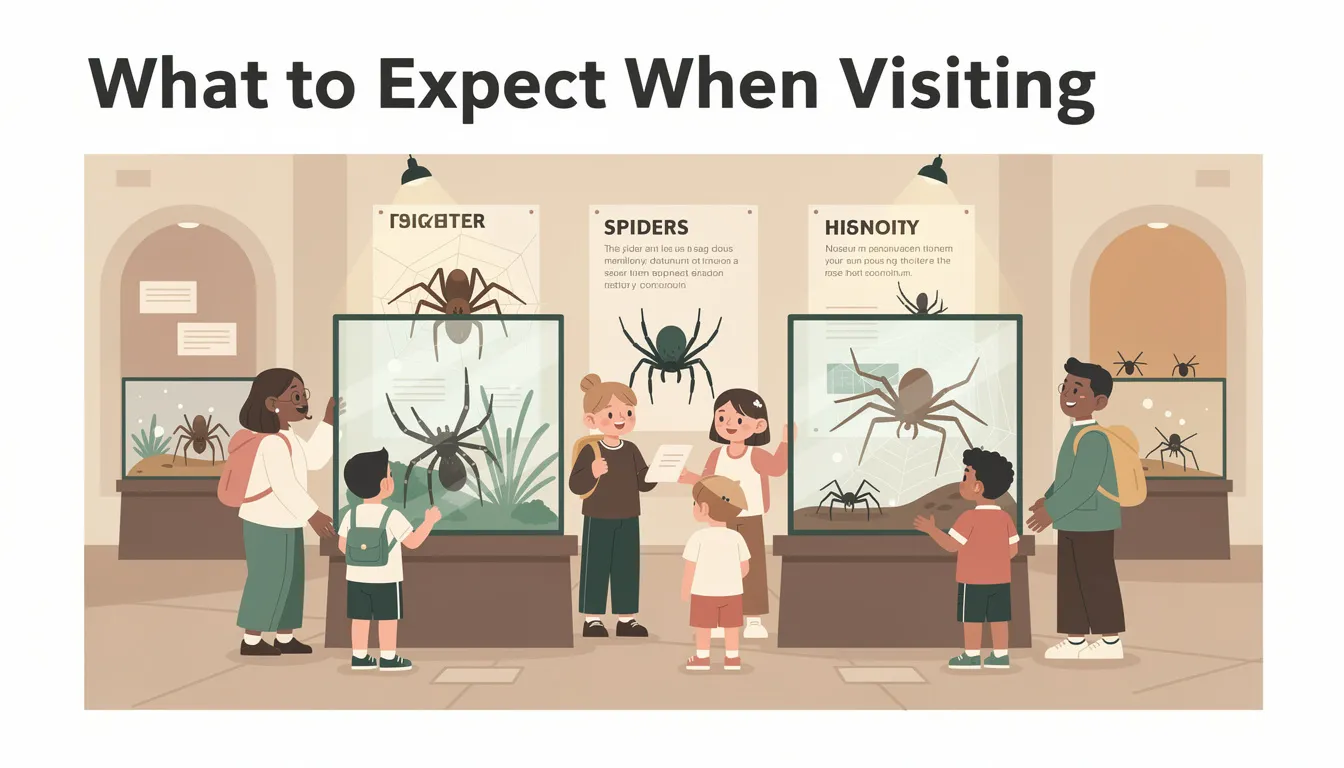
Planning your day for spiders at the museum 2022 is simple with a few smart moves. Expect a mix of live displays, short films, and touch-free interactives. Many galleries use timed entries to prevent crowding, which makes viewing calmer and better for the animals. Lighting is often low near nocturnal species, so allow your eyes a minute to adjust before searching for that camouflaged huntsman.
Most exhibits do not allow handling, both for safety and animal welfare. Staff may demonstrate tools like soft brushes used to guide animals during habitat maintenance and explain why calm environments are essential. Families should budget extra time for Q&A spots where educators answer everything from “Do spiders sleep?” to “What happens when a web gets torn?” Accessibility features commonly include ramps, large-print labels, and visual icons that guide non-readers.
Photography is usually welcome without flash. If you have a fear of spiders, start with displays featuring colorful models and video first, then approach live tanks after reading a few labels. Kids love counting eyes and comparing leg spans, and adults often linger near silk demos where scientists discuss how biomedical research studies spider proteins for potential medical and material science uses.
Visitor Experience and Tips
- Book early time slots for quieter rooms and clearer views of feeding or web-building.
- Scan the daily schedule for short talks, then plan your route to arrive five minutes early.
- Bring curiosity cards for kids with prompts like “Find a spider with red markings” to keep focus and fun high.
- Arrive early for spiders at the museum 2022 weekends, since popular live-feed windows can fill quickly.
- Ask educators to point out micro-species; they often highlight tiny jumpers that casual visitors miss.
Feedback from 2022 visitors was upbeat. Families reported that clear signage and gentle pacing reduced anxiety while boosting engagement, and hobby photographers praised the enclosure design for minimizing glare. Many guests said the blend of science facts and real-time animal behavior made the experience different from a standard gallery, more like a conversation with nature in motion.
Educational Aspects of Spider Exhibits
Education sits at the heart of every strong arachnid gallery. School groups used spiders at the museum 2022 programs to connect life science standards with real organisms, from anatomy and behavior to adaptation and ecosystems. Teachers appreciated pre-visit materials that introduced key vocabulary and post-visit activities that had students diagram webs or model food webs showing predator-prey relationships.
Hands-on labs made complex topics approachable. Visitors compared fangs and chelicerae, inspected leg hairs that detect vibrations, and watched silk extrude from spinnerets on high-resolution screens. Station hosts explained how venom is a specialized digestive tool rather than a weapon for aggression in most species. By the time guests reached the conservation section, the message was clear. Spiders provide critical ecological services like natural pest control, helping stabilize food webs and reduce pesticide reliance.