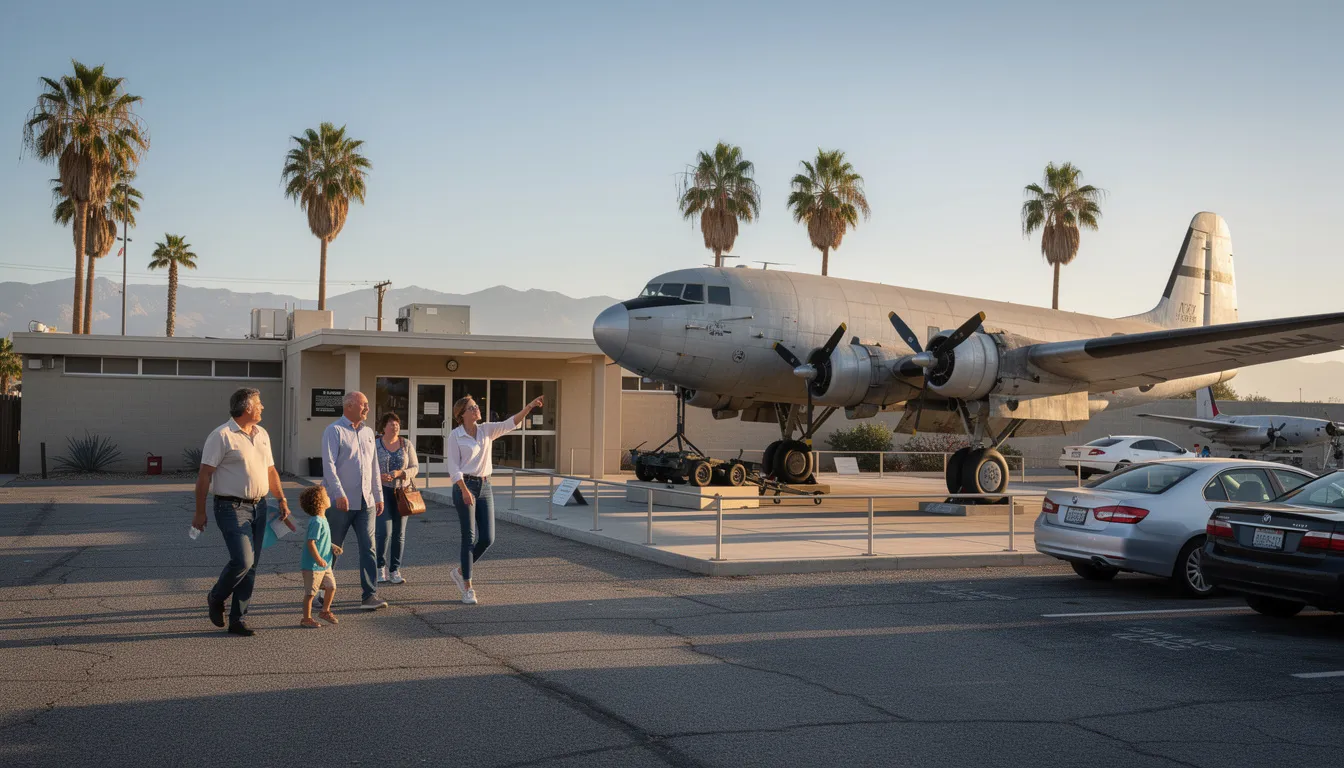
Tucked beside the runways of San Bernardino International Airport, the Norton AFB Museum brings the Inland Empire’s aviation story to life. Step inside and you are greeted by cargo giants, cockpit trainers, and the voices of veterans who kept them flying. Volunteers swap flightline tales while artifacts trace five decades of service. If you love airplanes or Southern California history, this hidden gem belongs on your itinerary.
💡 Keys Takeaways
- Norton AFB was operational from 1942 to 1994, serving various roles in military aviation.
- The museum houses over 20 aircraft and various military artifacts.
- It is a non-profit organization relying on donations and volunteer work.
About the Norton AFB Museum
The norton afb museum preserves the legacy of one of Southern California’s most consequential air bases through aircraft, artifacts, and stories shared by those who served. It is a community-driven, non-profit organization sustained by donations and a dedicated volunteer corps, which gives the museum its welcoming, conversational feel. You are as likely to hear a first‑person account of a midnight engine change as you are to study an aircraft data plate or a squadron patch.
Spread across indoor galleries and an outdoor display area, the norton afb museum showcases over 20 aircraft plus engines, tools, maps, and personal memorabilia. Exhibits are curated to connect objects to missions: a pallet scale next to airlift photos, survival gear beside mission logs, maintenance checklists paired with grease-stained tool rolls. The result is a museum that feels hands-on and human.
Docents, many of them former maintainers, loadmasters, and aircrew, anchor the experience. Ask about balancing a cargo load on a Starlifter or what a winter alert looked like during the Cold War and you will get a vivid, unvarnished answer. This blend of artifacts and lived memory is why aviation fans and families return with friends in tow.
Located on the grounds of today’s San Bernardino International Airport, visitors get a sense of place the moment they arrive. The noise of taxiing jets and the outline of old hangars frame the story you are about to explore inside. Plan to spend at least an hour, and more if you enjoy chatting with volunteers.
Overview of the Museum
Galleries are organized to trace the arc of Norton from World War II supply hub to Cold War logistics powerhouse and global airlift node. Expect a mix of full aircraft outdoors and detailed vignettes indoors that explain how missions worked day to day.
- Airlift and logistics corner with loadmaster tools, tie‑downs, and annotated cargo manifests.
- Maintenance displays featuring cutaway jet engines, hydraulic components, and troubleshooting guides.
- Oral history alcove where recorded interviews play alongside photos, maps, and unit insignia.
Throughout, you will spot the norton afb museum’s emphasis on people as much as planes. Handwritten notes on display cards, squadron reunion photos, and shadow boxes built by families turn a regional museum into a living memory bank.
History of Norton Air Force Base
Norton Air Force Base opened in 1942 amid the rapid wartime build‑up, serving first as a supply and maintenance depot supporting aircraft across the Pacific Theater. In the postwar years it evolved with the Air Force, expanding depot capabilities and becoming a cornerstone of logistics in the Western United States. The location near rail lines and major highways made it ideal for moving parts, people, and aircraft.
By the 1960s, Norton was a Military Airlift Command hub, home to units that flew the long‑legged C‑141 Starlifter on missions that stitched continents together. From combat resupply in Southeast Asia to aeromedical evacuations and humanitarian relief, aircrews trained here to launch on short notice and land almost anywhere. Behind the scenes, maintainers and depot specialists kept fleets mission‑ready in every season.
As the Cold War ebbed, Norton’s work shifted again, supporting global operations from the Middle East to the Pacific while preparing for final realignment. After a half‑century of service, the base closed in 1994 as part of nationwide base closures, and the property transitioned into today’s civilian airport and commercial complex. Veterans remember the last formation on the ramp, a moment equal parts pride and farewell.
Significant Events in History
- 1942: Activation as a wartime supply and maintenance depot serving Pacific operations.
- 1950s: Expansion during the Cold War, strengthening logistics and depot maintenance roles.
- Mid‑1960s: Arrival of long‑range airlift units, launching global C‑141 Starlifter missions.
- 1990–1991: Surge support for deployments and logistics during Desert Shield and Desert Storm.
- 1994: Base closure; facilities begin conversion to San Bernardino International Airport.
The norton afb museum threads these milestones together with maps, mission boards, and personal accounts so you can see how a regional base powered global reach for five decades.
Exhibits and Collections
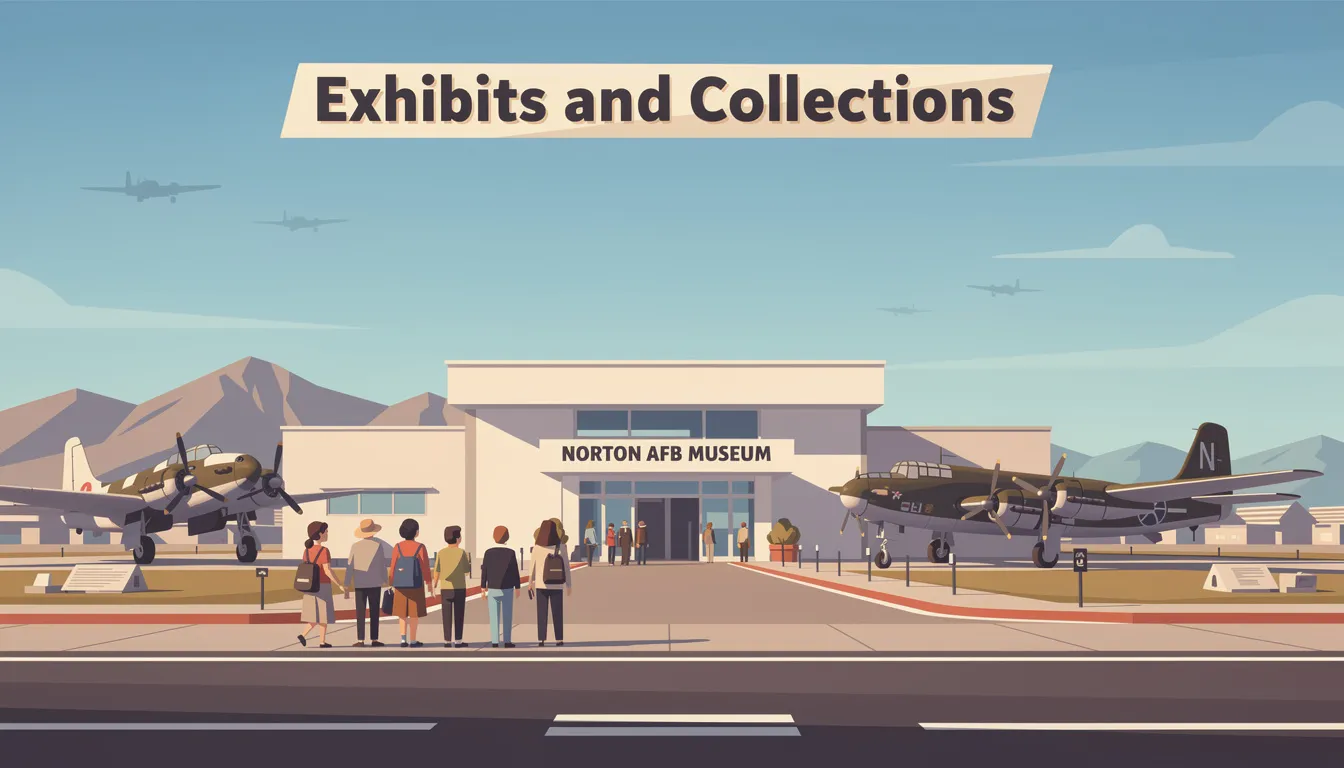
Aircraft outside set the tone, while indoor galleries reveal the detail. The museum’s collection spans World War II through the end of the Cold War, reflecting Norton’s changing mission set. You will find a lineup that includes cargo aircraft, trainers, liaison planes, and rotary‑wing support, each framed by signage that ties the machine to a mission, a crew position, or a notable sortie.
Look closely at the ground equipment. A bomb‑loader parked beside a cargo pallet tells a story about turnaround times. A weathered toolkit paired with a maintenance log highlights the quiet heroics of keeping a fleet flying. Wall cases display unit patches, name tapes, and flight jackets that put faces to call signs and tail numbers.
Oral histories are a standout. One docent, a former loadmaster, describes learning to “build” a cargo bay like a puzzle so weight and balance worked on icy runways in Alaska. A crew chief talks about swapping an engine overnight before a dawn launch. These human moments sit beside mission photos and route maps, making the exhibits feel cinematic rather than static.
Families appreciate the tactile elements. Kids can trace the outlines of rivets and read checklists sized to their hands. Aviation buffs linger by the engine stands, comparing compressor stages and turbine blades. The norton afb museum rewards both quick visits and deep dives.
Featured Aircraft
- C‑141 Starlifter artifact or cockpit section illustrating long‑range airlift operations and loadmaster duties.
- Classic jet trainer representing the pipeline that produced pilots and navigators for Cold War service.
- Vietnam‑era utility helicopter highlighting medevac, liaison, and base support roles.
- World War II transport or liaison aircraft connecting Norton’s early depot years to front‑line needs.
Beyond airframes, do not miss the “day in the life” dioramas. A recreated flightline shack with coffee cups, a grease board listing tail numbers, and a ringing desk phone conveys the rhythm of a base better than any textbook ever could.
Visitor Information
The museum sits within the footprint of the former base at today’s San Bernardino International Airport, minutes from downtown. Parking is typically easy, and pathways are laid out for a relaxed, self‑guided flow through indoor galleries and the outdoor ramp. Plan for 60–90 minutes if you want to see everything and chat with volunteers.
Photography is welcome in most areas, and many artifacts are close enough for detail shots. Accessibility is a priority indoors; some outdoor surfaces can be uneven, so comfortable shoes help. The norton afb museum often hosts special events, such as veterans’ panel talks or aircraft startup demos, which can add energy and extra learning to your visit.
Docents are your best resource. Ask them to point out unit traditions, base‑specific slang, or the hidden details on an aircraft’s data plate. You will come away with stories you will retell.
Hours and Admission Fees
Operating hours can vary by season and volunteer availability, with many visitors finding weekend hours the easiest time to visit. Admission is commonly by donation, reflecting the museum’s community focus and its mission to keep local history accessible. Special events may suggest a modest contribution to help cover costs.
Because staffing is volunteer‑based, consider checking the latest posted schedule ahead of time or calling before you head out, especially if you are planning a group visit.
Tips for Visitors
- Arrive near opening to enjoy quieter galleries and more time with docents.
- Wear comfortable shoes and bring water for the outdoor aircraft area on warm days.
- Ask volunteers for their favorite artifact; the backstory often unlocks a whole exhibit.
- Bring kids; scavenger‑hunt style prompts like “find the loadmaster’s scale” keep them engaged.
- Support the mission with a donation or by picking up a patch or sticker at the front desk.
If you are pairing your visit with plane spotting, the airport environment adds another layer. Hearing a turbofan spool up while standing under a classic transport makes the past feel present.
Why Visit the Norton AFB Museum
There are larger aviation museums in California, but few match this one for sense of place. The norton afb museum sits on the base it interprets, so the stories are grounded in the ramps, hangars, and taxiways visible just outside the windows. You are learning history where it happened, surrounded by people who lived it.
It is also unusually personal. A retired loadmaster can show you how a net strap cinches across cargo, then pivot to a photo on the wall and say, “That was my jet headed for Clark.” An aircraft electrician might explain how a hydraulic leak smells right before a line bursts, then point to the exact component in the display case. These first‑hand details make abstract terms like sortie generation or quick‑turn maintenance feel immediate and human.