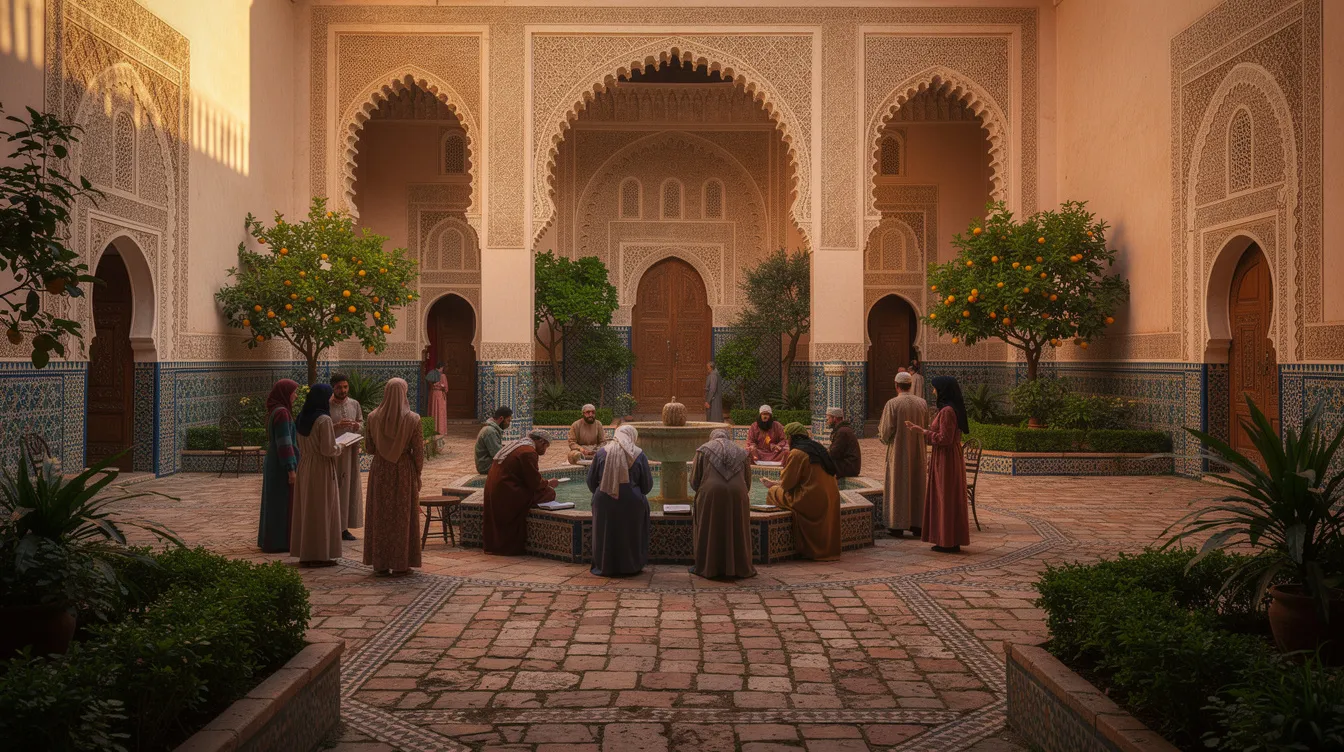
Across continents and centuries, a single institution has quietly linked scholars, rulers, and everyday learners: Al-Qarawiyyin in Fez, Morocco. Often celebrated as the world’s oldest university, it grew from a neighborhood mosque into a powerhouse of learning that shaped ideas from North Africa to Europe. Its story intertwines philanthropy, community, and scholarship. Understanding its legacy reveals how knowledge travels, adapts, and endures.
💡 Key Takeaways
- Al-Qarawiyyin has had a continuous operation for over 1,160 years.
- It is located in Fez, Morocco, and was initially a madrasa before becoming a university.
- Notable alumni include scholars who contributed significantly to various fields, including geography and philosophy.
Introduction to the World's Oldest University
When people search for the world's oldest university, they are often looking for a place that has taught students for longer than any other, and has done so continuously. Al-Qarawiyyin fits that description with unusual precision. Established in the mid-ninth century and still open today, its lectures, libraries, and scholarly rituals have persisted through dynasties and disruptions. The label carries nuances, yet its continuity sets it apart in the global history of higher education.
Modern audiences sometimes imagine a university as a campus with laboratories and dormitories. Medieval reality looked different. Learning at Al-Qarawiyyin unfolded in mosque courtyards and porticos, in circles where teachers and students debated texts and ideas. Over time the institution formalized examinations and permissions to teach, developed endowed chairs, and curated a manuscript library. The movement from mosque to madrasa to university was gradual, but identifiable in its governance and curricula.
Recognition has followed. The institution is credited by Guinness World Records and cited by UNESCO for its antiquity and continuity. Those acknowledgments are not just labels; they underline the visibility of a North African center of learning in narratives often dominated by European examples. The presence of Al-Qarawiyyin in Fez also illustrates how urban design, commerce, and scholarship feed into each other, making teaching sustainable across generations.
Historical Context of Al-Qarawiyyin
The setting matters. Ninth-century Fez bustled with new arrivals, including families from Kairouan in present-day Tunisia. The Idrisid polity sought legitimacy and stability, and investing in religious and legal learning helped weave a shared civic fabric. Markets surrounded the mosque, financing both the city and its endowments. In this blend of migration, piety, and trade, the conditions were ripe for a learning hub that could anchor the community and attract scholars from across the Maghreb and al-Andalus.
Mosques often served as multifunctional civic spaces. In Fez, the Al-Qarawiyyin Mosque became an intellectual magnet. Its teaching circles developed reputations for rigor, and gifts of property and shops provided steady income. That fiscal stability meant salaries for scholars and maintenance for buildings, and it ensured that study continued even when politics shifted.
The Founding of Al-Qarawiyyin
The story begins in 859 AD with Fatima al-Fihri, a woman of means and vision who invested her inheritance in a mosque for her community. More than a construction project, it was a social contract. Endowments stipulated that income from shops and real estate would sustain teachers, copyists, and repairs. Sources recount that Fatima fasted while the building rose, a gesture of devotion that still resonates in local memory. From these origins, an institution flourished.
As the mosque’s reputation for scholarship grew, the community formalized teaching arrangements. Grants and endowed positions allowed masters to reside and lecture. Students arrived from across North and West Africa and from al-Andalus. The ethos remained anchored in piety and service, yet its academic curiosity ranged widely. The transformation from a place of worship to a madrasa and then to an institution recognizable as a university unfolded step by step, tied to funding, prestige, and administrative norms.
Internationally, Al-Qarawiyyin is acknowledged as the oldest continuously operating university. Such recognition draws on its uninterrupted teaching record, its system of credentials, and the cumulative role of its library and pedagogy. This matters for how educational history is told. Rather than a single civilizational path, the story showcases multiple centers, with Fez standing tall as an early and enduring node.
Key Figures in Its Establishment
At the heart of the foundation stands Fatima al-Fihri. Her initiative set the tone for pious philanthropy, known as waqf, that sustained learning. Local jurists offered legal frameworks for these endowments, while artisans and builders created a space optimized for study, light, and acoustics. Community leaders took responsibility for managing gifts, appointing teachers, and recording conditions in legal documents that protected assets across centuries.
Family connections also mattered. Tradition notes that Fatima’s sister, Mariam, funded the nearby Al-Andalus Mosque, helping make Fez a two-bank city of scholarship. Judges, muftis, and merchant patrons later amplified this foundation. Their names are not always as famous, but their deeds shaped the institutional stability that let Al-Qarawiyyin weather both plenty and hardship.
Curriculum and Educational Influence
Teaching at Al-Qarawiyyin revolved around text, commentary, and conversation. Students sat in study circles, listening to a master read a passage, then posing questions and comparing glosses. Over years of study they sought an ijaza, a license that affirmed their mastery of a book or discipline and authorized them to teach it. The license tied knowledge to a chain of transmission, strengthening trust and preserving nuance as ideas traveled.
Islamic sciences anchored the program, including Qur’anic exegesis, hadith studies, jurisprudence, and theology. In parallel, a robust humanistic education grew, encompassing grammar, rhetoric, logic, and ethics. As the city’s needs evolved, so did the curriculum, adding astronomy for calendrical calculations, mathematics for commerce and inheritance, and elements of medicine drawn from Greek and Arabic sources. Students moved between disciplines more fluidly than modern departmental walls might allow.
The library turned intellectual ambition into a daily habit. Manuscripts copied by generations of scribes made the latest commentaries available, and marginal notes preserved debates across time. The library’s curators acted as early information managers, cataloging works and overseeing loans under strict conditions. Revisions and epitomes condensed long treatises into teachable formats, speeding classroom use without losing core arguments.
Subjects Taught at Al-Qarawiyyin
Accounts from travelers and institutional records highlight recurring fields of study. Jurists labored over complex questions of contracts and endowments. Linguists refined rules that still guide classical Arabic grammar today. Philosophers and logicians read Aristotle through Arabic commentators, crafting arguments that resonated well beyond Fez. Astronomers observed stars and calculated prayer times. Mathematicians tackled arithmetic and geometry in service of trade, taxation, and architecture.
In practical terms, a student might begin with memorization and grammar, then advance to rhetoric and logic before specializing. A legal scholar would parse cases about waqf and inheritance, while an aspiring astronomer learned to construct and use an astrolabe. The interplay between theory and application gave Al-Qarawiyyin graduates tools to advise courts, design markets, and teach in distant cities.
Impact on European Universities
Intellectual pathways connected Fez with al-Andalus and the broader Mediterranean. Ideas moved with merchants, diplomats, and students. Commentaries that shaped discussions in Fez also reached translation centers in places like Toledo and Palermo, where Arabic scientific and philosophical texts entered Latin. The concept of licensing teachers echoed in Europe’s licentia docendi, and the concentration on disputation paralleled emerging scholastic methods in Bologna and Paris.
The traffic was not one way. European travelers and converts who passed through Fez carried impressions of its scholarly practices. Over centuries, this mix of encounter and adaptation helped produce university cultures that were distinct yet comparable. When modern readers encounter the language of faculties, degrees, and disputations, they see family resemblances born of long contact across sea routes that threaded North Africa and Europe together.
Comparative Analysis with Other Ancient Universities
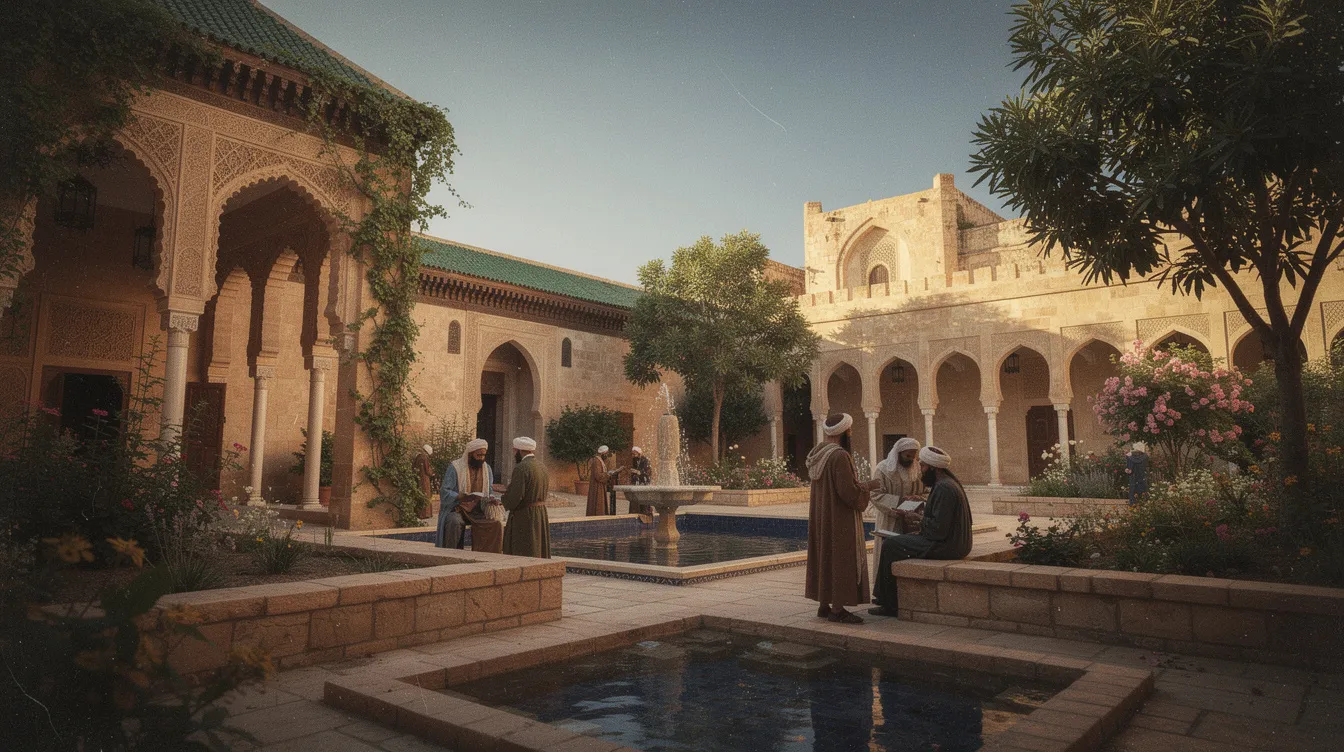
Claims about antiquity hinge on definitions. If one asks which institution has taught students without interruption and still grants recognized credentials, Al-Qarawiyyin emerges prominently. It often anchors discussions about the world's oldest university, in part because it blends mosque-based teaching with institutional structures that resemble later universities. Yet it sits amid a wider landscape of ancient centers.
Nalanda in India predates Al-Qarawiyyin by centuries and was a great Buddhist university with thousands of students and teachers. Its destruction ended that continuity, so it does not compete for the modern label despite its earlier rise. Al-Azhar in Cairo dates to the tenth century and remains a major Islamic university. Bologna and Oxford emerged in the late eleventh and twelfth centuries and formalized degree structures that influenced global higher education over time.
Each of these institutions solved similar problems differently. Bologna emphasized student associations that hired and fired teachers, while Paris championed masters’ guilds. Fez relied on endowed chairs, mosque infrastructure, and community oversight. All cultivated archives and libraries that could survive political changes. What distinguishes Al-Qarawiyyin is its documented practice of licensing teachers, the uninterrupted functioning of its classes, and the evolution of its curriculum in place.
When historians compare these institutions, they often focus on governance, credentialing, and curricula. In governance, Al-Qarawiyyin’s waqf-based funding stands out for insulating teaching from court politics at critical moments. In credentialing, its chain-of-transmission model supported quality assurance in a pre-print world. In curricula, the pairing of religious sciences with language, logic, math, and astronomy created a balanced profile that served courts and markets alike.
Legacy of Fatima al-Fihri
The founder’s legacy extends beyond a single building. Fatima al-Fihri modeled philanthropy as a strategic act, using her wealth to create public goods that endured. The endowment deed, or waqf, tied assets to educational purposes in perpetuity, sheltering them from family disputes or regime shifts. That legal mechanism inspired other donors and helped fix education at the heart of civic life in Fez.
Her story also broadens how we talk about women in the history of science and education. Rather than a footnote, she occupies the opening chapter of a university’s life. In a world where funding often determines what can be studied and who gets to learn, the example of a woman endowing a trans-generational institution matters. It asks modern readers to see gendered contributions not only in teaching and publication but also in the architecture of opportunity.
Notable Alumni and Scholars
Al-Qarawiyyin’s reputation drew and produced scholars who shaped fields from law to geography. The jurist Abu Imran al-Fasi, associated with Fez, helped spread Maliki legal thought and influenced reform movements that reached deep into the Sahara. The polymath Ibn al-Banna al-Marrakushi, active in the Maghreb, is linked through study networks to Fez and wrote influential works on arithmetic and astronomy used across North Africa.
Travelers and diplomats also mark the university’s story. Al-Hasan al-Wazzan, known in Europe as Leo Africanus, spent formative years in Fez’s intellectual milieu before writing a celebrated geography of Africa that circulated in Italian and Latin. Historians like Ibn Khaldun lived and lectured in Fez during parts of their careers and interacted with its scholarly circles, anchoring the city in the broader chronicles of the Maghreb and Mediterranean. These associations underscore a pattern: Fez served as a meeting point where ideas, people, and manuscripts converged.
It is wise to be cautious about attributions from distant centuries, since scholars often moved among cities and taught in multiple venues. Even with that caution, the pattern holds. The networks connected to Al-Qarawiyyin fed legal courts, chancelleries, madrasas, and diplomatic missions, giving the university’s alumni real influence on daily governance and cultural production.
Challenges and Modern Relevance
Institutions that last over a thousand years inevitably face reinvention. Colonial encounters, shifts in state policy, and new academic norms pressed Al-Qarawiyyin to adapt. In recent decades the university has integrated with Morocco’s higher education framework, aligning degree structures and quality assurance with national standards while preserving distinctive strengths in Islamic law, Arabic language, and classical studies. Balancing tradition and reform has been an ongoing negotiation.
Digital technology transformed both access and conservation. The renowned library, home to rare manuscripts and early Qur’ans, underwent major restoration and cataloging. Climate control, digitization, and careful handling protocols now protect fragile works. These upgrades make research more inclusive, allowing scholars to consult scans remotely while reducing wear on originals. The renovation also highlighted conservation as a public good, tying heritage to the knowledge economy.
Contemporary relevance appears in classrooms and community programs. Courses in comparative jurisprudence interact with modern legal questions, from financial instruments to bioethics. Language instruction extends to foreign languages to help students engage global scholarship. Partnerships connect the university with cultural institutions in Fez, turning the medina into a living laboratory for history, architecture, and urban studies.
For prospective visitors and students, the university embodies continuity within a dynamic city. The mosque remains an active place of worship. The library and select academic spaces have controlled access aligned with conservation needs. Local guides help visitors appreciate the geometry of courtyards, the craftsmanship of cedar screens, and the inscriptions that speak to centuries of benefactors and teachers. Respectful conduct and modest dress reflect the site’s living religious function.
Current Status and Student Life
Today’s Al-Qarawiyyin enrolls students in programs centered on Sharia, Arabic linguistics, and related humanities, with electives that bring in history, logic, and elements of social science. Instruction occurs in Arabic, with growing emphasis on foreign-language proficiency for research. Many students arrive with strong backgrounds in memorization and classical texts, then build analytical skills through close reading and debate.
Student life blends study with community engagement. During Ramadan, evening lectures expand attendance and encourage intergenerational learning. Study circles form around particular texts or teachers, sometimes spilling into nearby bookshops and cafes. Alumni networks connect graduates to courts, schools, and cultural organizations across Morocco and beyond. The feel is both traditional and current, sustained by endowments yet open to contemporary questions.
Practical tips help visitors and researchers. Plan visits outside peak prayer times, and ask locally about access to the library or exhibitions. Photography rules vary with spaces and exhibits, so seek permission when unsure. If you intend to study, inquire about preparatory courses that strengthen classical Arabic and logic, since both remain foundational for advanced work at the university.
In conversations about the world's oldest university, Al-Qarawiyyin stands out not just for age but for its living community. The persistence of its teaching methods, the evolution of its programs, and the renewal of its physical spaces together show how long-lived institutions stay relevant.
The Lasting Impact of Al-Qarawiyyin
Al-Qarawiyyin’s influence appears in three interlocking domains. First is method: text-centered study, debate, and credentials structured educational authority long before printing and accreditation bureaus. Second is infrastructure: endowments, libraries, and scholarly chairs showed how cities could fund knowledge as a civic service. Third is culture: the university served as a crossroads, where scholars from the Maghreb, the Sahara, and Iberia exchanged ideas that traveled into Europe and the wider Islamic world.
The institution also reframes common narratives. When we say the world's oldest university is in Fez, we invite readers to look south across the Mediterranean and to recognize Africa’s centrality to global intellectual history. The founding role of a woman, the steady accretion of endowments, and the fusion of sacred and scientific learning together illuminate a model that is both distinctive and instructive for current higher education debates.
For anyone designing schools, funding scholarships, or restoring libraries, Al-Qarawiyyin provides practical lessons. Build governance that can outlast regimes. Balance specialized expertise with broad humanistic training. Invest early in preservation and access. The story that began in 859 continues to unfold, and its pages still offer guidance to those who care about knowledge, community, and the future of learning.