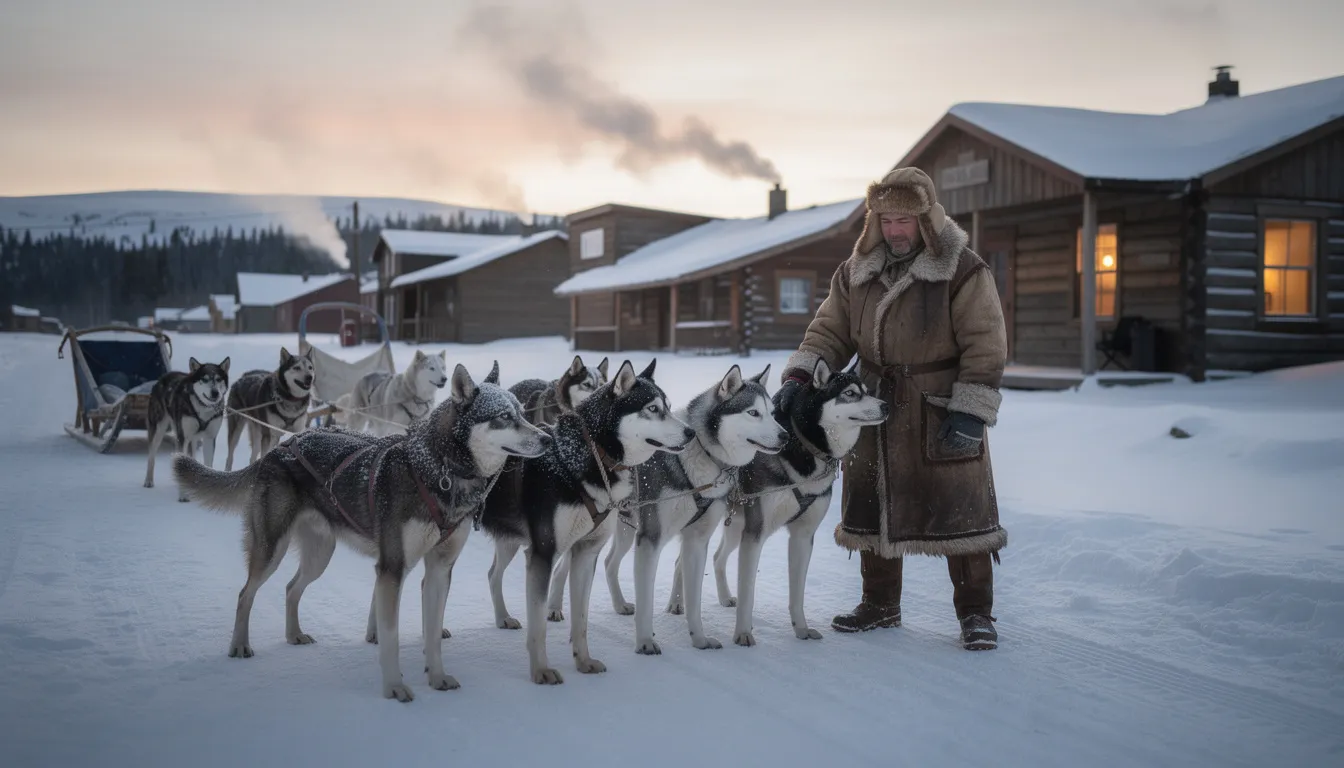
Snow stung their faces, ice cracked under their runners, and still the teams pressed on. In January 1925, a deadly diphtheria outbreak threatened Nome, Alaska, and only a desperate relay of dog teams could deliver the antitoxin. The cry went out that the sled dogs are ready on to nome, and a chain of mushers answered. What followed became one of the most gripping rescue efforts in Arctic history.
💡 Keys Takeaways
- The serum run covered over 674 miles in harsh conditions.
- More than 20 mushers participated in the 1925 run.
- The event inspired the annual Iditarod race established in 1973.
The Historic Serum Run to Nome
By midwinter 1925, Nome’s doctor warned that diphtheria could sweep through the isolated town before spring. Airplanes were grounded by bitter cold and unreliable engines of the era, and steamships could not break the pack ice. The only option was a relay along the winter trail system. The route covered 674 miles of frozen rivers, tundra, and sea ice, passed hand to hand by a chain of drivers and their teams.
Territorial officials rushed antitoxin by train to Nenana, where the first musher took the package. Over the next week, more than 20 mushers battled the elements while telegraph operators followed their progress checkpoint by checkpoint. Reports crackled through the lines that the sled dogs are ready on to nome, and the entire territory seemed to hold its breath as the teams ran through windchill near -50°F.
Background of the 1925 Serum Run
The outbreak began in January when Nome’s limited medical supplies ran low and children started to fall ill. Dr. Curtis Welch sounded the alarm, and a spare cache of antitoxin was identified in Anchorage. Much of it was expired, so officials assembled a fresh shipment in Seattle and rushed a portion to Nenana by rail. From there, the only possible link to Nome was the winter mail trail maintained by roadhouses, Native villages, and seasoned mushers.
The relay spanned the Yukon River country, crossed the Kaltag Portage to the coast, and then skirted the edge of Norton Sound. Each handoff had to be swift. Teams arrived at night, dogs heaving frost, drivers gulping hot coffee before snapping the cylinder of serum under a sled cover and tearing back into the dark. Those roadhouses were not just pit stops. They were lifelines where Athabaskan, Yup’ik, and Inupiaq residents fed, sheltered, and guided travelers along a landscape that shifts daily in winter.
Key Figures in the Journey
Two names are often highlighted, yet the relay was a tapestry of remarkable people and dogs. Norwegian-born Leonhard Seppala, already a legend, ran one of the longest and most dangerous legs with his veteran leader Togo. Seppala crossed Norton Sound in a gale, racing the tides across ice that could shatter without warning. Gunnar Kaasen drove the last leg into Nome with Balto in lead, pressing past Safety Roadhouse despite near-zero visibility to deliver the antitoxin before daybreak.
Lesser-known mushers carried enormous weight too. Edgar Kalland mushed the Yukon’s bitter cold. Charlie Evans’s team suffered frostbite near the coast and he still fought to move the serum forward. Henry Ivanoff made a crucial handoff near Shaktoolik. Many of these men were Alaska Native mushers who had learned the trail from elders and freight work, their knowledge earned over countless winter miles. Their teams did not appear for a single night of heroics. They were working dogs conditioned by years of hauling mail and supplies in tough country.
Dogs like Fritz from Seppala’s kennel, Fox of Billy McCarty’s team, and so many unnamed wheel and swing dogs did the quiet work of pulling. In every leg there was a lead dog reading the trail and trusting the musher’s voice. Handoffs happened fast, often with the briefest exchange: the sled dogs are ready on to nome, and then a shout to go as bells and howls faded in the snow.
Challenges Faced by Mushers and Dogs
The cold bled strength from the teams and glassed their whiskers with ice. Whiteouts erased horizon lines, turning sea ice, shore, and sky into a single sheet of gray. Runners iced up and had to be scraped with knives. Paw care meant drying feet at stops and massaging pads with fat before booting up for the next push. Sleep came in snatches measured by the time it took to drain a mug of stew.
Norton Sound was the most treacherous stretch. Sheets of ice drifted and refroze, with tide cracks opening like trapdoors. Seppala’s team threaded that maze by instinct, sensing the give in the ice before it shattered. Inland, blizzards stacked snow into drifts that could stop a sled dead. Mushers wrapped the serum against freezing, lashed it in the sled, and focused on the next roadhouse light. Every run was a calculation of dog energy, wind, and distance, always with the same goal in mind: the sled dogs are ready on to nome.
The Role of Sled Dogs in Alaskan History
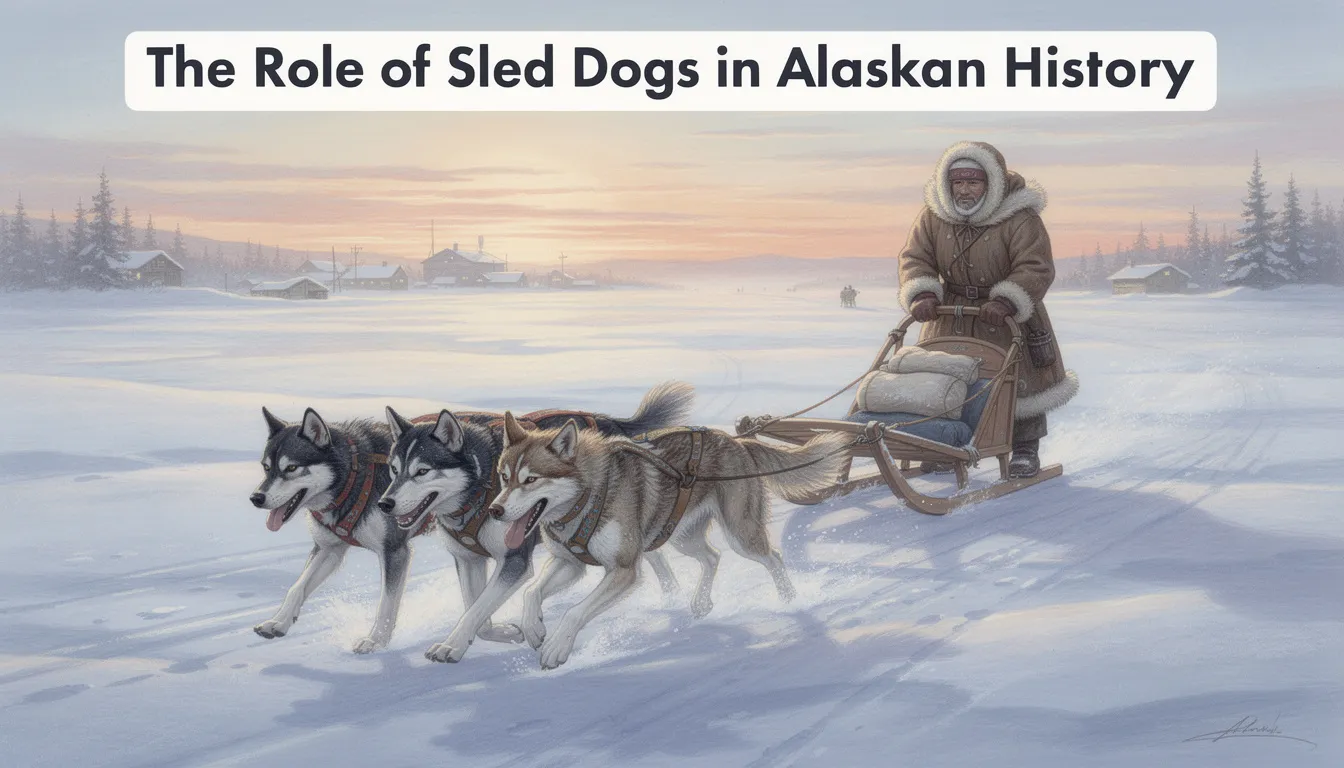
Long before the 1925 relay, sled dogs were the engine of winter travel in the North. Indigenous communities developed sled designs and handling techniques to move people, food, firewood, and mail across frozen rivers and coastal ice. The Gold Rush multiplied that traffic and turned dog teams into essential freight haulers. In a land with few roads, dogs were the winter highway.
Dog teams also ferried mail and medicine, linked mining camps to towns, and supported hunting and trapping. The work shaped a vocabulary and a team system. A confident lead dog took commands up front. Swing dogs helped guide turns. Wheel dogs pulled nearest the sled, steady and strong. These roles still anchor how mushers build teams today. The phrase the sled dogs are ready on to nome echoes that legacy of readiness, discipline, and trust between driver and dogs.
The Iditarod Connection
Decades after the serum run, Alaskans sought to preserve the trail culture that changing technology threatened to erase. Joe Redington Sr., veterans, and community allies helped launch the modern race in 1973. The Iditarod follows historic trade and mail corridors along the Iditarod Trail, honoring the people and dogs who knit the territory together in winter.
The race is not a reenactment of the relay, but its spirit is similar. Teams face storms, overflow, and the mental game of the long trail. Ceremonies and school programs share stories of Seppala, Kaasen, and the many Native mushers who made the 1925 run possible. On start day, you can feel a ripple of anticipation that sounds a lot like this line from old dispatches: the sled dogs are ready on to nome.
Impact and Legacy of the Sled Dog Teams
The 1925 rescue proved what coordinated teams and local knowledge could do under extreme pressure. Nome’s children received the serum and lives were saved. The episode stamped itself into American memory with a bronze statue of Balto in New York and tributes to Togo and Seppala across Alaska. It also brought overdue respect to the many Alaska Native mushers whose names rarely made headlines but whose miles carried the relay.
That legacy shows up in how we talk about grit, teamwork, and preparedness. It influenced veterinary practices for working dogs, encouraged trail safety standards, and inspired youth programs where kids learn to harness dogs, pack a sled, and read winter weather. When communities recreate sections of the trail or host heritage runs, they keep alive a set of skills that still matter in rural Alaska, from hauling wood to emergency response. At every commemoration, you can almost hear it again in the crowd’s murmur, the sled dogs are ready on to nome.