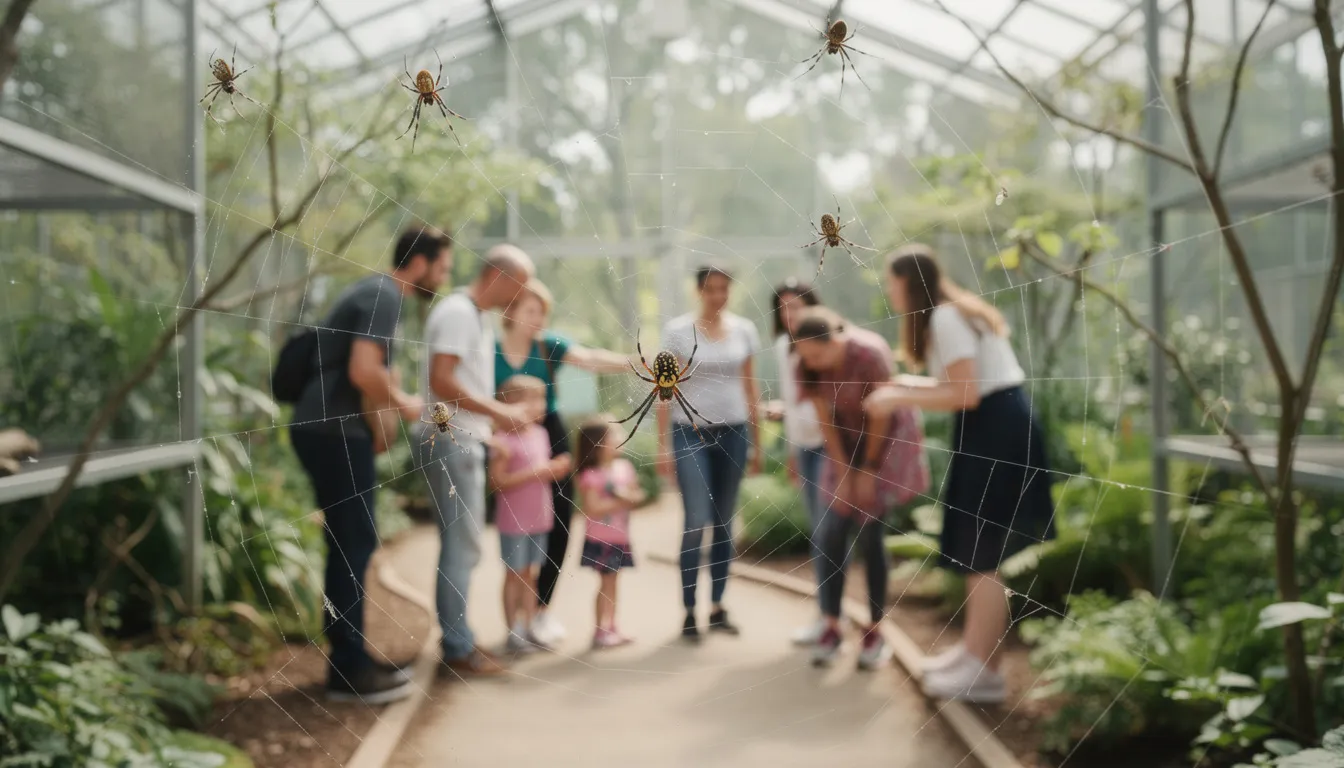
Want to step inside a living web of stories, silk, and science? The Spider Pavilion at the Natural History Museum turned curiosity into full‑on wonder in 2019, inviting guests to walk among free‑weaving orb makers and close‑up jumpers. Families, photographers, and science fans found a rare mix of calm, beauty, and chill thrills. If you missed it, here is everything that made the spider pavilion 2019 unforgettable and how to make the most of your next visit.
💡 Keys Takeaways
- The Spider Pavilion features over 15 species of live spiders.
- Approximately 100,000 visitors attended the pavilion in 2019.
- Interactive displays allow visitors to learn about spider behavior and habitats.
Inside the Spider Pavilion
Set within the Nature Gardens of the Natural History Museum of Los Angeles County, the Spider Pavilion feels like a secret greenhouse where silk is the architecture. The layout starts with an entry boardwalk that curves into a mesh‑enclosed habitat. That enclosure is humid and softly lit so the webs glow against greenery. The first turn usually reveals a constellation of classic wheel‑shaped webs hung by wild‑built masters, a perfect scene setter for the rest of the walk.
The core is a loop path that lets you pass inches from suspended webs. Keepers position plants, branches, and frames so spiders can anchor silk in safe sightlines. Along the route, you’ll see small placards with species names, web style, and quick fun facts. On the inner ring, terrariums hold ground dwellers and species that prefer a hideaway, like hairy tarantulas and shy wolf spiders, while the airspace belongs to graceful orb weavers catching sun and breeze.
Toward the middle, a staff station hosts pop‑up talks and feedings. Another nook offers magnifying lenses and a focus rail for steady macro photos. A shaded bench area lets families pause to watch a spider re‑tension a line or wrap a captured gnat. The overall result is part garden stroll, part lab, and fully immersive.
Scale matters here. The Spider Pavilion features over 15 species of live spiders, which turns the loop into a visual field guide. You are not staring into one big tank. You are inside a living neighborhood, with residents doing daily maintenance, hunting, or simply waiting. That close proximity is what kept visitors talking long after the spider pavilion 2019 season closed.
Overview of Spiders
Spiders are arachnids with two body segments, eight legs, and no antennae. Their silk comes from spinnerets, tiny spigots at the tip of the abdomen that can extrude different fibers for different jobs, from sticky capture threads to scaffold lines. Many species in the pavilion demonstrate this by reinforcing web spokes or laying draglines as safety ropes.
Spiders do not chew. They use venom to subdue prey, then digest externally before sipping liquefied meals. You may notice shed skins at the bottom of terrariums. That is a clue to growth since spiders must shed their exoskeleton to get bigger. Keepers often save these sheds to show kids how joints and fangs look up close, a favorite moment for budding biologists.
Highlights of the 2019 Exhibit
The centerpiece of the spider pavilion 2019 was a show‑stopping colony of golden silk web artists shimmering like threads of sunlight. Their webs spanned broad gaps between bamboo poles and garden shrubs, giving a perfect lesson in engineering. Across the path, compact jumping spiders drew crowds with their curious, almost puppy‑like head tilts, and keepers cheerfully explained how these agile hunters track prey with keen vision.
Diversity was the hook. Visitors met spiky spiny‑backed orb weavers that look like tiny badges, elegant long‑jawed orb weavers stretched on reed‑thin frames, and Chilean rose hair tarantulas resting like velvet pompoms. A cluster of crab spiders sat like stealthy petals on blossoms, showing how camouflage can beat silk. Each stop added a new strategy, a new shape, a new reason to look again.
Another standout was timing your walk to catch feeding moments. Keepers would place a fly into a web, and the whole section would lean in to watch silk turn into a high‑speed toolkit. The spider zipped along anchor lines, assessed the vibration pattern, and wrapped the prize with precise flicks. Kids copied the moves with pipe cleaners at the activity cart nearby, then compared their “wraps” with the real thing.
By the end of the season, tally boards and staff estimates suggested that approximately 100,000 visitors experienced the pavilion. Families told us that the balance of awe and calm made it easy to linger. Even arachnophobes found themselves inching closer to watch a delicate repair or to spot a dewdrop caught on silk.
Interactive Features
The spider pavilion 2019 made hands‑on learning feel natural. A set of touch‑free screens let guests tap between species profiles and habitat maps. Microscope stations displayed magnified spinnerets and claw tips. A vibration table demonstrated how different tensions and thread types change the “music” of a web, and kids tried to guess which signal meant food or danger.
Interactive displays allow visitors to learn about spider behavior and habitats without disturbing the animals. Short clips on loop showed time‑lapse web building, while flip panels challenged you to match web shapes with hunting styles. These features bridged curiosity and comprehension, so guests left with real vocabulary and real insight.
Special Events
Weekends brought extra energy. Keepers hosted Q&A circles where guests could ask anything, from “How long does silk last?” to “Do tarantulas jump?” Family days added craft corners where children designed a web pattern that matched a hunting story. Photography hours early in the day gave macro enthusiasts room to work alongside staff, who shared safe distances and focusing tips that keep spiders stress‑free.
What to Expect When Visiting
Plan for a gentle, garden‑paced experience. The path is wide enough for strollers and wheelchairs, and movement flows in one direction to reduce crowding. Depending on the time of day, you may see more web repairs in the morning and more resting in mid‑afternoon. On warm days, air inside the mesh enclosure feels like a mild greenhouse. Bring water and expect short pauses while people line up for a close look at a star web.
Tickets are often timed entry during busy seasons, which helps space out guests and protect the animals’ routines. Staff encourage patient viewing rather than pointing or tapping. That calm etiquette pays off since spiders resume normal behaviors quickly when not startled. You can easily spend 30 to 45 minutes on a single loop if you enjoy detail hunting.
If you are noise sensitive or traveling with toddlers, choose earlier hours. Mornings tend to be brighter, which makes webs sparkle and photographs easier. Afternoon sun can backlight silk beautifully too, so check your angle before snapping. Macro lenses and phone clip lenses both work well if you hold still and let your camera focus slowly.
- Sights: gleaming orb webs, compact jumpers, slow‑moving tarantulas.
- Sounds: quiet conversation, short keeper talks, gentle garden ambiance.
- Smells: fresh plants and soil from the surrounding Nature Gardens.
- Touch: non‑contact learning, with tools like magnifiers rather than handling animals.
Accessibility is front of mind. Benches appear every few turns, signage uses clear icons and large type, and staff are ready with plain‑language explanations. Visitors who were hesitant at first often said they felt safer and more curious by the halfway point, which is exactly what the spider pavilion 2019 set out to achieve.
Educational Aspects of the Exhibit
Learning here is built into the path. Labels highlight each species’ niche, from flower ambush experts to aerial net makers. Simple diagrams explain how silk types differ and why tension is everything. Keepers narrate feeding and maintenance in real time so kids can pair vocabulary with action. That alignment of words and live behavior locks in understanding faster than any slideshow.
Teachers and homeschoolers love the ready‑made prompts. You can chart web locations along the loop to discuss microhabitats, or time how long a spider takes to repair a broken line. The pavilion’s educators connect this to bigger ideas like predator‑prey cycles and urban biodiversity. Many guests leave with a new appreciation for spiders as essential neighbors, not just Halloween symbols.
Programs during the spider pavilion 2019 included short talks, discovery carts with shed skins, and scavenger cards that lead children to spot specific web patterns. Staff often compare silk strength to materials we know, then circle back to sustainability and biomimicry. That story arc helps older students see how field observations become inspiration for design and engineering.
Activities for Families
Try a two‑challenge loop. First, ask kids to find three different web shapes and describe how each might catch food. Second, have them notice spider colors and guess whether a species is hiding or advertising. Back at the discovery cart, compare your ideas with staff examples and see how close you came.
Other simple wins include sketching a web, counting anchor points, or following a single spider for five minutes to write a behavior log. Turn it into a game by awarding points for observation words like “tension,” “wrap,” or “dragline.” Younger visitors can play a shape hunt, matching icons on a card to webs they find along the path. Everyone leaves with a small triumph, which makes science feel personal.
Visitor Tips and Recommendations
Build your visit around lighting, patience, and comfort. Early or late daylight reveals silk best and softens shadows on terrariums. Move slowly, scan at different heights, and pause longer than you think. Many guests said their favorite moments came after a quiet minute, when a spider began a repair or tested a new line.
Photography works best with natural light and steady hands. Rest elbows on the railing, avoid breathing on webs, and let autofocus settle. If you bring kids, practice whisper rules before entering. A calm tone keeps spiders active and helps other guests focus. Family groups can split roles, with one adult reading signs while the other spots webs, then swap for the next stop.