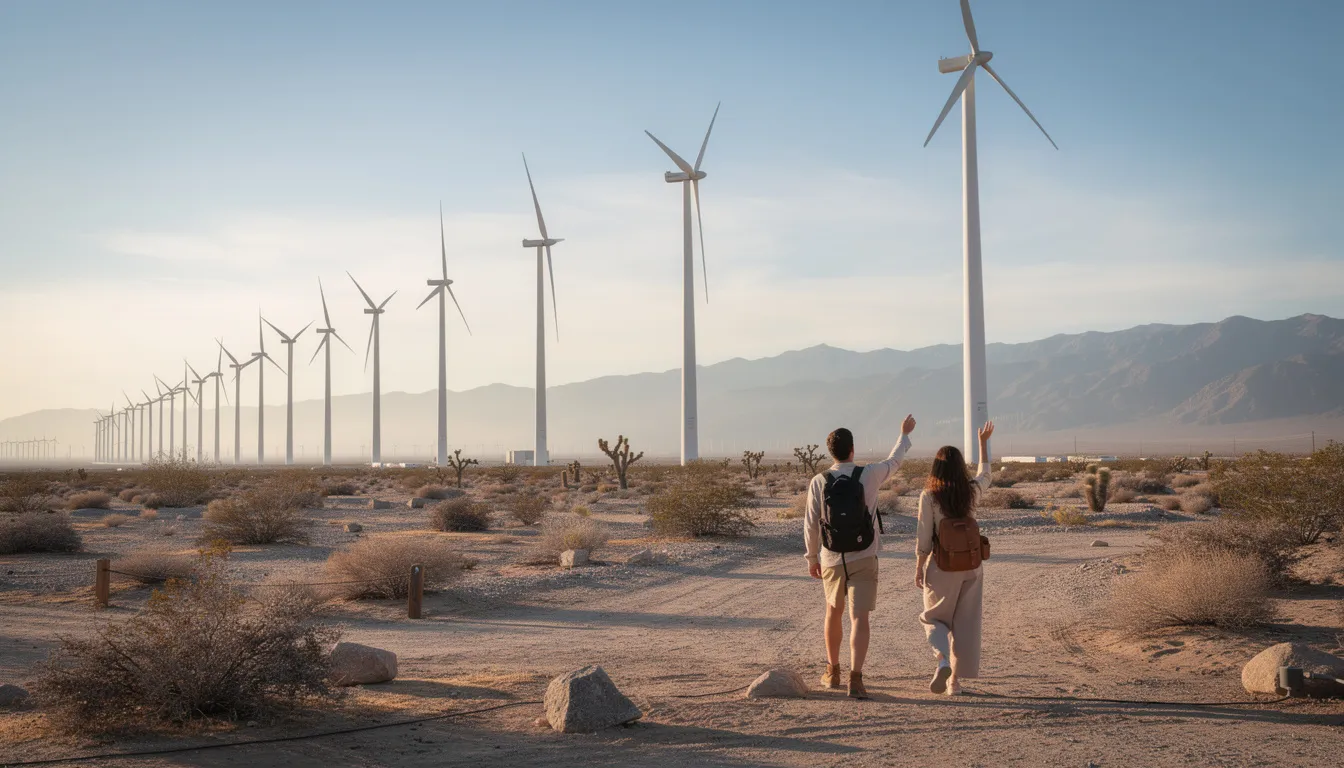
Few sights announce your arrival in the Coachella Valley like the sleek white towers spinning along Interstate 10. These are the famous palm springs windmills, a dramatic meeting of design, desert light, and clean power. They frame the city with motion and meaning, turning relentless mountain winds into electricity. If you have ever wondered what they are, how they work, and how to see them up close, this guide is for you.
💡 Keys Takeaways
- Over 650 windmills are still operating in the San Gorgonio Pass area.
- The wind farm contributes significantly to California’s renewable energy goals.
- Tours can provide insight into the technology behind wind energy.
Set between two dramatic mountain ranges, the palm springs windmills occupy one of the windiest corridors in Southern California. As you approach from Los Angeles or Joshua Tree, hundreds of turbines populate the San Gorgonio Pass in layered rows that stretch toward the horizon. They are not only part of the desert’s visual identity. They are also vital machines quietly feeding power into the grid.
The site forms one of California’s oldest and most photographed wind energy zones. On breezy afternoons you can watch rotors accelerate, hear a faint swoosh under the wind itself, and see how the landscape and the technology complement each other. For first-time visitors, it helps to understand what you are looking at, because there is a full living system at work here.
What Are Palm Springs Windmills?
Despite the nickname, these are modern wind turbines rather than old-world grain-grinding windmills. Each turbine typically includes a tall tower, a nacelle that houses the generator and gearbox, and three long blades designed to capture kinetic energy from moving air. Sensors rotate the nacelle to face the wind and pitch the blades to maximize efficiency or to slow during high gusts.
In the San Gorgonio Pass, machines range from older, smaller turbines to newer utility-scale models. The tallest modern towers can reach well over 250 feet, and a single rotation of their blades can sweep an area larger than a football field. While designs vary, they all perform the same job: translate steady mountain winds into electrical power you can use at home. Today, over 650 windmills remain active in this corridor, an eye-catching fraction of California’s broader wind fleet.
The Significance of San Gorgonio Pass
Geography is the secret sauce. The San Gorgonio Pass sits between the San Jacinto and San Bernardino Mountains, creating a natural wind tunnel. Temperature differences between the Inland Empire and the low desert drive consistent air flow through the gap, especially in the afternoons. The result is reliable wind resource and excellent capacity for producing electricity. This unique setting explains why the palm springs windmills became both a pioneer site and a long-term workhorse for California’s clean power ambitions.
History of Windmills in Palm Springs
The story of the palm springs windmills begins in the late 1970s and early 1980s, when policy incentives and a growing interest in alternative energy unlocked investment in California wind. At the time, San Gorgonio joined Altamont Pass and Tehachapi as one of the state’s first three major wind areas. Early turbines looked quite different from the refined giants you see today. Many were mounted on lattice towers, with smaller rotors and simpler control systems.
Those early years were experimental and sometimes noisy, but they planted the seeds for a global industry. As technology advanced, turbine designs became more aerodynamic, generators more efficient, and electronics far smarter. Utility companies signed contracts for wind power, and state standards pushed for cleaner portfolios. By the 2000s and 2010s, developers were upgrading older arrays with fewer but larger machines, a process called repowering. The switch improved output while reducing the total number of turbines on the skyline.
The palm springs windmills have endured because the wind keeps showing up. While some early machines have been retired, the area still hosts hundreds of operational turbines that continue to evolve with better materials and control software. What began as a frontier experiment is now a mature energy district that blends heritage with constant modernization.
Visiting the Windmills: Tours and Experiences
There are many ways to experience the wind farm. Casual observers can pull off at safe, legal viewpoints along public roads to snap photos of the turbines with the San Jacinto Mountains rising behind them. For a deeper look, guided tours operate seasonally and provide safe access to vantage points near the machines. Guides explain how turbines work, what to watch for in the blades and nacelles, and how power flows from spinning rotors to your wall outlet.
Expect a mix of storytelling and tech basics. You might hear how sensor systems yaw the nacelle into the wind, why blades twist along their length, and how operators monitor performance remotely. Tours often include historical stops that trace the site’s evolution from early prototypes to modern giants. If you enjoy photography, bring a wide-angle lens for sweeping rows, plus a longer focal length to compress lines of turbines against the mountains.
Timing shapes the experience. Winds are often calmer in the morning, which is great for clear photos and comfortable temps. Afternoons tend to be windier, which means more turbine motion and that satisfying desert energy vibe. The light near sunrise and late afternoon adds depth and color to the scene. Winter through spring can deliver vibrant skies and crisp visibility, while summer heat requires extra water and sun protection.
How to Plan Your Visit
To make the most of a trip to the palm springs windmills, a little prep helps. Consider these quick tips:
- Book a guided windmill tour if you want close-up views and expert explanations of the technology and history.
- Use designated pullouts or public roads for photos. Respect signage and private property throughout the wind farm.
- Check the forecast and wind apps. Calmer mornings suit families and photo shoots. Breezier afternoons put the turbines on full display.
- Pack sun gear, closed-toe shoes, and water. The desert can be bright and dry even in cooler months.
- Bring a small cloth to clean lenses. Fine dust can ride the wind and settle on camera glass and phone screens.
Curious to preview the experience before you go? This short video tour walks you through the setting and highlights what you will see on site, from sweeping aerial angles to ground-level views beside the towers.
Many visitors combine the windmills with other nearby stops. Downtown Palm Springs is only minutes away, with mid-century modern architecture and museums. Nature lovers often pair a tour with a hike in the Indian Canyons or a ride up the Palm Springs Aerial Tramway to the cool forests above. If you plan sunset photos at the turbines, build extra time for desert traffic and soft evening light that fades quickly once the sun dips.
Families and accessibility-minded travelers will find that guided tours typically offer comfortable transportation and minimal walking, along with plenty of time for questions. If you are traveling with kids, borrow the guide’s binoculars to spot details like blade tips flexing or small maintenance crews at work. The palm springs windmills are a perfect catalyst for science chats about energy, weather, and engineering in action.
The Impact of Wind Energy in California
Wind power is a pillar of California’s clean energy transition, and the palm springs windmills are part of that backbone. The state’s long-term goal is 100% clean electricity by 2045, with milestones that steadily increase the share of renewables on the grid. San Gorgonio’s reliable winds help firm that progress by delivering steady output during high-demand periods, especially on hot afternoons when air conditioners kick into gear.
The contribution here goes beyond a pretty skyline. The wind farm supplies electricity without burning fuel, which means no combustion emissions at the point of generation. It saves water compared with thermal power plants, an important advantage in a desert region where every drop matters. And it diversifies the energy mix so the grid is not overly dependent on one resource or weather pattern. In months when winds run high, these turbines offer a meaningful slice of the state’s renewable generation, supporting targets and helping utilities meet procurement requirements.