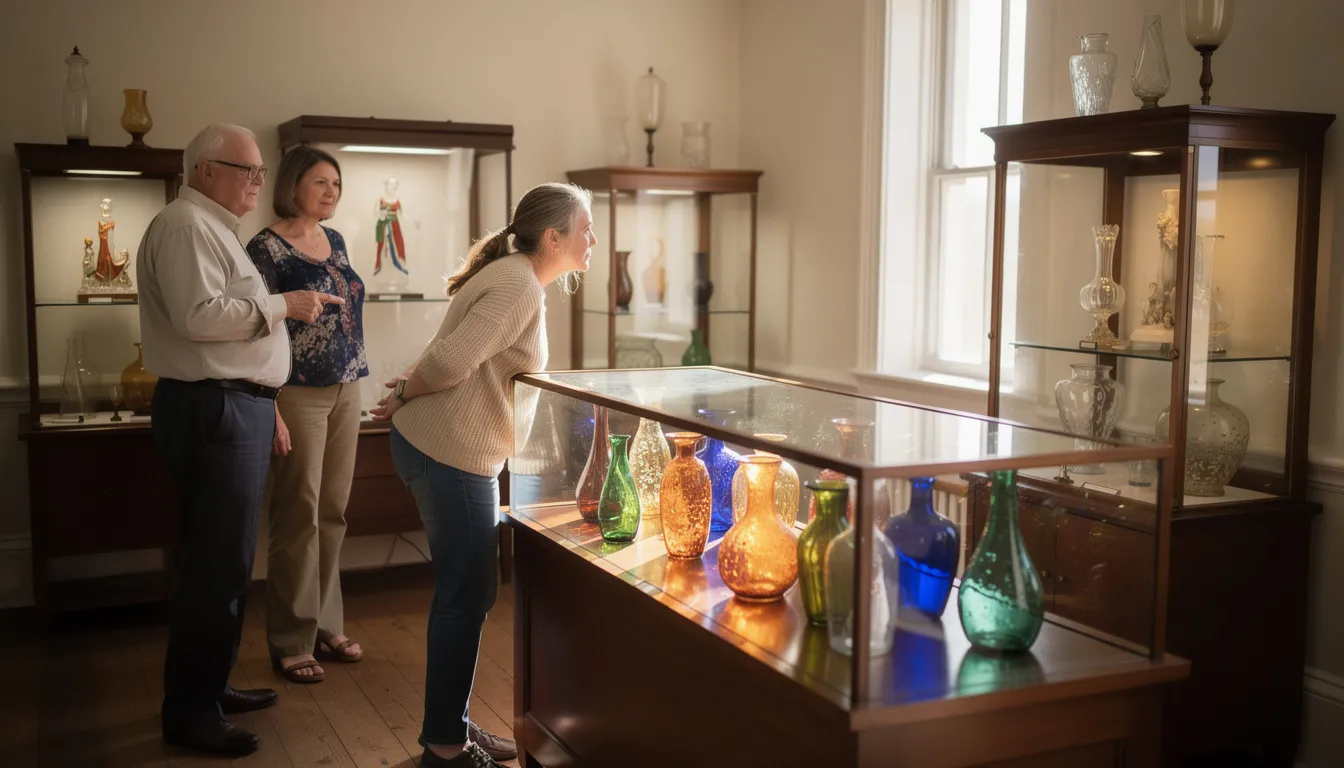
Shimmering color, delicate forms, and a century of craftsmanship come together in a charming Redlands setting. The Historical Glass Museum invites curious minds, families, and collectors to explore a world where fire becomes art. Located in the heart of Redlands, CA, the museum showcases more than 500 unique pieces that reveal how glass shaped everyday life and design. If you are seeking a memorable weekend stop, this intimate gem belongs on your list.
💡 Keys Takeaways
- The museum boasts over 500 unique glass artifacts
- Located in the heart of Redlands, CA
- Open Saturday and Sunday with free admission
About the Historical Glass Museum
Step inside and you step back through a living timeline of American design. This house-turned-gallery preserves objects that once sat on parlors, dinner tables, and shop counters, each piece telling a story about taste, technology, and the people who used them. The curators and volunteers created a space that celebrates the region’s heritage while honoring the makers who transformed sand and flame into beauty.
What gives the Historical Glass Museum its character is its intimacy. Rather than cavernous halls, you find cozy rooms that feel like someone’s home, making it easier to picture how a ruby vase caught the morning light or how a patterned bowl became a family heirloom. That closeness fuels the museum’s mission to preserve and share glass as both everyday utility and cultural memory.
Foundational techniques come alive across the displays. You see early pressed glass that once made stylish tableware affordable, then the delicate irregularities of hand finishing that remind you of the artisan’s touch. Labels and docents help decode how factories scaled production, why certain patterns became popular, and how trends moved from Europe to American homes.
The museum’s significance reaches beyond design. Glass reflects the economy, migration of craftspeople, and the role of domestic life in the Inland Empire. A pitcher engraved for a wedding tells you about community ritual; an apothecary bottle hints at early science; a carnival glass dish mirrors the rise of consumer culture. Visitors often share memories as they walk. One grandmother pointed to a Depression-era bowl and whispered that her mother used the same color for Sunday desserts, a quiet reminder that the objects here are not just beautiful, they are lived history.
If you are researching or simply love local sites, the glass museum redlands ca offers rare context. It bridges Redlands’ historic neighborhoods with broader stories of American manufacturing, and it shows how glassmaking evolved from household necessity to collectible art. That blend of scholarship and heart is what keeps travelers and locals returning.
Exhibits and Collections
Expect a spectrum of color and craft, from delicate tableware to sculptural art pieces. The galleries are arranged to help you see shifts in technique over time, moving from early production methods to experimental studio work. Many visitors pause longest at the cases that pair utilitarian objects with refined showpieces, because the comparison reveals how quickly fashion, technology, and taste changed across decades.
One room glows with the soft pastels and geometric textures of Depression glass, showcasing bowls and plates in peach, green, and icy blue. Another gathers Victorian pattern glass, where intricate molds produced starbursts, diamonds, and scallops that dance in the light. Nearby you may find hand-cut crystal with sharply defined facets, the weights and refractions proving why a well-cut rim feels so satisfying in hand.
The museum also explores how glass went modern. Labels trace the rise of the mid-century studio movement, when makers left factories to experiment in small workshops. Look for asymmetrical vases, bold color blocks, and unexpected textures that challenge the idea that glass must be clear and delicate. You might notice techniques like cased layers, pulled handles, and controlled bubbles that point to new creative freedoms.
Some of the most talked-about displays focus on how glass interacts with light. A shelf of iridescent carnival glass shimmers like oil on water. Under a small UV setup, pieces of Uranium glass ignite into an otherworldly green, a safe and fascinating reminder that chemistry shapes aesthetics. Paperweights, marbles, and miniature figurines show the precision of lampworking, where a flame and rods of color create surprising detail.
Stories from visitors add a human thread to the collection. A recent guest recalled washing a similar milk glass mixing bowl with her father on Saturday mornings, always careful not to chip the rim. A collector shared how the etched roses on a vase matched the pattern on a family wedding photo from 1910. These moments echo through the rooms and make the glass museum redlands ca feel like a memory studio as much as a gallery.
Keep an eye out for educational notes that explain the physics and craft of the medium. You will see how annealing prevents stress fractures, why colorants like cobalt and gold produce brilliant blues and warm reds, and how mold seams identify older pieces. The museum’s curatorial voice is inviting and clear, perfect for both first-time visitors and seasoned collectors who want a refresher.
What to Expect
First-time guests often appreciate a quick roadmap before they wander. Here is how a typical visit unfolds and how to get the most from your time among the cases and shelves.
- Begin with the earliest rooms to learn core techniques like pressed and cut glass, then follow the timeline into studio-era experiments.
- Seek out demonstration pieces that show how molds, engraving, and polishing change the look and feel of a rim or handle.
- Look for the small UV station to see Uranium glass glow, a favorite with kids and photographers.
- Chat with a docent if available; they often share the backstory of a rare pattern or a maker’s mark you might have missed.
- Allow time for the personal notes in labels; they connect designs to everyday rituals like holidays, gifts, and table settings.
By the end, the shift from utilitarian wares to expressive art pieces makes sense, and you will likely find a favorite era that matches your taste. Many guests say they arrive curious and leave inspired to look again at the glass already in their homes.
Visitor Information
This destination sits right in the heart of Redlands, close to charming streets, local eateries, and historic bungalows. It is easy to fold into a weekend itinerary, which is ideal because the museum welcomes guests on Saturday and Sunday. The size is manageable, so you can enjoy a focused cultural stop and still have time for a stroll and coffee nearby.
Admission is free admission, which makes the glass museum redlands ca especially appealing for families and small groups. Plan on 60 to 90 minutes for a leisurely loop through the rooms. Photography for personal use is generally fine if you avoid flash around sensitive objects, and a small notepad can be handy for jotting down patterns or techniques you want to remember.