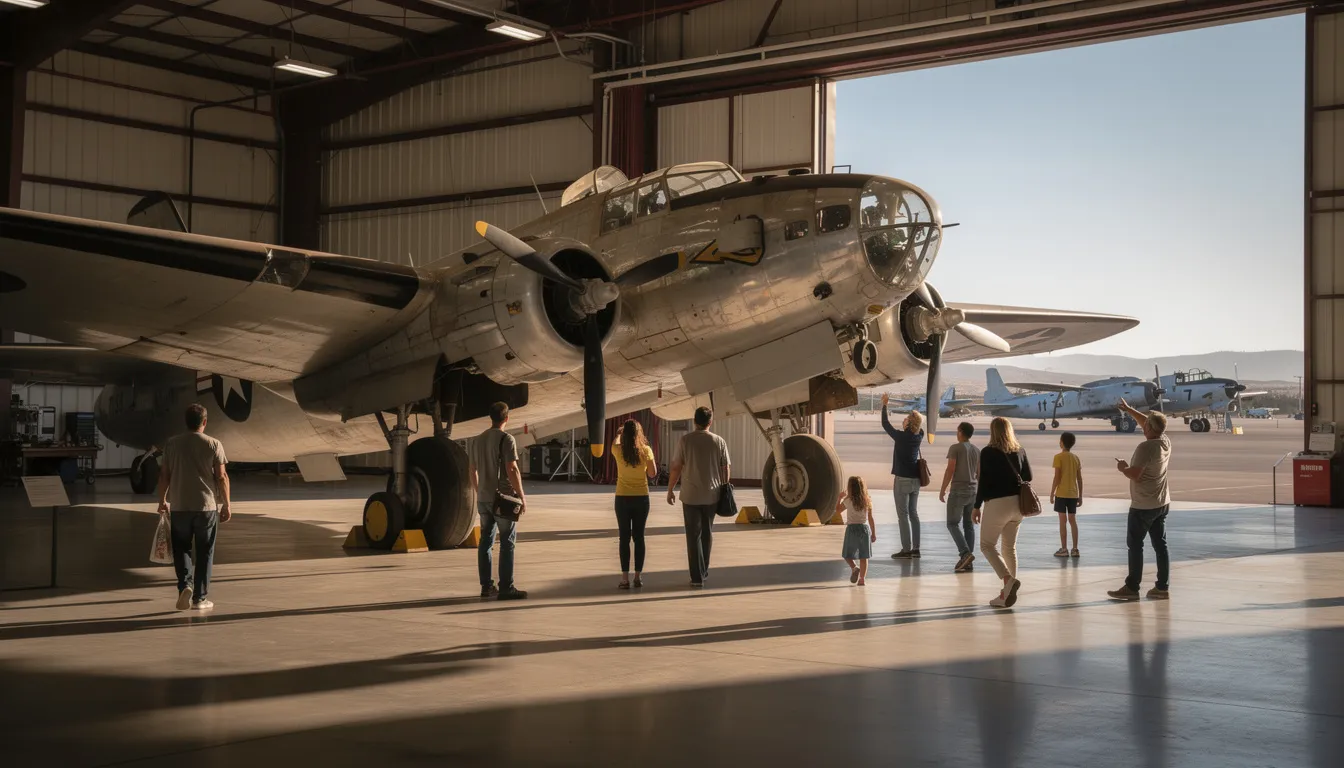
Looking for a day that blends epic aircraft, rich stories, and hands-on learning? March Field Air Museum in Riverside, CA delivers a sweeping journey through American air power, from fragile biplanes to sleek jets. With runways of history right next to an active air reserve base, it’s where past and present feel shoulder to shoulder. Plan a relaxed half day and bring your curiosity.
💡 Keys Takeaways
- The museum houses over 70 aircraft from different eras.
- March Field is a historic military airfield established in 1918.
- The museum features interactive exhibits and educational programs.
Set beside March Air Reserve Base in Riverside, the March Field Air Museum shares the evolution of flight in ways that feel personal and immediate. Its collection spans fragile trainers, rugged warbirds, and high-performance jets, arranged so you can trace technology shifts at a glance.
The campus blends indoor galleries with a vast outdoor flight line, making it easy to compare aircraft across decades. Families appreciate the hands-on displays and stories told by volunteer docents. Aviation buffs can lose track of time studying aircraft data plates, restoration notes, and the engineering leaps that turned slow canvas wings into supersonic metal.
The star number is hard to miss. You’ll find over 70 aircraft on-site, each with its own story and era. The museum also leans into learning, offering interactive exhibits and educational programs for all ages. If you’re searching for an experience that balances inspiration with substance, March Field Air Museum fits the bill.
Overview of the Museum
Think of the layout in two big pieces. Indoors, themed galleries walk you through early flight, the world wars, and the jet age with artifacts, archival photos, pilot gear, and personal letters. Outdoors, the flight line stretches with fighters, bombers, transports, and helicopters arranged by era and mission.
Plan to split your time. Start inside to get the storyline straight, then move outside to stand beside the aircraft you just read about. Kids gravitate to the interactive stations and scavenger-style activities, while enthusiasts often bring a notebook to jot down tail numbers and restoration details.
Parking is straightforward, wayfinding signs are clear, and the gift shop is handy for aviation patches, model kits, and STEM-friendly souvenirs. If you’re timing a visit for photos, early morning and late afternoon light brings out great metallic textures on the ramp.
Exhibits and Attractions
The museum’s exhibits are designed to make aviation history feel close enough to touch. Inside, object cases and multimedia storytelling bring pilot experiences into focus, from training mishaps to squadron camaraderie. You’ll see uniforms, survival gear, bombsights, and navigation tools that bridge the gap between cockpit theory and real-world missions.
Step outside and the tone shifts from quiet reflection to awe. The flight line presents aircraft by era and role, so you can spot the differences between early straight-wing jets and later swept-wing designs. Walk around a cargo plane and imagine loading pallets at night. Compare helicopter configurations and think through how rotor systems changed rescue operations. Some aircraft open for walk-through days on a rotating schedule, a favorite with families and photographers.
Interactive elements help younger visitors connect the dots. Simple aerodynamic demos, propellers you can examine up close, and docent-led Q&A sessions keep energy high. The museum’s educational programs make great field trips, and STEM tie-ins are built into many activities, perfect for teachers and homeschoolers planning a lesson around the visit.
Notable Aircraft
While the lineup can rotate as restorations progress, visitors often highlight these standouts:
- Classic jet fighters that showcase the leap from subsonic to supersonic flight, including icons like the F-86 Sabre and F-4 Phantom II.
- World War II cargo and transport aircraft such as the C-47 Skytrain, which tell the story of airlift and logistics.
- Vietnam-era helicopters like the UH-1 Huey, illustrating medevac and air assault tactics that reshaped warfare.
- Cold War reconnaissance platforms, the pinnacle of speed and altitude for their time, often the most asked-about aircraft on site.
- Training aircraft that prepared generations of pilots, from primary trainers to advanced jet trainers.
If you’re building a photo list, think about composition. Shoot nose-on for commanding portraits, step back for full profiles, and try low angles at sunset for dramatic silhouettes. Ask a docent for the day’s best walk-in or cockpit-view opportunities.
Guided Tours
Docent-led tours add context you won’t get from placards alone. Many guides are veterans or flightline professionals who can connect systems and stories, from engine quirks to mission planning. Their anecdotes give color to timelines and help younger visitors grasp why each aircraft mattered in its day.
Group tours are typically available with advance notice, and school programs can align with curriculum goals. If you’re an enthusiast, mention your interests at check-in. Staff can often point you toward lesser-known gems or current restoration projects worth a detour.
Visitor Information
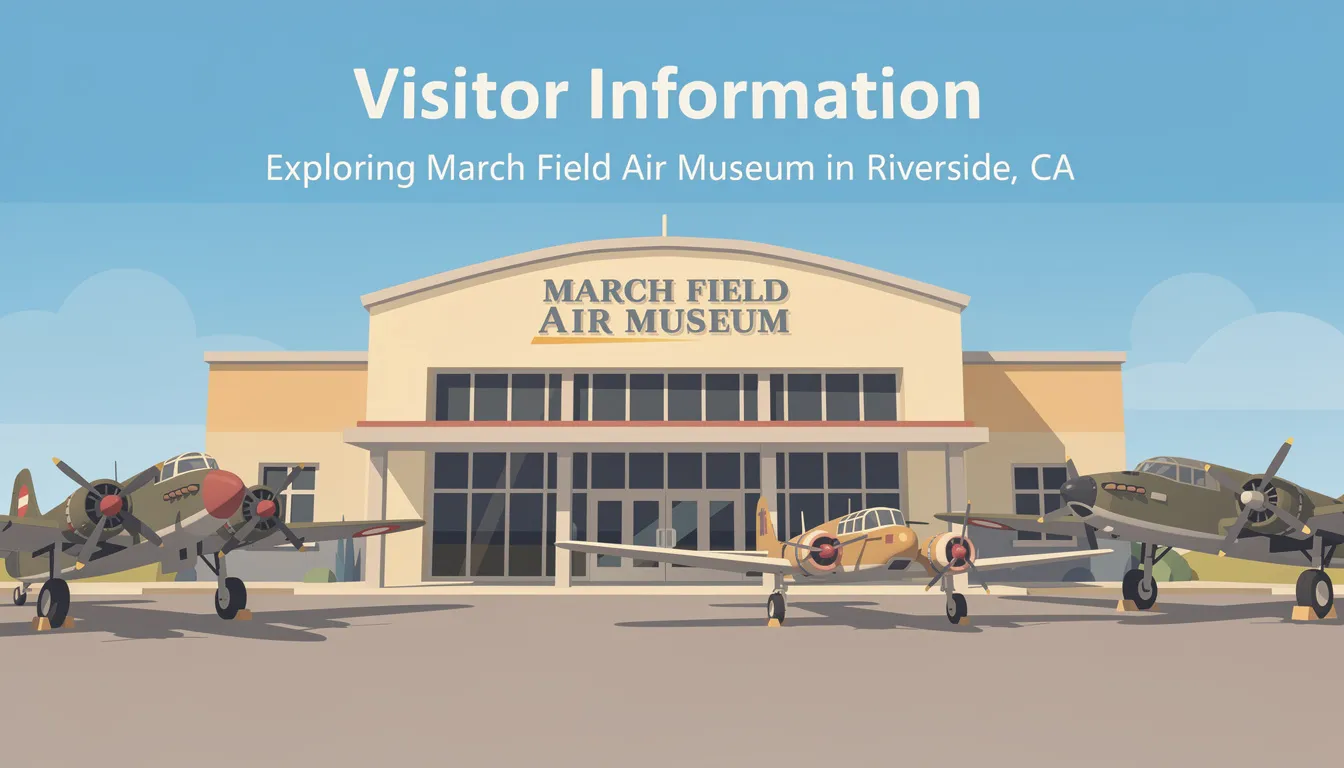
March Field Air Museum sits just off the I-215 corridor in Riverside, adjacent to March Air Reserve Base. It’s easy to reach from most Inland Empire cities and pairs well with other local attractions for a full day out. The outdoor yard is expansive, so bring sun protection in warmer months and a light jacket on breezy days.
Expect a relaxed pace. Many visitors spend two to three hours, though enthusiasts can fill half a day. On-site parking is convenient, and the lobby has restrooms, a gift shop, and space to regroup before heading to the ramp. Photography is encouraged for personal use, and tripods are often welcome outdoors if you stay clear of pathways.
Admission Details
Entry is ticketed, with reduced rates for children, students, and seniors. Active-duty military, veterans, and families may find additional discounts or special days throughout the year. Memberships are a smart value if you plan multiple visits or want to support preservation efforts, as they frequently include unlimited entry and guest perks.
Group rates are typically offered for schools, youth organizations, and clubs with advance reservations. If you’re coordinating a large visit, ask about scheduling a docent for your group. Special events, living history days, and night shoots are ticketed separately and can sell out.
Accessibility Options
The museum works to keep exhibits accessible. Indoor galleries have wide aisles and seating areas for breaks. Outdoors, most pathways are paved or hard-packed for easy navigation, though some surfaces can be uneven near large aircraft.
Accessible restrooms are located in the main building. If you need a wheelchair or additional assistance, call ahead so staff can prepare. Service animals are welcomed. For guests with sensory needs, consider a morning visit when crowds are lighter and the flight line is quieter.
Historical Significance
March Field is a cornerstone of American aviation history. Established in 1918, it grew from a training field into a major hub across multiple eras, helping prepare aviators for conflicts and supporting operational units as technology advanced. Its story mirrors the rise of air power as a decisive element in modern warfare.
During World War II, March Field played a crucial role in training and deployment, shaping the crews who flew long-range missions over distant theaters. In the jet age, it became synonymous with the strategic responsibilities of the Cold War, hosting units tied to deterrence, reconnaissance, and rapid mobility.
When the installation transitioned to March Air Reserve Base in the 1990s, the mission shifted but the legacy endured. The museum grew out of this legacy, started by dedicated volunteers and veterans who wanted to preserve aircraft, artifacts, and personal accounts before they were lost. Today it stands as a living archive, not just a static display, safeguarding local and national aviation stories.
March Field Air Museum bridges the human element with the hardware. You can trace how design changes reflect new tactics, how crews adapted to evolving threats, and how communities rallied around their airmen and women. The museum’s interactive exhibits and educational programs ensure those lessons continue to reach new audiences.
Tips for Your Visit
Craft a simple game plan before you arrive. Start with the indoor galleries to get your bearings, then head outside with a shortlist of aircraft you want to see up close. Build in a break after the first hour to recharge and compare notes. If you’re with kids, turn the visit into a mission: find a propeller, spot a tail hook, count the ejection seat warning triangles.
For aviation enthusiasts, aim for a theme. Spend one visit on reconnaissance and electronic warfare, then come back to focus on trainers and testbeds. Bring a small flashlight for peeking into wheel wells and intake trunks, and a notebook to track serial numbers. Staff appreciate careful curiosity and are happy to point out details that many visitors miss.