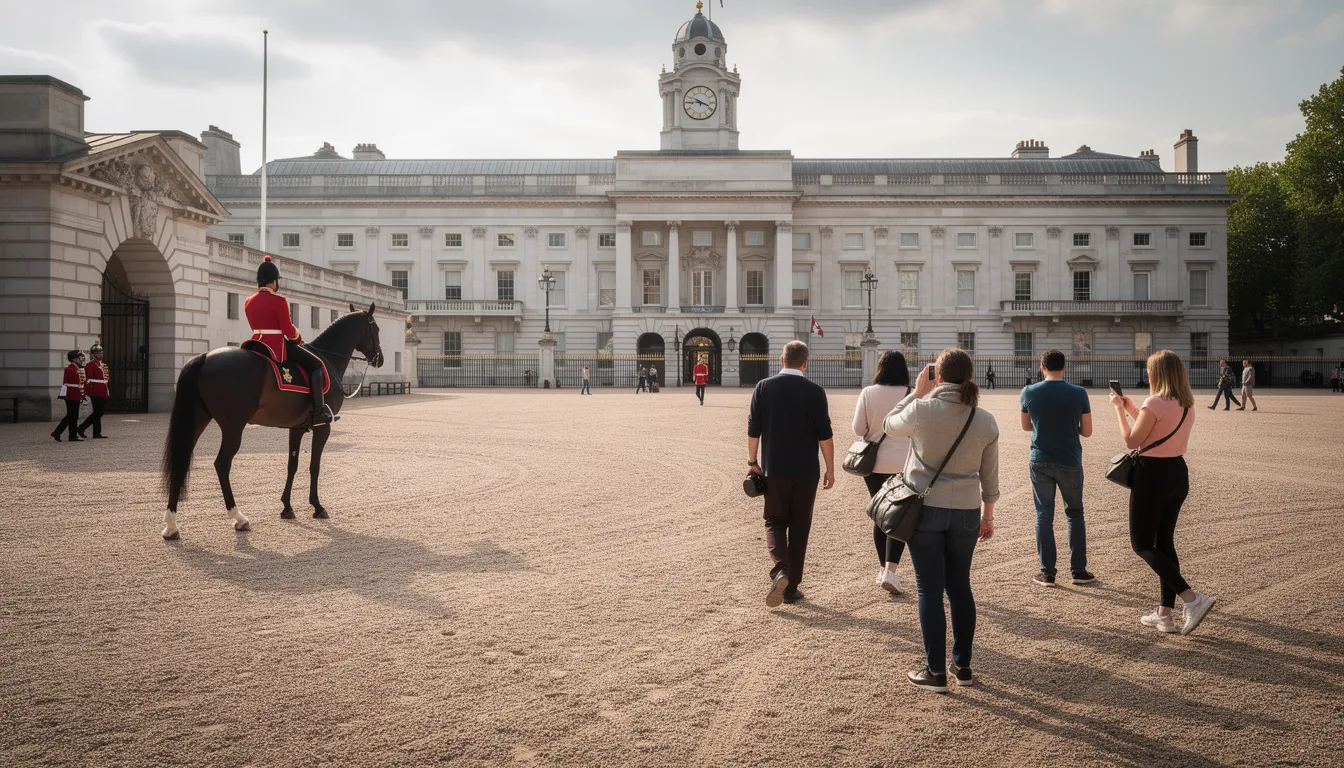
Grand parades, polished boots, and the steady rhythm of hoofbeats: few places capture ceremonial London quite like Horse Guards Parade. Set between Whitehall and St James’s Park, this vast gravel arena is where pageantry meets living history. Whether you come for the Changing of the Guard or to wander a storied open space, you’ll find plenty to see. Here’s how to make the most of your visit.
💡 Keys Takeaways
- Horse Guards Parade hosts over 1 million visitors annually.
- It is the site of the Trooping the Colour ceremony, celebrated since 1748.
- The parade ground measures around 400 meters long and 300 meters wide.
At the ceremonial heart of London, horse guards parade is the grand open space behind the Horse Guards building on Whitehall. The arena is a sea of pale gravel framed by handsome Georgian and Victorian facades, with the domes of the Old Admiralty and the greenery of St James’s Park in view. On many days you’ll find mounted sentries at the famous arch and crowds gathering for formal inspections.
Scale is part of the magic. The parade ground stretches about 400 meters in length and 300 meters in width, which explains why the space swallows noise even during big events. Despite its formal feel, it’s a public place you can cross freely when not in use for ceremonies. In a typical year, it welcomes over 1 million visitors.
First-time visitors often spot the building’s central clock tower and the statue of Field Marshal Wolseley, then look up to see the London Eye peeking over the treetops. You’re steps from Downing Street, Buckingham Palace, and Westminster, so horse guards parade is a perfect pivot point for a day of sightseeing.
What to Expect
Walk in from Whitehall through the Horse Guards arch and you enter a working military setting with timeless rituals. The Household Cavalry’s mounted troopers stand guard, their cuirasses gleaming, while the arena serves as the stage for rehearsals and major state events. On quiet afternoons the mood is almost contemplative; on ceremony days, it’s electric.
On my last early summer visit, a bugle call cut through the air as a squad strode into formation and the crowd fell silent. A few minutes later, the horses clip-clopped out under the arch, and cameras rose in unison. Even if you’ve seen photos, the real thing feels bigger, more precise, and more human.
Practical highlights you’ll notice as you explore:
- The Horse Guards building courtyard and sentry boxes at the Whitehall arch
- The vast open parade ground used for formal reviews and rehearsals
- Views toward St James’s Park and the Old Admiralty Building
- The Household Cavalry Museum entrance on Whitehall (tickets required for the museum)
Because horse guards parade is a working ceremonial space, parts of it may be cordoned off before large events. You can usually still take photos from the edges, and staff are friendly if you ask where to stand.
Historical Significance
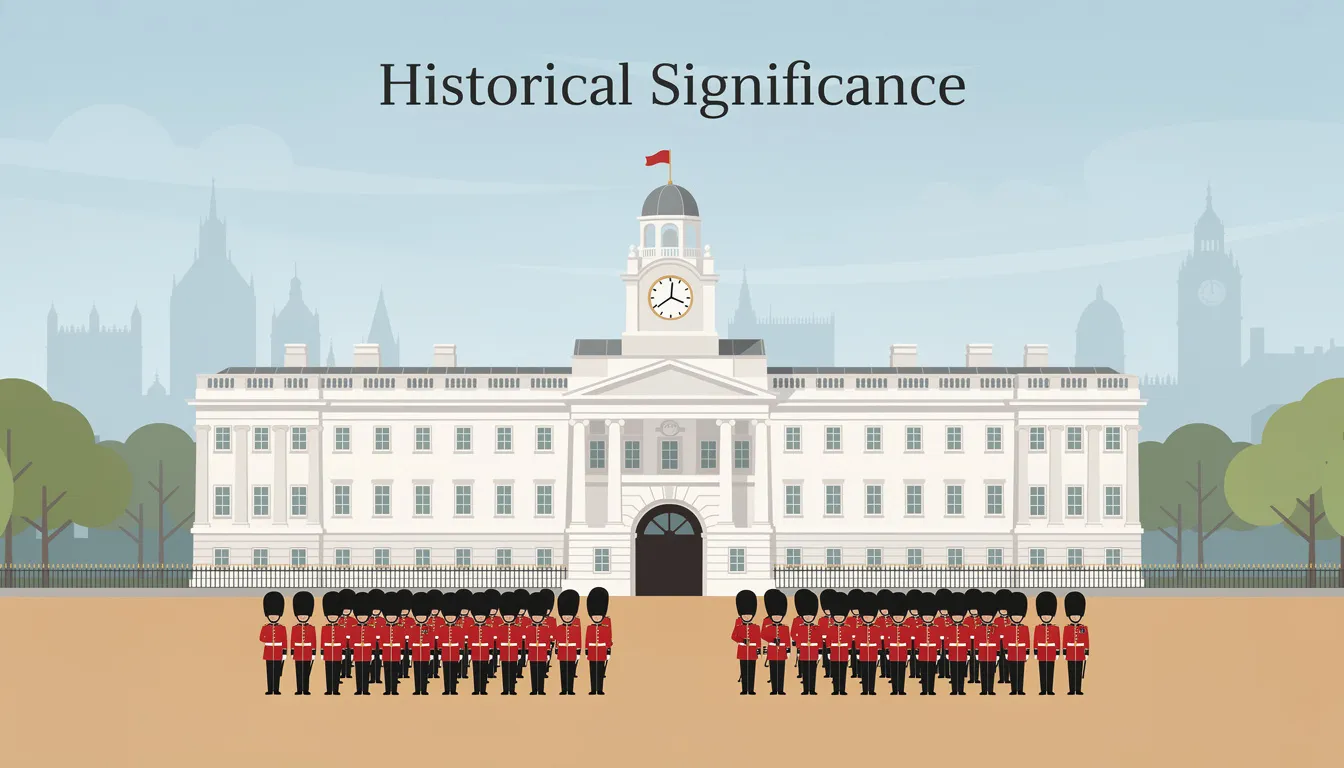
The story of horse guards parade begins with the long-vanished Whitehall Palace. This open ground sat alongside the royal tiltyard where Tudor monarchs watched jousts and pageants. After fires destroyed most of the palace, the area evolved into the parade ground for the sovereign’s guards, becoming central to Britain’s military pageantry.
The Horse Guards building, designed in the mid-18th century and completed by students of William Kent, became the administrative and ceremonial anchor of the site. For centuries, regiments of the Household Division have mustered here for inspections and reviews. The tradition of Trooping the Colour, marking the monarch’s official birthday, has roots back to 1748, making it one of the capital’s longest-running ceremonies.
History didn’t pause in modern times. During state occasions and wartime commemorations, the parade ground has hosted massed formations, dignitaries, and international attention. It even transformed into a sporting arena when it staged beach volleyball during 2012, surprising many with just how adaptable this historic space can be.
Key Historical Events
A few milestones that shaped the character of horse guards parade:
- The formalization of royal guards’ parades in the 17th and 18th centuries, anchoring the site’s ceremonial role
- Trooping the Colour evolving into a national fixture with the monarch taking the salute
- Major royal jubilees and state visits reviewed from the saluting base on the parade ground
- The London 2012 Olympic Games converting the arena for beach volleyball, showcasing the site to a global audience
Stand on the gravel and you’re treading where generations of soldiers, sovereigns, and spectators have gathered. The continuity is part of the allure: the rituals echo across centuries, even as London changes around them.
Events and Ceremonies
Most visitors time their stop to witness the Changing of the Guard. At horse guards parade, that ceremony involves the Household Cavalry and is known as the Changing of the King’s Life Guard. It’s the mounted counterpart to the more widely known foot guards’ change at Buckingham Palace, and it feels uniquely intimate thanks to the closeness of the arena and the Whitehall arch.
Here’s how it works on a typical day. The new guard rides from Hyde Park Barracks to Horse Guards, where they form up, salute, and exchange duties with the old guard. The spectacle is crisp and photogenic, with polished cuirasses, plumed helmets, and the kind of drill that slows time. The Life Guard usually changes at 11:00 Monday to Saturday and 10:00 on Sunday. Schedules can shift for events, public holidays, or severe weather, so it’s wise to confirm on the day.
Two other moments draw regular crowds. The mounted sentries outside the Whitehall arch change hourly during daylight, and the short afternoon inspection known as the Four O’Clock Parade or Dismounting Ceremony takes place at 16:00. Both are briefer than the main change but offer great close-up views of uniforms and horsemanship.
The headline event of the year is Trooping the Colour, the official birthday parade for the British monarch, celebrated since 1748. The Massed Bands, precision marching, and a royal salute create an unforgettable atmosphere. Stands are ticketed, and rehearsals on preceding weekends can be a good alternative if you don’t have seats. Another favourite is Beating Retreat, usually held on early summer evenings, when the Massed Bands of the Household Division perform on the parade ground under soft twilight.
Want to maximize your view? A few quick pointers from many visits:
- Arrive at least 20–30 minutes early for the Life Guard change; edges near the arch offer strong angles
- Mind the ropes and instructions from stewards so everyone can see safely
- For Trooping the Colour, check rehearsal dates; they’re less crowded while preserving most of the spectacle
- Bring a wide-angle lens for the sheer breadth of the arena and a short telephoto for details
Even outside set-piece events, horse guards parade often hosts rehearsals in the mornings, which can be more relaxed and easier for families with young children.
Visiting Tips
Planning a smooth visit starts with timing and comfort. The gravel reflects light, which is great for photos but can be bright in midsummer. Comfortable shoes help on the uneven surface. If you’re traveling with a stroller or wheelchair, the outer paved edges are the easiest paths, and staff can point you to the flattest routes.
The arena is open to the public when not in use, and it’s free to watch the Changing of the King’s Life Guard. Food and drink aren’t sold on the parade ground, but you’re steps from cafés on Whitehall and kiosks in St James’s Park. Public toilets are available in the park just beyond the trees.