Step into a living archive where fabric, form, and imagination meet. Exploring costume design at the FIDM Museum reveals how clothing becomes character, history becomes tactile, and creativity becomes research you can see up close. From screen-used looks to couture-level craftsmanship, every gallery turn invites you to read a story written in seams and stitches. If you’re curious about how costumes shape what we feel and remember, this is your place.
💡 Keys Takeaways
- The FIDM Museum houses over 12,000 costumes and accessories.
- Annual exhibitions attract thousands of visitors from around the world.
- Costume design plays a critical role in storytelling in film and theater.
Costume design is the visual language that helps audiences instantly grasp who a character is, where they are in time, and how they change. Before a single line is spoken, the cut of a jacket, the drape of a gown, or a scuffed boot tells us volumes. Designers balance character psychology, era accuracy, and directorial vision to build worlds that feel real enough to touch.
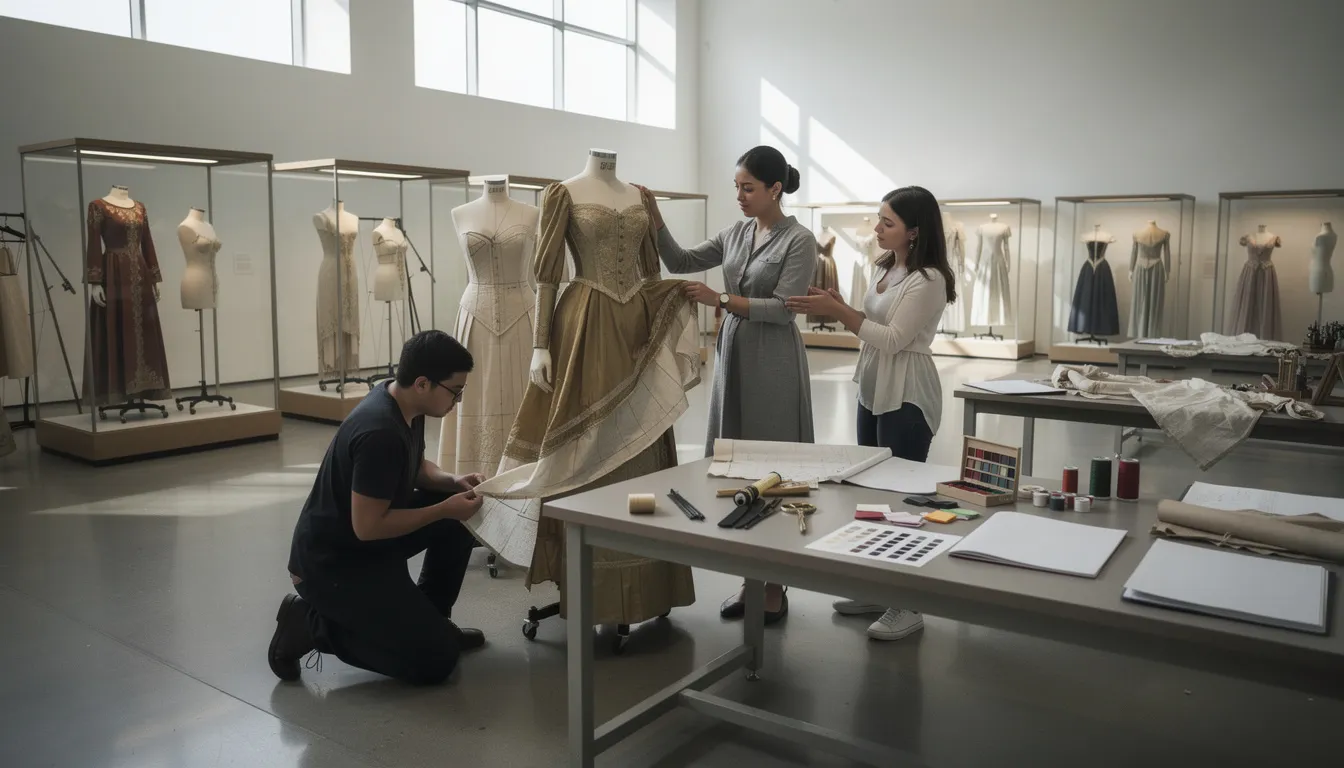
At its core, design choices start with script analysis and progress through research boards, sketches, swatches, and fittings. The goal is harmony between story and garment, so each piece supports performance rather than stealing it. The right fabric can quiet a scene, while a precise color choice can add urgency or warmth. A costume is not just clothing; it is a tool for performance.
Visitors exploring costume design at the FIDM Museum can see this process laid bare, from concept illustrations to finished ensembles. Mannequins are positioned to preserve the garment’s original silhouette, allowing you to observe line, proportion, and movement cues as the designer intended. Small details like hand-finished hems or custom buttons reveal the hours of work that rarely make it onto the screen.
Designers also solve practical challenges during production. They consider lighting on set, how fabrics react to sweat and water, and whether an actor must run, fight, or dance. Repeats are built for stunt doubles, continuity, and backup. This is why you will often see multiples of the same look on display, each crafted to maintain continuity and performance needs while matching the hero piece.
If you are mapping your visit to learn, set an intention: focus on one element such as texture, historical accuracy, or character arc across several costumes. That approach makes your experience of costume design at the FIDM Museum both engaging and productive.
Highlights of the FIDM Museum
The FIDM Museum is a hub for fashion scholarship and screen storytelling, with a collection that spans centuries and genres. The institution’s holdings include historical dress, contemporary fashion, and film and television costumes, assembled to help students, researchers, and fans study design at a professional level. The museum’s collection includes over 12,000 costumes and accessories, a scale that allows curators to build nuanced narratives across exhibitions.
The annual shows have become destination events for travelers, students, and cinephiles. These exhibitions consistently draw thousands of visitors from around the world, thanks to their impeccable curation and the thrill of seeing screen-worn pieces displayed with scholarly context. For anyone keen to understand costume design at the FIDM Museum, these highlights demonstrate how the collection is both a classroom and a gallery.
History of the FIDM Museum
Rooted in Los Angeles, the FIDM Museum developed alongside the city’s creative industries. Donations from designers, film productions, and private collectors helped build a teaching collection that supports the Fashion Institute of Design & Merchandising’s students as well as the public. Over time, curators formalized an acquisitions strategy to document both fashion history and screen-used design, ensuring the archive reflects evolving techniques and cultural shifts.
Behind the scenes, the staff prioritizes preservation. Climate control protects delicate textiles, and specialized mounts maintain the original structure of garments. Research files often accompany pieces, capturing sketches, swatches, and fitting notes that offer rare insight into the creative process.
Notable Exhibits
Regular showcases like Art of Costume Design in Film and Outstanding Art of Television Costume Design illuminate how costuming shapes visual storytelling. Past displays have celebrated designers whose work defines modern cinema and television. Visitors often encounter period gowns with meticulous boning and hand-embroidery, contemporary suits cut with razor precision, and fantasy armor built from innovative composites.
Exhibitions have highlighted celebrated artists whose film wardrobes inspired audiences worldwide, including Oscar-winning designers and guild-honored teams. You might spot hand-painted textiles, custom-loomed fabrics, or intricate beading that looks different from every angle. The curation frequently groups ensembles by theme, so you can compare color strategies, world-building tactics, and character arcs across different productions. For anyone studying costume design at the FIDM Museum, these juxtapositions make theory tangible.
Want a guided sense of scale and layout before you go? The walkthrough below offers a close look at display strategies and the variety of techniques featured in a recent film-focused show.
Upcoming Exhibitions
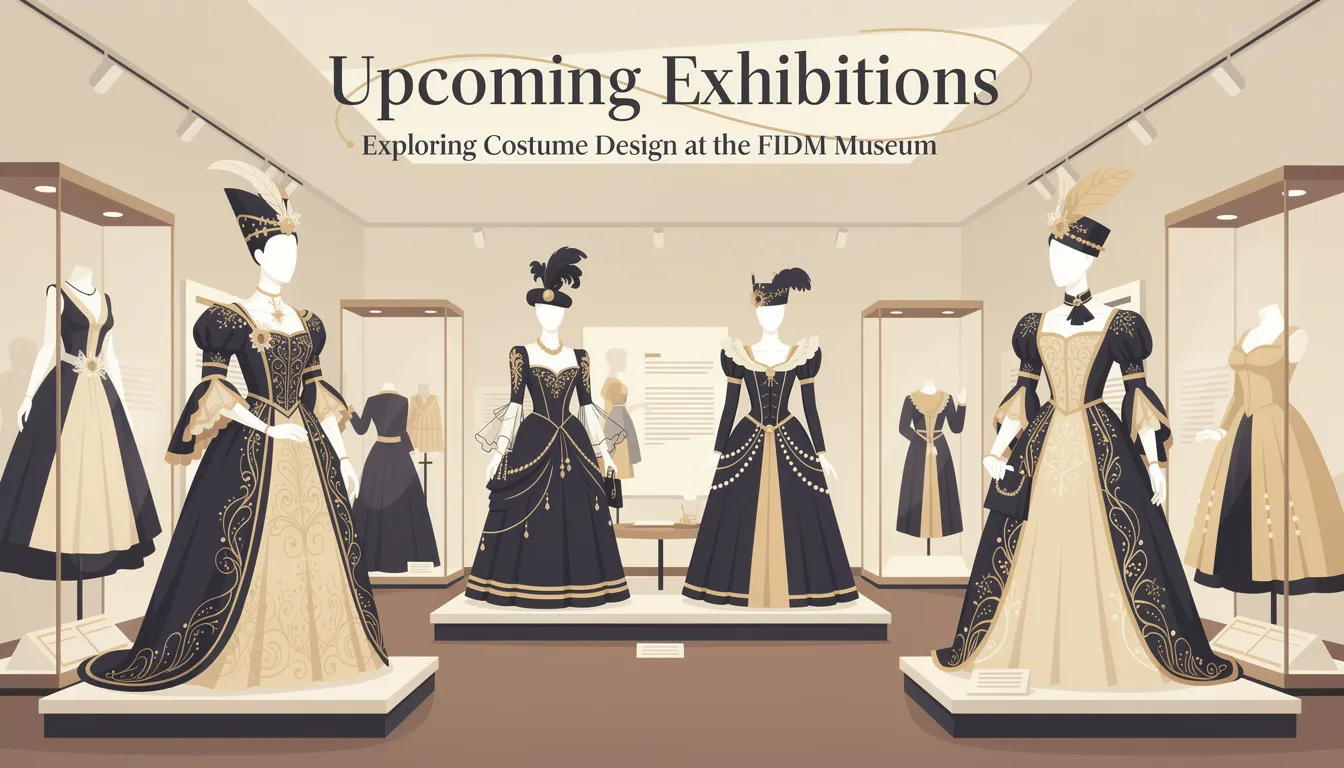
Each year brings new themes that reflect recent releases, historical anniversaries, and emerging technologies. Expect one major film-focused presentation and, often, a television-centered showcase that captures bold character work from limited series and long-form storytelling. If you track the awards calendar, you will notice how the timing helps spotlight craft during peak conversation periods.
Planning ahead is wise. Exhibition dates can vary, but announcements typically outline themes, featured productions, and educational programming such as talks or curator-led tours. When you are focused on making the most of costume design at the FIDM Museum, arrive with a shortlist of pieces you want to study, whether that is a specific era, a designer’s signature approach, or an effect like aging and distressing.
Bring a small notebook or use your phone’s voice notes to record observations. Try sketching a garment’s lines to understand why the silhouette reads heroic or vulnerable. If you are visiting with students or colleagues, agree on a shared research question so your group can compare insights afterward. This turns a one-hour visit into a meaningful study session.
Visitor Information
The museum sits in downtown Los Angeles and is designed to be approachable for both first-time visitors and researchers. Admission policies can change, and hours may shift around installation periods, so check official channels before heading out. Gallery etiquette is standard: no touching, be mindful of distance around trains and embellishment, and ask staff about photography guidelines since some lenders restrict images.
- Timing your visit: Weekday afternoons are often calmer, which makes note-taking and close study easier.
- What to bring: A pencil for sketching, a phone for low-light photos if permitted, and comfortable shoes for extended viewing.
- Accessibility: Elevators and ramps commonly serve public areas. Reach out in advance if you need specific accommodations.
If you are traveling in a group, contact the museum in advance to ask about capacity and any available learning materials. Many visitors combine their trip with a second pass through the galleries to compare initial impressions with focused analysis. This layered approach is especially helpful when evaluating costume design at the FIDM Museum across different genres.
Impact of Costume Design in Film
Costume design plays a critical role in storytelling in film and theater. When a character enters a scene, clothing cues help us decode motivations, status, and emotional state. Color can foreshadow a turn in the plot. Texture can reveal whether someone belongs in a world or feels out of place. The best designs fold seamlessly into cinematography, production design, and performance.
In film, costumes must read at multiple distances. Close-ups demand authentic finishes and fine construction, while wide shots require strong silhouette and shape. Designers collaborate with cinematographers to choose fabrics that behave well under specific lenses and lighting temperatures. They work with production designers to avoid color clashes and to ensure that patterns do not create moiré on camera.