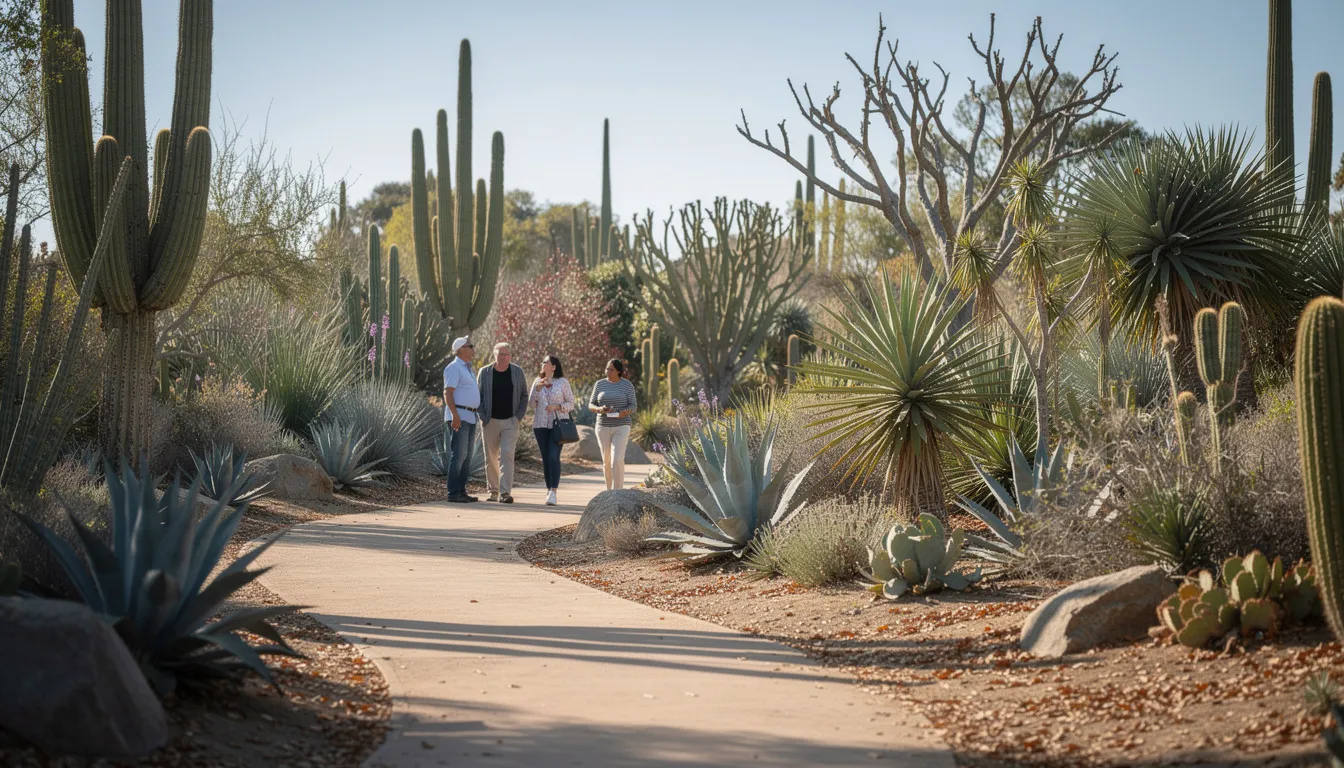
Picture a hillside alive with golden barrels, towering boojums, and winter-blooming aloes blazing coral and ember. That is the magnetic pull of the desert garden at the huntington, where arid-land plants become sculpture and color. It is a place to slow down, listen to hummingbirds, and notice how resilient life thrives with little water. This is not just a display; it is a living classroom shaped by artistry and science.
💡 Keys Takeaways
- The Desert Garden is home to over 5,000 varieties of plants.
- It spans 15 acres, making it one of the largest collections in the US.
- The garden plays a crucial role in conservation efforts for endangered species.
About the Desert Garden
Set within The Huntington in San Marino, California, this expansive landscape brings the world’s arid regions together in one place. You move through hillsides, mounded beds, and natural stone outcrops that showcase cacti, aloes, agaves, yuccas, euphorbias, and other succulents arranged for drama and discovery. The design highlights forms and textures first, then reveals flowers and wildlife as you linger.
Scale matters here. The collection spans 15 acres and includes more than 5,000 plant varieties, offering a rare chance to compare species from the Americas, Africa, and Madagascar side by side. Plantings are grouped into water-wise zones with open vistas, tight pathways, and hidden alcoves that create natural microclimates and great photo opportunities. The result feels immersive and surprisingly lush, even in high summer.
Overview of the Garden
Paths branch like arroyos, curving around mounds so each turn delivers a new silhouette: ribbed columnar cacti, bulbous caudiciforms, hedgehog clusters, and spiky rosettes. Signage is clear without distracting from the scenery, so you can learn plant names while staying present with the experience. Benches are placed in shaded pockets to help you pause, cool down, and notice details you might otherwise pass by.
Expect seasonal shifts. In winter and early spring, aloes ignite the slopes with tall red and orange flower spikes that pull hummingbirds into noisy aerial duels. Late spring brings yucca and agave bloom stalks that shoot skyward. Summer light amplifies geometry, turning the golden barrel hills into glowing mosaics.
Key Features
- Iconic golden barrel cactus displays that form sweeping, photogenic patterns on the hillside.
- Winter-blooming aloe collections with towering inflorescences alive with pollinators.
- Boojum trees and ocotillos that sketch surreal silhouettes against blue skies.
- Madagascar spiny plants, including pachypodiums and euphorbias, arranged in naturalistic groupings.
- Thoughtful rockwork and mounded soils that enhance drainage and spotlight plant architecture.
Beyond the spectacle, the desert garden at the huntington is designed as a living reference library. Horticulturists actively curate and replant to keep collections healthy and scientifically valuable, which means repeat visits often reveal new species and fresh combinations.
History of the Desert Garden
The Desert Garden took root in the early 1900s, when Henry E. Huntington and pioneering horticulturist William Hertrich began assembling plants that could thrive in Southern California’s Mediterranean climate. Instead of formal lawns, they envisioned a bold landscape shaped by form, light, and water conservation, decades before “drought-tolerant” became a household phrase.
Hertrich worked with growers and collectors to secure cacti and succulents from across the Americas and Africa. Some plants arrived as seed or cuttings, others as small specimens that have since matured into towering elders. Over time, waves of new accessions enriched the genetic diversity of the collection, and careful documentation turned impressive displays into a scientific resource.
The approach was practical and visionary at once. Mounded beds improved drainage, strategic boulders created heat sinks, and thoughtful spacing allowed spiky plants to be admired safely. When people talk about the desert garden at the huntington today, they are seeing a century of horticultural problem-solving expressed as art.
Flora and Fauna

Desert plants offer variety far beyond “spikes and spines.” You will encounter columnar giants, cushion-like clusters, swollen trunks that store water, and tight rosettes designed to shade their own roots. Many are xerophytes, which rely on strategies like reflective hairs, thick skins, or ribbed stems that expand and contract after rain. Succulents from different continents solve the same challenge in beautifully different ways.
Blooming is strategic. Aloes often flower in cool months, while cacti set buds for late spring and summer displays. Night-blooming cereus perfumes the air after sunset, and agaves invest years of stored energy in a single, sky-high flowering event before the mother plant dies, leaving behind offsets or seeds. Many species use CAM photosynthesis, opening stomata at night to conserve water while still capturing carbon for growth.
- Winter to early spring: Mass aloe color and hummingbird activity.
- Late spring: Cactus flowers in jewel tones; yuccas and some agaves spike.
- Summer: Strong shadows highlight structure; night-blooming species shine.
- Fall: Seed pods and fruit offer subtle interest and wildlife food.
Wildlife finds both nectar and shelter here. Native bees work cactus flowers, butterflies visit seasonal blooms, and lizards warm on sunlit rocks. Hummingbirds chase each other through the aloe slopes, and songbirds perch on ocotillo canes to survey the scene. The diversity of microhabitats within the desert garden at the huntington supports a surprising web of life that adapts to Southern California’s warm, dry cycles.
Visiting Information
The Desert Garden sits inside The Huntington Library, Art Museum, and Botanical Gardens in San Marino. Entry requires general admission, and weekends and holidays can be busy. If you can, plan a weekday visit and aim for cooler hours when light is soft and wildlife is most active. The main paths are mostly level, with some gentle slopes and stepping-stone detours through planted mounds for close-up views.
Photography is welcome; morning and late afternoon offer the best glow, while overcast days act like a giant softbox that saturates color. Bring water, a hat, and sunscreen. Shoes with good traction make it easier to navigate gravel paths and occasional uneven surfaces. Families will find plenty of fascination at kid height, but remind children to look with eyes, not hands, around spines and latex-sapping euphorbias.
Visitor Tips
- Arrive in the early morning for cooler temperatures, active wildlife, and fewer crowds.
- Follow the outer loop first to take in broad vistas, then dive into side paths for details.
- Use plant labels to create a photo series of favorites, then revisit those areas in another season.
- Pack extra water and light snacks; shade is available but limited within the desert zone.
- Practice garden etiquette: stay on paths, avoid touching spiny or latex-bearing plants, and give photographers space.
- If mobility is a concern, ask staff which routes minimize slopes while still hitting highlights.
To make the most of your time in the desert garden at the huntington, pair it with nearby gardens that contrast in texture and climate. Seeing succulents after a stroll through a leafy, temperate zone sharpens your eye for structure and the ingenuity of arid-adapted life.
Conservation Efforts
What looks like pure beauty is also a frontline for plant conservation. Staff propagate rare and threatened species, maintain detailed accession records, and collaborate with partners to safeguard genetic diversity beyond the plants’ native ranges. Growing collections in a public garden reduces pressure on wild populations by making ethically propagated material available to researchers, educators, and the nursery trade.
The team leans on techniques like ex situ conservation, targeted breeding, and seed banking for long-term security. They monitor plant health, adapt irrigation to shifting weather, and share horticultural knowledge that helps communities garden with less water. Behind the scenes, the desert garden at the huntington anchors education programs that show how resilient landscapes can be both spectacular and sustainable.
Sustainable Practices
- Efficient irrigation using drip lines and hydrozoned beds that match water to plant needs.
- Mineral-rich, fast-draining soils and gravel mulches that reduce evaporation and root stress.
- On-site propagation to supply displays and reduce demand for wild-collected plants.
- Integrated pest management that prioritizes beneficial insects and targeted, minimal interventions.
- Public workshops and signage that encourage drought-smart gardening at home.
Every visit supports this mission. When you spend time among these spines, trunks, and rosettes, you are also investing in a future where endangered arid-land species have a safety net, and water-wise design becomes second nature.