The Tournament of Roses is more than a New Year’s Day tradition, it is a living gallery of engineering, artistry, and flowers. Pasadena rose parade floats turn city streets into a moving botanical museum, each design telling a story through petals, seeds, and natural textures. This guide brings clarity to how these floral giants are imagined, built, and celebrated. Expect history, insider know-how, and practical tips to make your experience unforgettable.
💡 Keys Takeaways
- The Rose Parade has been held annually since 1890.
- Floats must meet specific guidelines set by the Tournament of Roses.
- Floatfest allows attendees to see floats up close before the parade.
Pasadena Rose Parade Floats at a Glance
Each January, Pasadena becomes the stage for a dazzling procession of story-driven sculptures wrapped in flowers. From sponsor showcases to nonprofit messages of hope, the floats are designed to charm crowds, impress judges, and honor a theme that changes every year. Along the 5.5-mile route, the colors, textures, and moving elements keep spectators engaged from start to finish.
What makes pasadena rose parade floats special is the rule that every visible inch must be covered with plant-based materials. That is why you see cranberries shimmering as jewels, crushed walnut shells reading like suede, and delicate petals creating painterly gradients. Designing for motion is part of the magic, with animations timed to reveal surprises in front of the grandstands and TV cameras.
Significance of the Rose Parade
The parade is a cultural ambassador for Southern California, signaling fresh beginnings on New Year’s morning. It attracts visitors from around the world, supports local hospitality and retail, and showcases community groups, schools, and charities alongside marching bands and equestrian units. For many locals, volunteering in float decoration is a cherished rite of passage that turns neighbors into teammates.
The History of Rose Parade Floats
The tradition began in 1890 when Pasadena’s Valley Hunt Club organized a festival to celebrate California’s mild winter. Early entries featured horse-drawn carriages draped in flowers. As automobiles arrived, builders experimented with larger frames, animated features, and new botanical techniques to tell more elaborate stories.
Over the decades, television exposure amplified the artistry and set higher expectations for innovation. The parade follows a “Never on Sunday” practice, so if New Year’s Day falls on a Sunday, the event moves to January 2. Through world wars, recessions, and technological shifts, the heart of the experience remains constant, blending community pride with floral craftsmanship.
Today, floats evolve with new materials and mechanics while honoring long-standing traditions, from ceremonial judging to the precise choreography along Colorado Boulevard. The Tournament of Roses continues to steward the event’s standards and spirit.
Design and Creation of Floats

Building a float starts months in advance with concept sketches, scale models, and structural engineering. Teams plan how riders will be seated, where animation will unfold, and how to keep weight balanced on the chassis. Many designs include kinetic features like blooming flowers, turning figures, or rising towers powered by hydraulics or electric motors, all concealed beneath floral artistry.
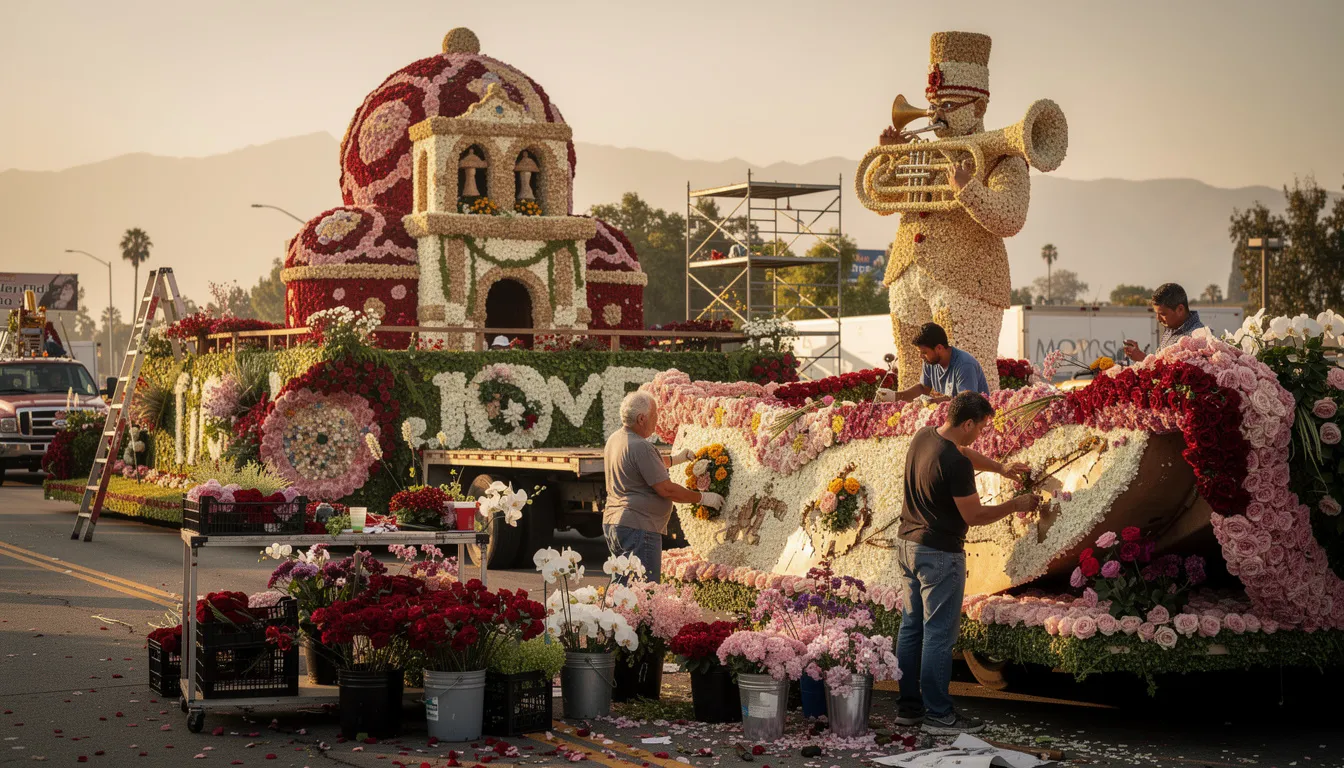
Floats must satisfy guidelines set by the Tournament of Roses, including safety, maneuverability, and the iconic requirement that all visible surfaces use natural, plant-based materials. Designers prioritize color harmony, material contrast, and long-lasting blooms that can hold their shape from pre-dawn staging through mid-morning sun. A final “deco week” sees armies of volunteers applying seeds, leaves, bark, and flowers in meticulous patterns.
Materials Used in Float Construction
Every square inch you can see is botanical. Builders combine durable “dry” elements with fresh flowers to achieve depth, texture, and color that read well both in person and on camera.
- Dry deco: ground coffee, cinnamon, paprika, rice, lentils, millet, split peas, crushed walnut shells, cornmeal, and dehydrated petals for saturated color. This is often called dry deco because it is applied without water.
- Structural botanicals: palm bark, banana leaves, eucalyptus pods, mosses, seaweed, and grasses create texture and shading.
- Floral stars: roses, orchids, carnations, chrysanthemums, and gerbera daisies, many inserted into water vials or floral foam to extend freshness.
- Natural shine and detail: citrus, cranberries, whole spices, seeds, and even coconut flakes to mimic snow, fur, or gemstones.
Designers often choose fresh flowers strategically for faces and focal points, reserving seed mosaics for large color fields or hard-to-reach areas. A helpful insider tip is to pre-map material “recipes” on printed elevations, so decorators know exactly which seed or petal belongs where, speeding up work during the final 48 hours.
Another pro move is staging bloom times. Crew leads keep certain flowers refrigerated until just before installation to avoid premature opening, then mist petals and use anti-transpirant sprays to reduce water loss. Back-up materials are always on hand to replace anything that bruises during transport.
Floatfest Event Overview
Floatfest, also known as A Showcase of Floats, invites the public to view the entries up close after the parade. It typically takes place the afternoon of January 1 and again on January 2, with timed-entry tickets helping to regulate crowd flow. Expect a walking route that winds through several blocks, docent commentary from float crews, and countless photo opportunities with the award placards on display.
Activities often include Q&A with volunteers, signage detailing materials used, and family-friendly areas for photos. Sturdy shoes are a must because the viewing path is long and can be crowded. Many guests prefer morning entry on the second day when lighting is soft and petals are still fresh. Accessibility lanes and stroller policies are in place to keep the experience smooth for everyone, and service animals are welcome.
Behind the Scenes at Floatfest
Once the parade ends, logistics move fast. Floats are routed to the showcase area, animation is secured for pedestrian safety, and crews perform quick touch-ups to keep designs camera-ready. Veteran decorators recommend scanning from a few feet back to catch the full effect, then stepping in close to appreciate the seed mosaics and bark work that read like textiles.
If you want a preview before you go, this short video captures the atmosphere and scale of Floatfest in Pasadena, highlighting how pasadena rose parade floats look when you are just a few feet away.
Plan for lines at peak times and bring water. The showcase route is largely outdoors and can get warm even in January. Photography is encouraged, but tripods and ladders can be restricted to keep the flow moving, so compact gear is best.
How to Experience the Rose Parade Floats
You can experience pasadena rose parade floats in two powerful ways. First is parade day, when sound, motion, and crowd energy turn the floral sculptures into live theater. Second is Floatfest, where you trade motion for proximity and study the craftsmanship at nose-to-petal range. Many visitors build their plans around both for a complete perspective.
On parade morning, the step-off time is typically 8 a.m. Arrive early whether you are curbside or in the grandstands. Dress in layers and bring a cushion or small blanket for comfort, since pre-dawn temperatures can be cool and seats are hard. If you are sensitive to scents, a light mask or scarf can help, especially when a float thick with lilies or gardenias rolls by.