The Reagan Library’s latest blockbuster exhibition pulls you beneath the Nile’s surface and into a world few have seen but everyone will talk about. Egypt’s fabled port cities, once busy with merchants, priests, and sailors, now rise from the silt through colossal statues, shimmering jewelry, and ritual objects. If you have ever wondered how entire civilizations vanish and then return, this is your moment. The galleries frame the lost cities of Egypt with cinematic clarity and hard-won archaeological evidence.
💡Key Takeways
- The exhibition features artifacts over 3,000 years old.
- It highlights the discovery of ancient cities like Thonis-Heracleion.
- The exhibition is part of a larger effort to promote cultural heritage.
Egypt’s Lost Cities: An Overview
Across the Nile Delta, entire harbor towns once anchored Egypt’s trade, religion, and diplomacy. Floods, earthquakes, and shifting river mouths dragged some of these centers into the water, sealing streets, temples, and cargoes in layers of mud. When archaeologists returned with sonar scanners and dive teams, they found time capsules that rewrote textbooks. The Reagan Library exhibition distills those decades of fieldwork into a clear narrative that both casual visitors and seasoned history fans can follow.
At the heart of the story is Thonis-Heracleion, a city that served as Egypt’s maritime gateway before Alexandria eclipsed it. Mentioned by ancient writers, it vanished for more than a millennium. Rediscovery confirmed what texts only hinted at: thriving ports where Greek and Egyptian cultures mixed, temples that guarded sacred channels, and customs officers who stamped goods flowing between worlds. The exhibition frames these finds with maps, models, and context panels that chart a city’s rise, fall, and second life.
The curators keep the focus on how we know what we know. Divers documented artifacts in situ, raised them carefully, and conserved them in labs so their surfaces and inscriptions could speak again. Techniques like side-scan sonar and sediment cores explained how the Nile reorganized its delta. In gallery texts, you will see how tiny clues like barnacle lines on anchors or residues inside jars reveal trade patterns, diet, and ritual.
What are the Lost Cities of Egypt?
The phrase lost cities of Egypt refers to urban centers that either sank, were abandoned, or were buried by shifting waters and silt. Many sit in the western Nile Delta and offshore in Aboukir Bay. The most famous is Thonis-Heracleion, a double-name reflecting its Egyptian and Greek identities. Nearby Canopus also yielded sanctuaries and villas that, together with these port complexes, map a coastline that was constantly negotiating with the sea.
What makes these places unique is their preservation. Collapses that would have destroyed a town on land instead sealed it underwater. Wood, rope, woven baskets, and boat planks survived where desert winds would have erased them. Thanks to Underwater archaeology, researchers can reconstruct everything from shipbuilding to festival routes, offering a fuller picture of life between the Late Period and the early centuries of the Hellenistic era.
Highlights of the Exhibition
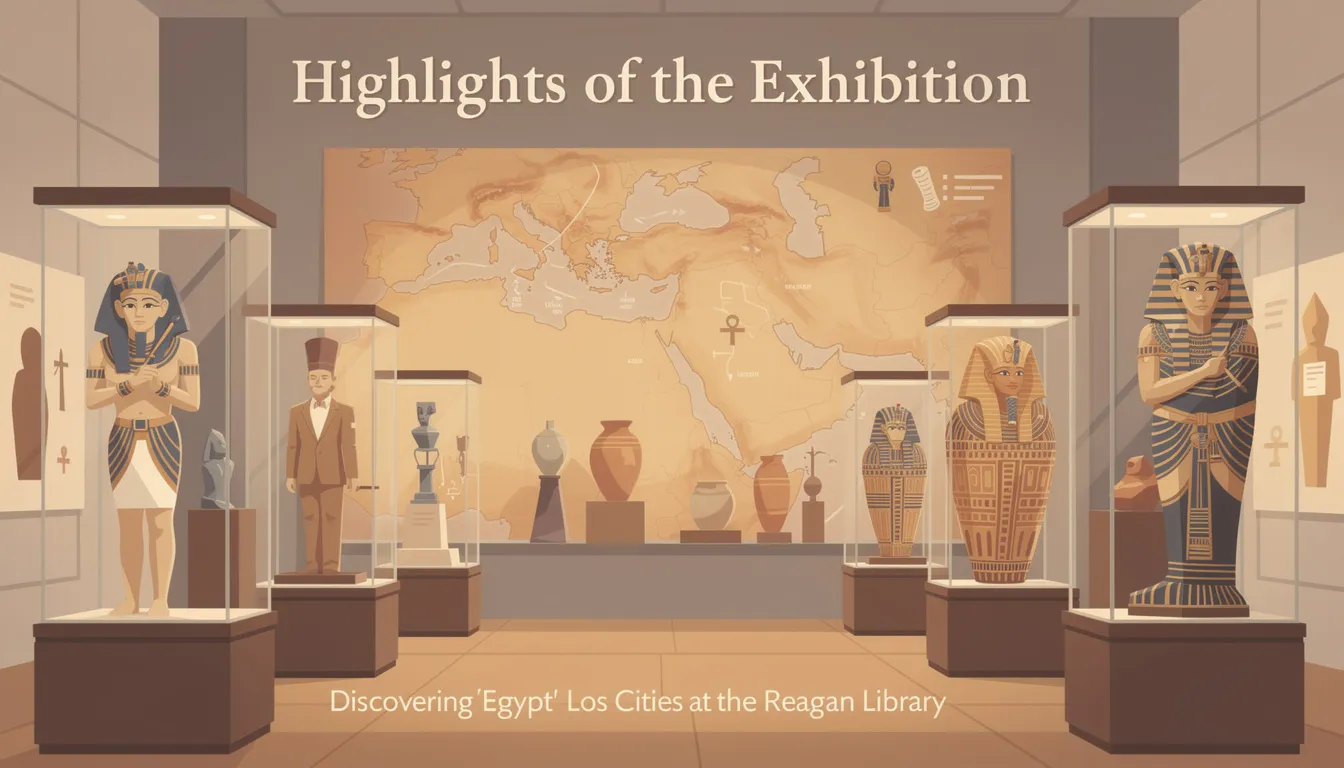
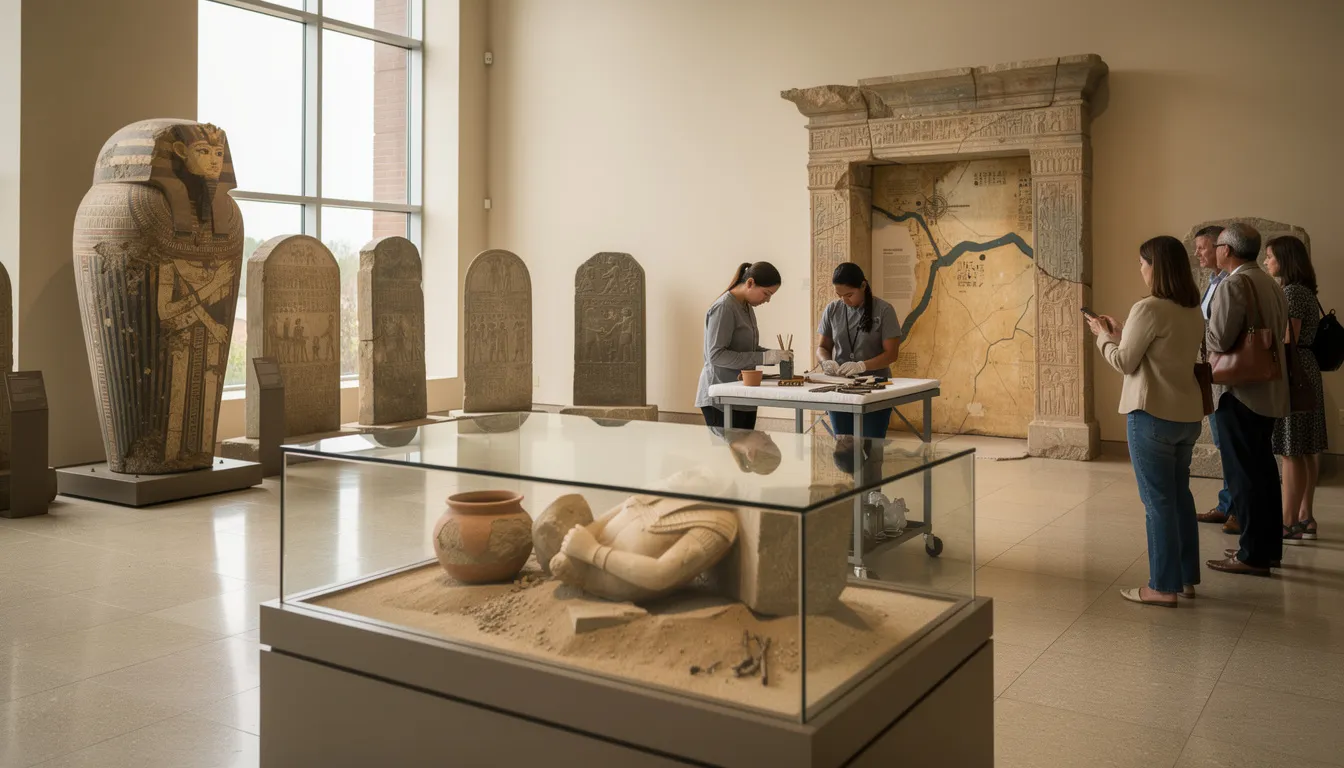
The exhibition opens with a sense of scale. Dim lighting and ambient water sounds lead you toward towering sculptures and monumental fragments that once lined harbor quays and temple courts. You meet deities and rulers in stone first, then enter more intimate cases of jewelry, amulets, votive offerings, and domestic objects. This pacing mirrors a visitor’s path through a port city, from the public to the personal.
One of the immediate thrills is proximity. Many objects are finely preserved and legibly inscribed even after centuries underwater. In several cases, you can trace carved hieroglyphs with your eyes and imagine the hands that cut them. Labels point out where marine concretion still clings to surfaces, a quiet reminder that these pieces were asleep under silt for ages. Several standouts date back over 3,000 years, bridging pharaonic, Persian, and early Greek periods in a single room.
The design team understood that context is everything. Large wall maps connect findspots to ancient river channels. Touchscreens let you rotate 3D scans of artifacts, making details like chisel marks or gold granulation techniques visible from all angles. Short curator commentaries, drawn from field notes and conservation reports, share how decisions were made and why specific objects earned their place in the narrative.
You will also find attention to ritual. Temple precincts in these cities regulated both the sacred and the commercial, and the show brings that blend forward with inscriptions that record tax exemptions, dedications, and decrees. The balance between state power and local cults appears in statues of Osiris, Isis, and Serapis displayed near imported Greek ceramics, reminding visitors that ports collapse borders long before modern globalization.
Key Artifacts on Display
- Colossal royal statues in dark stone that once flanked canal entrances, their crowns and nemes still commanding after centuries of submersion.
- Temple stelae engraved with decrees that illuminate harbor tolls, priestly privileges, and the legal fabric of a working port.
- Ritual vessels and naoi from sanctuaries dedicated to Osiris and Isis, showcasing ritual processions and flood festivals tied to the Nile’s rhythm.
- Jewelry in gold and semiprecious stones, with micro granulation and filigree work that reveal the hand of master artisans serving both Egyptian and Greek patrons.
- Maritime finds such as anchors, rope fragments, and boat timbers that trace ship design and docking methods in tidal channels.
Throughout, the galleries circle back to Thonis-Heracleion as a touchstone. Its rediscovery anchors the show’s narrative of disappearance and return. If you are coming specifically for the lost cities of Egypt, this is where the scholarship and the spectacle meet. Artifacts from daily life sit beside courtly and religious pieces, letting you reconstruct a day on the quayside from sunrise offerings to late-night cargo checks.
Importance of the Archaeological Discoveries
The finds from Egypt’s sunken ports change what we know about power, trade, and identity in profound ways. For centuries, our view of the Delta leaned heavily on texts written elsewhere. Now, inscriptions, weights, coins, and votives from the seabed let the cities speak for themselves. The result is a more balanced story in which local administrators, sailors, and artisans matter as much as pharaohs and foreign envoys.
One key insight is the layered nature of religion in border zones. Temples in these ports blended Egyptian deities with Greek interpretations, creating a shared spiritual language that eased exchange. Dedications in both scripts sit side by side, and the art blends styles in subtle ways. These pieces turn a buzzword like cultural hybridity into something you can actually see in a carved profile or a lotus pattern.
The second big shift is economic. Harbor installations and storage jars, residue analyses, and marked weights sketch trade networks that connected inland farms to Aegean islands and beyond. Organic remains, sealed by silt, preserve grains, seeds, and textiles well enough for lab work. This is where techniques like radiocarbon dating and residue analysis come into play, backing stories with hard data and timelines.
There is also a conservation lesson. Underwater sites are fragile. The exhibition underscores the careful balance between leaving artifacts where they lay and recovering them for study and public display. Visitors will notice small choices in mounts and lighting that protect surfaces while making details legible. These choices reflect a broader ethics of care that museums and field teams share when they steward world heritage.
Impact on Understanding Ancient Civilizations
- Port life comes into focus, from dockside shrines to customs houses, showing how religion, regulation, and trade worked together.
- Evidence of Greek and Egyptian collaboration refines our timeline for cultural exchange, pushing it earlier and making it more local.
- Material from daily routines, not just royal monuments, gives a people-first view of history grounded in tools, textiles, and tableware.
- Improved dating and context help align written sources with the archaeological record, reducing guesswork and sharpening chronologies.
Scholars often say that the lost cities of Egypt are laboratories for studying change. Shifting river mouths, seismic events, and political turnover are all recorded in layers of mud, stone, and inscription. By walking through these galleries, you are effectively moving through an archive that keeps delivering new evidence with every field season and conservation advance.
Visiting the Reagan Library
Plan for a visit that rewards curiosity. The exhibition is thoughtfully paced, so you will want to move slowly, circle back to key cases, and compare objects across rooms. If you are coming for the lost cities of Egypt, make this your first stop before exploring the rest of the campus. A steady flow works best, and photo spots are clearly marked so you can capture the scale without blocking labels.
Families will find plenty to do. Kids gravitate to the shipbuilding displays and the interactive 3D scans, while teens enjoy decoding hieroglyphs on stelae with label aids. Docents add value with short talks that unpack how divers map a site and why some objects stay underwater. If you enjoy deep dives into method, look for conservation notes that show before-and-after treatments.