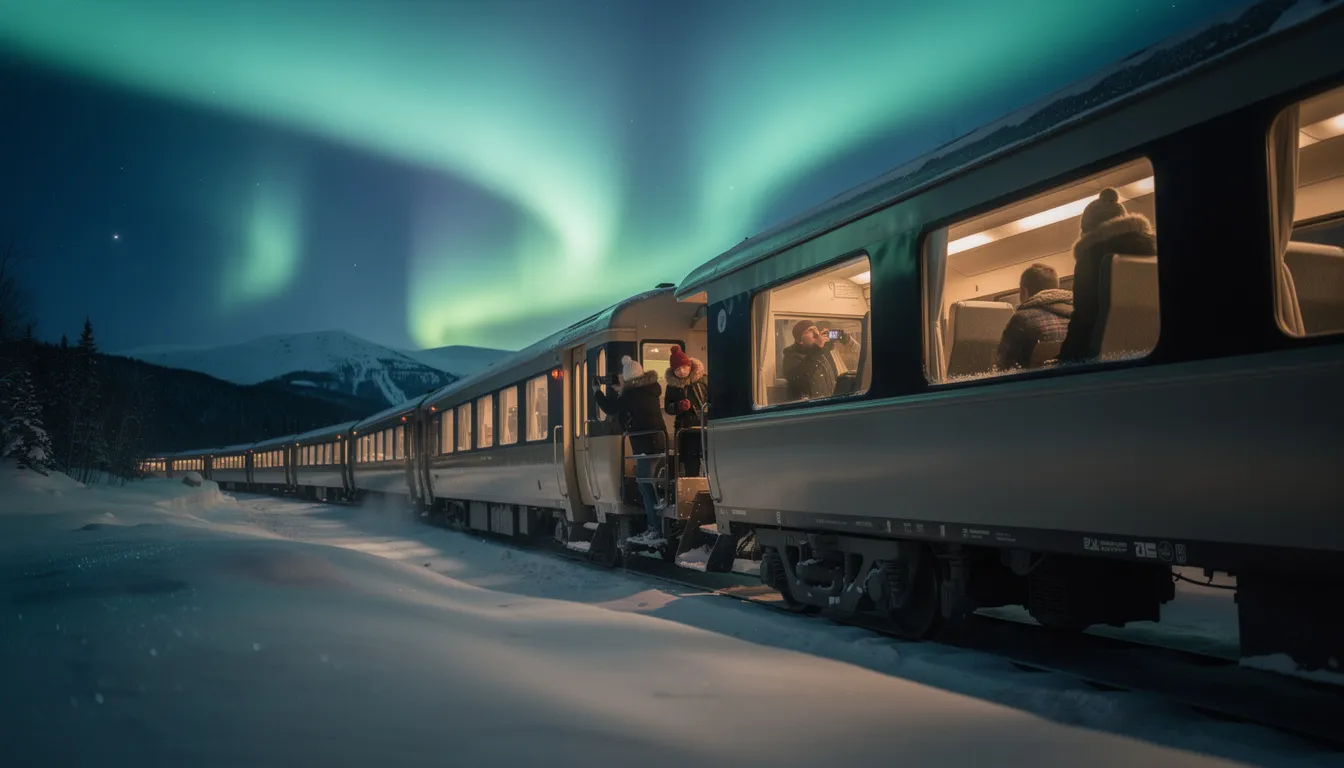
Winter in Alaska feels bigger from a train window. Frosted spruce trees slip by, rivers turn to blue-white braids, and when night falls the sky sometimes answers with green fire. If you are chasing quiet adventure with a front‑row seat to the season, the Aurora Winter Train is a classic. It brings you deep into the backcountry while keeping you warm, well fed, and wide eyed.
💡 Keys Takeaways
- The Aurora Winter Train operates between Anchorage and Fairbanks.
- Travelers can enjoy stunning views of the Alaskan wilderness, including snow-covered mountains and frozen rivers.
- The train offers various amenities like dining services and panoramic windows.
Overview of the Aurora Winter Train
Imagine settling into a warm seat as a vast white landscape glides by and the conductor’s voice points out a moose bedded down among the willows. That is the spirit of the aurora winter train, an off‑season ride that trades summer crowds for frosted silence and starry skies. This is slow travel at its most rewarding, where the journey is the highlight, not the layover.
The route feels timeless. The Aurora Winter Train operates between Anchorage and Fairbanks, linking Alaska’s biggest city with its interior hub across valleys, mountain foothills, and river country. Panoramic windows frame Denali views on clear days, the Susitna River’s frozen sweep, and long corridors of spruce forest that look like pages from a winter storybook.
Route and Schedule
The line covers roughly 356 miles and typically takes about 12 hours, depending on weather and operational conditions. Northbound runs usually depart Anchorage on Saturdays, while southbound trips return from Fairbanks on Sundays, with select extra departures around major holidays and peak aurora periods. You will pass through small communities like Wasilla and Talkeetna and roll near Denali National Park before curving through Nenana toward Fairbanks.
Winter light changes how the ride feels. In December and early January, most of the journey will be in twilight and darkness, which can boost your odds of spotting the aurora when skies are clear. By February and March, daylight stretches and scenery takes center stage, especially the Alaska Range when clouds cooperate. If you want the best of both, many travelers choose March for long views by day and real aurora potential after dusk.
This train also serves remote residents with flag‑stop service in certain areas. You may pause for a few minutes so someone can hop off with groceries, a sled, or even a fat‑tire bike. Those unscripted moments are part of the charm. Schedules can shift with weather, so plan buffer time for same‑day connections and keep your plans flexible.
What to Expect on Your Journey
Think of the car as a moving lodge. You step aboard to warmth, soft seats, and big windows that turn Alaska’s winter into a movie. The ride has a steady rhythm, the kind that makes conversations more thoughtful and hot chocolate taste better. On clear nights the lights go low enough to keep reflections down, and passengers share quiet gasps when a green ribbon unfurls across the sky. Many say the aurora feels closer from the train because the darkness is so complete outside.
Travelers often trade stories here. A photographer from Seattle once told me she came for a single shot of Denali in winter and left with ten frames she loved more, all taken from her seat. A Fairbanks grandmother pointed at a frozen bend in the Chulitna River and remembered when her kids used to skate there. The aurora winter train attracts that kind of memory making, even if it is your first time on the rails.
Onboard Services
The ride balances comfort with authenticity. Expect warm cars, large panoramic windows, and friendly staff who know the route by heart. Seating is reserved, there are restrooms on board, and you can move between cars to stretch your legs or find a new angle for photos. Some trains offer basic narration about landmarks and history, which adds context to the passing scenes.
Dining is part of the pleasure. There is usually a dining or café car with hot meals, soups, baked goods, and drinks. The menu changes, yet you can count on hearty winter fare. Bring a snack if you have strict preferences, although most travelers are delighted to linger over a bowl of chili while the Alaska Range drifts by. Outlets may be available in select seats, and cellular service fluctuates, which is half the joy because it nudges you to look outside. Wi‑Fi is typically not available in the backcountry.
- Warm, reserved seating with panoramic windows designed for viewing.
- Dining or café service with hot meals and beverages during the trip.
- Clean restrooms and space to walk between cars for new perspectives.
- Occasional onboard announcements that highlight wildlife sightings and landmarks.
Pro tip for photographers, bring a lens cloth and shoot at a slight angle to reduce reflections. If you have a dark scarf, hold it over the window edge to block stray cabin light. For aurora, set your camera to manual, raise ISO, use the widest aperture you have, and stabilize your elbows on the window frame. You will be surprised by what you can capture while rolling through the night.
Tickets and Pricing
Seats sell out for holiday weekends and peak aurora windows, so it pays to plan. The service usually runs through the heart of winter into early spring, with more limited departures than summer trains. Fares vary by date, direction, and seat category, and there are often reduced rates for children and residents. Round‑trip bookings can be a smart value if you intend to return on the rails, while many travelers mix it up by flying one way and riding the other.
Expect adult fares to fall in the low to mid hundreds for a one‑way journey, with shoulder dates often lower than holiday peaks. Prices reflect the length of the route, roughly 356 miles, and the full day on the rails, about 12 hours in typical conditions. If you are building a bigger Alaska itinerary, factor in accommodation at either end so you are not rushing to or from the depot in the dark and cold.
Booking Options
You can secure tickets in advance through the official sales channels, by phone, or in person at depots when they are open for winter operations. Online booking offers the easiest way to compare dates and see which direction fits your daylight or aurora goals. A few insider tricks help you choose the best ride for your style.
- Choose direction for light, northbound often gives you more daylight early in the trip, southbound may offer dusk colors toward the end.
- Pick your seat side with intention, northbound left side can favor Alaska Range views when skies are clear, southbound right side mirrors that.
- Time your dates, February and March balance scenery and aurora chances, new‑moon weeks can help if skies cooperate.
- Book early for holiday weeks, aim for 4 to 8 weeks out for popular dates, more if your window is fixed.
- Build buffer time, winter travel can run slower with weather, avoid tight same‑day flights.
If you want a shorter rail taste, consider breaking the run at Talkeetna for a night, then continue the next day. Families like this approach because it turns one marathon into two satisfying chapters. Adventure travelers sometimes add a lodge stay near Denali area communities for snowshoeing or dog mushing before rejoining the southbound train.
Tips for Traveling on the Aurora Winter Train
Winter travel rewards those who prepare. The train is warm and comfortable, yet platforms and brief stops can be very cold, especially with wind. Dress in breathable layers that you can peel off inside, then add back for photos at stops. Water bottles are handy because heated air can feel dry, and lip balm plus moisturizer keep you comfortable during a long day in the cabin.
Because you are in remote country for much of the route, think of self‑sufficiency as a friendly guideline. Bring snacks you love, a small power bank for your phone, and a camera plan you can manage in tight spaces. The aurora winter train is not about rushing from site to site. It is about letting Alaska’s winter roll by while you stay warm, curious, and ready for surprises.