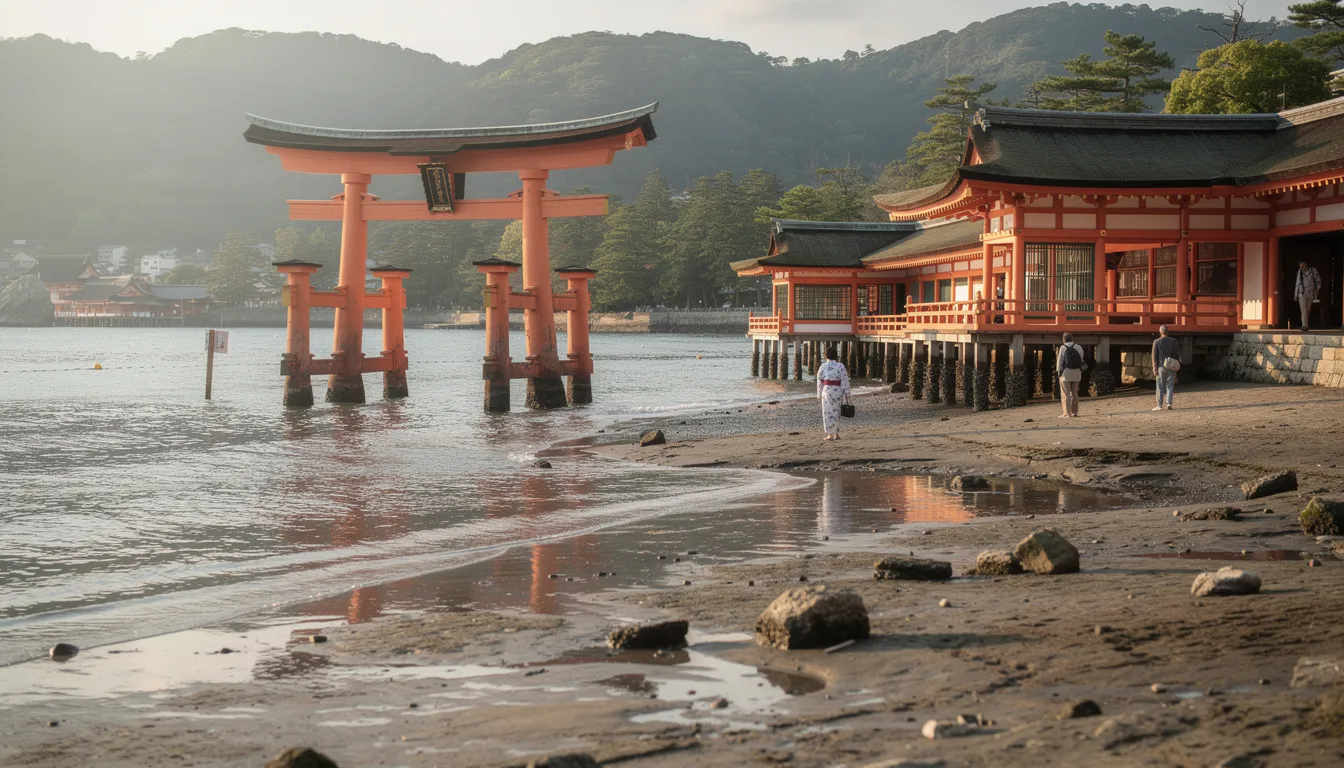
Red torii rising from rippling water, vermilion corridors floating above the tide, cedar-scented breezes from Mt. Misen. Itsukushima Shrine is the postcard of Japan that actually exceeds the postcard. Whether you crave history, quiet spirituality, or the thrill of timing a perfect high-tide photo, the island of itsukushima, better known as Miyajima, rewards every step. Here is how to understand it, see it at its best, and make your visit effortless.
💡 Key Takeaways
- Itsukushima Shrine was founded in the 6th century.
- The shrine is famous for its ‘floating’ torii gate.
- It was designated as a UNESCO World Heritage Site in 1996.
Itsukushima Shrine at a Glance
Set on the forested shores of Miyajima, Itsukushima Shrine is a Shinto complex built above the sea so worshippers could approach the sacred island without stepping on it. At high tide, the architecture appears to hover; at low tide, the sandy seabed turns into a natural plaza where visitors wander beneath the massive gate.
The Great Torii is the icon. Painted in vivid vermilion and standing about 16 meters tall, it frames the Seto Inland Sea and the hills beyond. Many visitors time their day to see the gate at both high and low tide for a full sense of the place’s changing character.
Recognized as a UNESCO World Heritage Site in 1996, the shrine blends refined courtly style with maritime spirituality. Boardwalks connect prayer halls, a Noh stage faces the bay, and lanterns glow softly at dusk. You will meet gentle deer in the village streets and catch the aroma of grilled oysters from open-front shops, a reminder that nature and culture coexist seamlessly here.
One traveler told me, “I arrived in the rain and the reflections doubled the shrine.” Another confided that dawn on the empty pier felt like a private blessing. That range of experiences captures why itsukushima is loved: it is visually stunning and quietly personal.
History of Itsukushima Shrine
Local belief traces the sanctuary to the 6th century, when the island was revered as the home of deities. The shrine is dedicated to the three sea goddesses associated with safety, trade, and navigation. Over time, the site grew in prestige as sailors, merchants, and court nobles made offerings to secure their journeys across these inland waters.
The shrine’s grand layout dates largely to the 12th century, when the powerful statesman Taira no Kiyomori sponsored a sweeping expansion. Influenced by aristocratic palace design, the complex adopted Shinden-zukuri elements: airy pavilions, long corridors, and open vistas that frame both mountain and sea. Building the halls on stilts lifted them above the tide, preserving the sanctity of the shoreline and creating the famed floating effect.
In ancient times, to protect the island’s purity, births and deaths were discouraged on Miyajima. People in late pregnancy or serious illness were urged to stay across the channel, and funeral rites were conducted on the mainland. That sense of sacred geography still resonates today, especially when you walk the corridors at quiet hours and hear only the sea under the floorboards.
The Great Torii has been rebuilt multiple times due to storms and age. The current gate dates to the late 19th century and underwent recent restoration, which revived its vermilion sheen and structural integrity. Throughout its history, the shrine has balanced careful preservation with the realities of wind, tide, and time. That resilience is part of itsukushima’s story.
Visiting Itsukushima Shrine
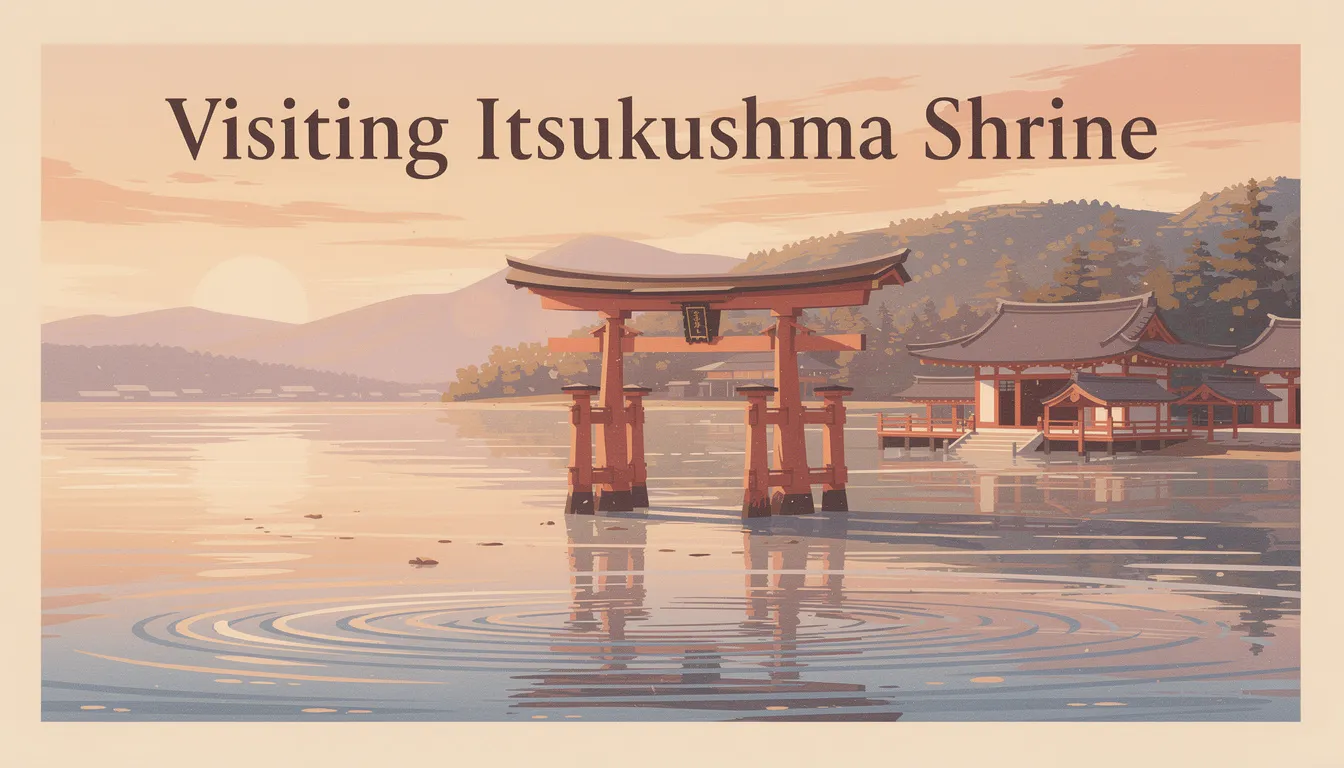
The magic of your visit hinges on tide and light. At high tide, the halls and torii look suspended; at low tide, you can walk out on the firm sand and stand below the gate, peering up at its giant cypress pillars. Many travelers plan a half day, arriving to see high tide, exploring the village or hiking while the water falls, then returning for low tide.
Photography is wonderful at sunrise when the sea is calm and at late afternoon when warm light brushes the shrine. If you bring a tripod, be mindful of foot traffic on the narrow boardwalks and keep gear compact. Inside the shrine precincts, follow staff guidance on where photos are permitted.
Location and Accessibility
Itsukushima Shrine sits on Miyajima, just off the coast from Hiroshima. From Hiroshima Station, take the JR Sanyo Line to Miyajimaguchi, then a short ferry ride across the channel. The crossing takes about 10 minutes, with frequent departures throughout the day. Trains and ferries run early and late enough to catch sunrise or dusk most of the year.
Once you step off the ferry, it is a pleasant, flat walk through the village to the shrine entrance. The route is stroller friendly and suitable for wheelchairs, though some inner corridors have gentle inclines. If you are carrying luggage, use station or ferry-terminal coin lockers so you can move comfortably.
Best Time to Visit
Spring brings cherry blossoms to the shrine’s edges, and autumn sets the maples blazing on the slopes of Mt. Misen. Those seasons draw crowds, yet they also deliver the most vivid colors. Summer offers long golden evenings over the bay, while winter days can be crisp and clear with fewer visitors.
To see the gate floating, target high tide. To walk out beneath it, target low tide. Check a local tide chart before you go and give yourself at least an hour on either side of peak to enjoy the changing views. Early morning offers calm and space to breathe; late afternoon lends a painterly glow on the water. If you can, experience both.
Nearby Attractions
Pair your shrine visit with a trip up Mt. Misen. Hike peaceful forest trails or ride the ropeway for wide panoramas across the Seto Inland Sea. On clear days you can trace island chains to the horizon, a vista that anchors the shrine’s maritime spirit in geography you can see.
Back near the waterfront, look for the five-story pagoda and the elegant Senjokaku Hall, both part of the broader cultural landscape. Daisho-in Temple, tucked into the hillside, offers serene gardens and thousands of quirky statues. In the village, sample grilled oysters and sweet momiji manju. All of this sits within easy walking distance, making itsukushima a compact, rewarding day.
Cultural Significance
Itsukushima Shrine enshrines three Shinto goddesses of the sea, and much of its ritual calendar centers on safe passage and gratitude for bounty. The architecture itself is a prayer, extending into the water as if to greet the tide. You feel that intent when waves murmur under the floor and lanterns glow at dusk.
Music and dance are central to worship. Courtly performances on the Noh stage and festive boat processions echo an imperial past. The highlight is the Kangen-sai, when musicians play gagaku as ornate boats glide across the bay. It is a living bridge to the Heian court, set against the same mountains and sea that inspired poets and painters for centuries.
Historically, the island blended Buddhist and Shinto traditions, and that layered spirituality remains in the way people move through the village, pausing to ring a bell or bow at a wayside altar. The deer, considered messengers of the gods in parts of Japan, roam freely, reminding visitors that animals, humans, and kami share this place.
For many Japanese people, visiting the shrine is both pilgrimage and family outing. I once watched a grandmother coach her grandson through hand-washing at the purification basin, a small lesson in respect and presence. That is the quiet power of itsukushima: awe on the surface, meaning beneath.
Practical Information
The shrine’s opening hours vary by season but are typically from around 6:30 to 18:00, with slight extensions in longer daylight months. Arrive early for calm corridors or plan for late afternoon light; either way, leave room to adjust to the tide schedule.
Expect to pay an admission fee of about ¥300 for adults, with discounted rates for students and children. A combined ticket that includes the Treasure Hall is available and usually costs a bit more. Last entry is often about 30 minutes before closing. Bring small bills or coins for smooth payment.