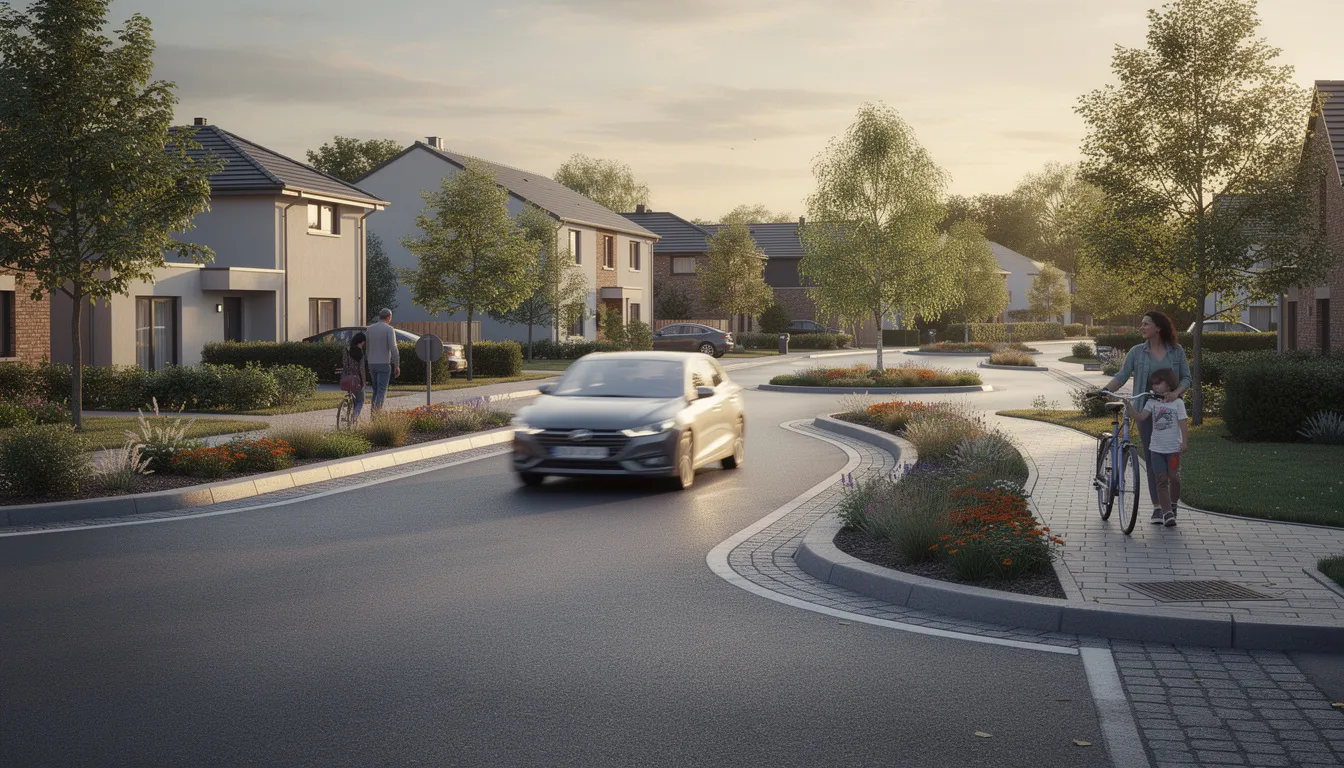
Drivers respond to the shape of the street as much as to the signs on it. That is why cities install chicanes to gently bend travel lanes, slow vehicles, and make walking feel safer. When designed well, these simple curves encourage steady, comfortable speeds without harsh jolts. They also add greenery and character to blocks that once felt like speedways.
💡 Key Takeaways
- Studies showing a reduction in vehicle speeds by up to 30%
- Statistics indicating decreased accident rates in areas with chicanes
- Case study examples from cities like Orlando and New York
What is a Chicane?
A chicane is a deliberate, gentle S-shaped shift in the travel path that causes drivers to steer, not just press the brake. By introducing a lateral offset with curb extensions, islands, or alternating parking bays, the roadway cues drivers to slow and pay attention. Unlike speed humps, which rely on vertical jolts, chicanes use horizontal deflection to bring speeds down smoothly.
Chicanes can be built with concrete, landscaped planters, flexible posts, or even temporary materials for pilots. They show up on residential streets, school zones, and corridors where speeding is common but emergency response times or bus routes make vertical devices less desirable. Designers often check the 85th-percentile speed before and after installation to verify performance.
Definition and Purpose
In traffic management, a chicane is a series of lateral shifts that changes a driver’s line of travel. The purpose is to reduce operating speed, increase driver focus, and shorten crossing distances for people on foot. A well-designed lane shift does this without creating excessive noise or discomfort for transit and freight.
- Common forms include alternating curb extensions, staggered parking, or small center islands.
- They can be permanent, seasonal, or tactical to test layouts before construction.
- Spacing and offset are tuned to target speed and vehicle mix on the corridor.
Benefits of Chicanes
The primary benefit is speed reduction. Multiple before-and-after studies in North America and Europe report decreases of up to 30% in typical operating speeds once chicanes are added. That change is big enough to transform how a block feels and functions for neighbors, children, and older adults.
Crash outcomes improve as well. Evaluations often show fewer loss-of-control collisions and fewer severe injuries, with several programs documenting 15–40% reductions in total crashes along treated segments. Slower, steadier traffic also reduces honking and harsh braking, which makes streets quieter and more predictable.
- Enhanced pedestrian safety through shorter, protected crossings.
- Improved driver attention thanks to subtle steering demands.
- Lower noise and smoother traffic flow compared with stop-and-go devices.
- Opportunity to add trees, lighting, and place-making elements.
Chicanes can be cost effective across a network because they offer quick wins on long residential stretches where traditional signals or four-way stops are not warranted. They work well with parking-protected bike lanes and raised crosswalks, creating a consistent feel block to block.
Environmental Impact
Speed consistency reduces hard accelerations that waste fuel. By moderating peaks in speed and braking, chicanes can lower emissions and keep noise levels down during both day and night periods. Landscaping within curb extensions captures stormwater and shades sidewalks, improving comfort on hot days.
- Green infrastructure planters help manage runoff and reduce heat.
- Less engine revving means quieter, more livable blocks for residents.
- Tree canopies in chicane islands enhance street character and microclimate.
How Chicanes Improve Safety
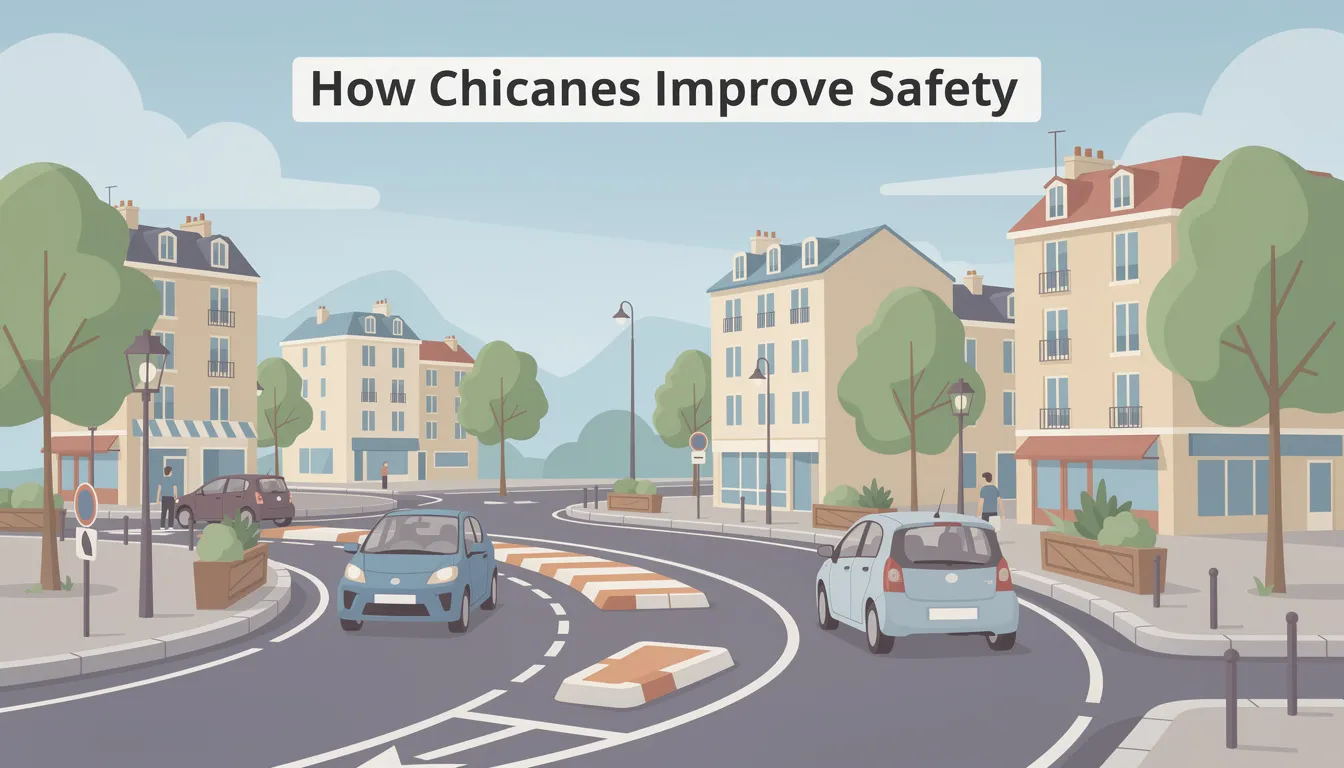
Safety gains come from physics and perception. Slower vehicles carry less kinetic energy, and drivers negotiating a curve give more attention to lane position and sightlines. The result is fewer high-speed conflicts and better reaction time at driveways, bus stops, and crossings.
Chicanes also reduce risky passing and help equalize speeds across lane users. People cycling benefit when the path includes predictable curves and visual narrowing. For people walking, corner extensions built as part of a chicane shorten the time spent in the street and improve visibility.
Several programs report fewer injury crashes where chicanes replace long, straight segments that previously encouraged speeding. Yield rates at crossings rise when the roadway alignment signals caution, and near-miss counts fall as drivers approach junctions at more manageable speeds.
Case Studies
Orlando’s neighborhood traffic calming pilots introduced landscaped chicanes on residential corridors that struggled with cut-through traffic. City evaluations reported operating speed reductions in the range of 20–30%, fewer complaints about aggressive driving, and early indications of fewer collisions over the following year. Residents highlighted the added shade and safer feel near schools and parks.
New York has used parking alternation and painted curb extensions to create corridor-scale chicanes within its Vision Zero program. On several treated avenues, the New York transportation team reported double-digit drops in peak speeds and notable declines in injury crashes after installation. The lane shifts also helped clarify turning paths at intersections, which reduced side-swipe and failure-to-yield conflicts.
These examples illustrate a common pattern. Where the street once encouraged straight-line speeding, a thoughtfully curved path nudges behavior, slows traffic, and supports safer everyday trips.
Implementing Chicanes in Urban Design
Success starts with data. Collect speed studies, crash maps, and community feedback to understand where and why speeding occurs. Use that baseline to set a target speed and identify blocks that can be shifted without disrupting bus routes, emergency response, or key loading needs.
Build a pilot to learn before you pour concrete. Temporary curb extenders, planters, and paint can create a test chicane in days. Measure the 85th-percentile speed, observe yielding at crossings, and gather feedback from neighbors, drivers, and first responders. Adjust offsets, signage, or visibility as needed.